
Deprecated: mb_convert_encoding(): Handling HTML entities via mbstring is deprecated; use htmlspecialchars, htmlentities, or mb_encode_numericentity/mb_decode_numericentity instead in /var/www/html/wp-content/plugins/super-cool-ad-inserter/inc/scaip-shortcode-inserter.php on line 37
When the April 22 primary comes around, Pennsylvania will be in the unaccustomed position of actually having a say in who the Democratic presidential nominee will be. Confronted with this awesome civic responsibility, City Paper did what it always does in such situations: We went out drinking.
With local activist Pat Clark as co-host, CP gathered a handful of committed political believers at a South Side bar to talk about the primary fight. What emerged was that many of the most divisive issues — votes on Iraq, bickering between campaigns — were of little interest. Perhaps the largest argument, in fact, was over the best way to approach voters and politicians on the other side of the aisle: Which candidate had the best chance to win in November? Should a Democratic president try to be a conciliatory figure, or a fighter willing to slug it out? Do America’s best hopes lie in Democrats winning political battles, or in trying to transcend them?
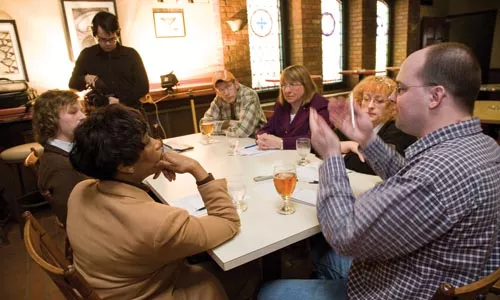
Video portions of this discussion, shot by media guru Keith Tassick, can be found (we hope) by clicking here. Elsewhere in this issue, you can find stories about the political stakes of the April primary, the role race may play in the outcome, and how well our voting machines are likely to work.
The panelists included:
Jason Tigano, a former staffer for Congressman Mike Doyle who now works for the city’s Urban Redevelopment Authority.
Barbara Ernsberger, a Downtown attorney who chairs the city’s Democratic committee (but who was speaking as an individual, rather than as a party leader).
Valerie McDonald Roberts, a former city councilor who now manages Allegheny County’s real-estate department.
Maria Lupinacci, one of two authors of the popular local blog 2 political junkies (http://2politicaljunkies.blogspot.com).
City Paper: Why don’t we start by saying a little about whom each of you is supporting for president and why?

Jason Tigano: Senator [Barack] Obama has probably the best opportunity to become president. With his characteristics, he can really unite the country. He can bring people together in a way that I think would be better than Senator Clinton and also Senator McCain — trying to grow our reputation internationally as well as bringing the country together with Democrats and Republicans here at home.
Barbara Ernsberger: I [support] Hillary Clinton for a number of reasons, one of which is her long-term support of children and educational issues, starting back when she graduated from law school and was part of the Children’s Defense Fund, all the way up to the present day. I have raised three children … I have one more of them to go through college, [and] I appreciate her addressing the issues of the expense of college tuition. … I also admire her guts in taking on the health-care issue in 1993 and being willing to tackle it again, which no one has done since 1993.
Valerie McDonald Roberts: I am supporting Senator Barack Obama for a number of reasons. … I’ve looked at his heart, and it’s been a long time since I’ve seen that level of sincerity, honesty, integrity, compassion, faith. I’ve also looked at his mind to see so much wisdom, common sense, as well as intellect. If you combine both of them, I think what draws me as well as so many others are truth and trust. The American people, myself included, have to trust, and we’ve lost a sense of that in Washington, D.C. I think he will bring that back.
Maria Lupinacci: We give lip service to what’s important in this country, that children are important, that education is important, that health care is important, that families are important. And Hillary Clinton has spent her entire life’s work being an advocate for that. It impresses when she tried to bring health care to the American people before the public was ready. … It impresses me in 2005, when she [was] one of a handful of Senators that voted against the Cheney energy bill. … I also know that she can work with Republicans, because she got [support from conservative areas] in upstate New York. … But on the other hand, she will fight. I do a lot of fund-raising for Democrats, and I hear, “Why don’t we have a backbone? Why don’t we fight?”
CP: What should the candidates be talking about in the weeks ahead?
JT: I think most important would probably be the economy. … I think Senator Obama has a great program for energy, green technology and trying to bring the next technologies to Western Pennsylvania, to create jobs, to reduce our dependence on foreign oil, to then grow our national security.
CP: But Maria raised an issue I’ve heard others talk about: that Senator Obama voted in favor of that 2005 bill, which had a lot of giveaways for the oil companies.
VMR: [T]here are some pieces of legislation that you can vote “no” on, and people say, “How could you vote ‘no’ on that?” Because there was a part of that legislative bill that was not acceptable, and they would not amend it to extract it out, so you have to vote the whole bill down, or you vote the whole bill up.
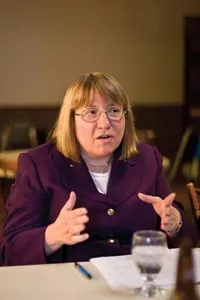
BE: I did go to [Clinton’s March 14 rally in Oakland], and her suggestion was that the oil industry — with the billions that it takes in, and for which it has admitted in Congressional testimony that they spend a minuscule amount on any form of alternative energy — should become partners. They’re not to be the enemy, but they should become partners in the development of alternative forms of energy. … [W]e have to have a president that’s willing to lead on that, and take on what is an enormous source of power in this country, which is the oil industry.
JT: Part of the 2005 energy bill was a piece of legislation introduced by Congressman Mike Doyle that actually guaranteed federal funding and mandated [that] any new construction of a federal building has to be LEED-certified [for energy-efficiency]. … Oftentimes with this legislation, it’s not an all-yes or an all-no. You have 30 good things in a bill, and 30 awful things. … Like Senator Clinton is dealing with on the Iraq war vote — one vote cannot give you the whole story, and so it’s really unfair to judge a candidate on one individual vote.
CP: Can we agree that as president, either candidate would come up with similar energy initiatives?
BE: I think that’s true.
JT: I would also say they would also be very different from anything [presumptive Republican nominee John] McCain would propose. … After the primary, Democrats need to come back together.
CP: Is there a reason it has to be after the primary? If they both come out of the primary with a shiv in the side of their neck, it’s not going to bode well for the Democratic Party.
VMR: They are almost neck and neck. … [H]ow do you tell one to fall on their sword? Who’s going to do that, and why would they do that? … [N]either of them are going to do that. That’s just the harsh reality that we have here, because it’s so close.
BE: There’s a positive aspect of them continuing to compete, which is that hopefully, these issues will be fleshed out. … The worst thing I could see happening is that [the party’s nominee] should reflect how the voters have been going, what the vote counts have been. There shouldn’t be something at the convention that manipulates the result.
ML: But the rules are that the superdelegates get to pick whoever they want [as the nominee at the convention]. They made this superdelegate structure up, and those are actually the rules. Personally, I would like not to have superdelegates, I would like to just have a straight-up vote. … [But] we’re kind of stuck with that.
CP: Where do the Democrats differ on a policy issue you think is important?
ML: I think Hillary has a better position on health care because of one word: universal. And that’s what it has to be, that’s what it’s going to take. The plans are very close, but I do think you can term [Clinton’s plan] universal. … I don’t think either plan goes far enough, actually, but I think her plan gets closer.
JT: I really look at it as two roads to the same destination. … I would go out and talk to seniors about Medicare Part D after it was passed, and that was a mandatory [prescription-drug] program: If they didn’t sign up, they were going to get fined. And the real stink of it all [was that Pennsylvania’s existing prescription-drug plan] was five times better than the national program. … When you’re dealing with the diversity of the United States of America, and how Alaska needs something different from Florida and Hawaii, I think that having some flexibility in a plan doesn’t necessarily mean it’s not as good.
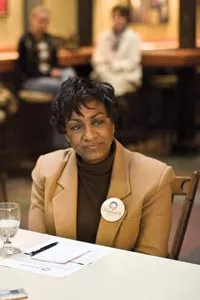
VMR: Nothing gets passed unless it goes through Congress. … You can go in with a strong plan and it can get diluted and whittled and amended and what have you. … [Obama’s] plan is closer to what could possibly come out of the congressional debate and the congressional votes. Hillary’s, I think, would be modified more substantially.
CP: And lots of people do get freaked out by this talk of “mandatory” health care, which is part of the Clinton plan.
ML: [Obama’s] plan is mandatory for people with kids, though.
BE: Unpaid medical bills are one of the leading causes of bankruptcy in this country. … This can be [the] working poor, this can be people without employment … it could be a young person, it could be an older person. That’s a problem across the board. I think we need an aggressive health plan that addresses those issues. Senator Clinton said … that if you have health coverage with your employer, or if you’re purchasing it yourself and you’re happy with it, fine. But if you’re not, she’s going to make available what is available to Congress, to other Americans. I think that is what you have to do.
ML: [And] we aren’t facing a Democratic president and a Republican Congress [as Bill Clinton did during much of the 1990s]. There are close to 30 Republicans up for re-election in the Senate, so we have got a great chance of making some real inroads there. … So maybe we will have a Congress that is a lot more receptive.
CP: What do you Obama supporters think he has that Clinton doesn’t?
JT: I think [Obama] would give Republicans something very different to try to tackle, as opposed to [dredging] up what happened with President Clinton eight years ago with the different scandals. … I think the single biggest issue that America faces right now is the lack of a United States of America. Very similar to what [Obama] talked about when he was at the [2004 Democratic] convention. … I think it very much has come down to Democrats versus Republicans in a very hard-line sort of way. I think the country has to be healed first, and then we can heal Washington.
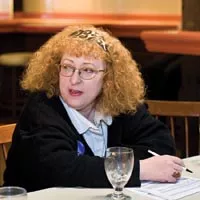
ML: As far as the electability issue, the Republicans have already spent around $100 million going after Hillary. Everything’s out there on the table; we know exactly what to expect. … [And] I don’t trust the Republicans to make nice. “Nonpartisan” is a great word, but we have some real differences on issues. … I don’t want eight years of [partisan] war, but I don’t want to [abandon Clinton and] reward Republicans for spending $100 million to try and tear our people down either.
… I want someone who’s gonna make a difference on the issues. It’ll sound negative, [but] I don’t want to be inspired. … I want someone that’s going to be able to make a change.
CP: We’ve had a very polite discussion here, but it seems like there has been a lot of bad feeling out there. Why do you think that is?
BE: One thing I want to say, because I talk to so many members of the party who are active — good friends of mine who are on different positions than I am — and we pretty much all committed that whoever wins we’re going to go with it. What’s ever happening at the national level, when it starts yelling about who said what, what stupid thing has been said most recently by some campaign person, locally I don’t think the [race is being fought] that way. And I don’t think it will become that way.
CP: Is that true in the Obama camp? Because I hear more often from that side things like, “If that Hillary Clinton steals an election from us, I’m just staying home.”
JT: I have heard that more. I don’t feel that myself. [But] just from family members and friends I’ve talked to, I think some Democrats just have a genuine concern about another Clinton in office. … I think a lot of people … don’t like the idea [of] some of the things that came from the first Clinton administration.
VMR: It’s not about “the Obama supporters cannot support Clinton, and they get mad and take their toys and go home.” That’s not the issue. The issue is whether there would be subterfuge, whether there would be some kind of scalawag stuff going on, that swings an election contrary to the will of the people. … A lot of people in the Obama camp would be supporting Senator Hillary Clinton for president, if Senator Barack Obama were not in the race. But they don’t want the election or the nomination to be taken in a way that’s contrary to the democratic process.
CP: To what extent are “identity politics” — issues of the candidates’ race and gender — shaping this primary? To what extent should they be shaping it?
VMR: I’m sick of talking about race. I am really, really tired of it. And it really undermines the candidates themselves. We really do have to focus on that individual and their character and their policies.
ML: Someone saw a sign — I’m sure it wasn’t from an Obama supporter; I’m gonna say it’s from a McCain supporter — at [Pittsburgh’s] St. Patrick’s Day parade that was, “Clinton country” with certain letters crossed out. … But there’s nothing wrong with a little girl looking up to Hillary, and there’s nothing wrong with a little African-American kid looking up to Barack. There’s something good about some identity politics. And [this debate] is not happening with Republicans because they would never put up someone that high.
This article appears in Mar 20-26, 2008.




The most noteworthy commentary in the recent Obama/Clinton Austin debate was Hillary’s closing comment. A subtle and exceedingly well choreographed re-play of the “victim card” which has thus far been so eminently successful for her. Still again holding back the tears, Hillary inferred that she was the most qualified to be Commander-In-Chief because she “had been tested” by the public humiliation that she was forced to endure with the forced admission of Bill’s Monica caper. The unfortunate truth is that in the absence of the astute retention of the infamous “blue dress”, Hillary would have led the savaging-brigade against Monica precisely as she had done against Jennifer Flowers, Juanita Broderick, Paula Jones, Kathleen Wiley, etc., etc.. Of course, the by-invitation-only audience took the bait “hook, line and sinker”.
The real question is do we want Hillary, the serial enabler, and Bill, the serial groper, to once again have the opportunity to scandalize the White House and the Presidency? Greg Neubeck
Poor City Paper. Always going to publication right after the conversation changes.
“VMR: I’m sick of talking about race. I am really, really tired of it. And it really undermines the candidates themselves. We really do have to focus on that individual and their character and their policies.”
I would guess she’d feel differently had she envisioned we would be talking about race so differently today.
“JT: I think [Obama] would give Republicans something very different to try to tackle, as opposed to [dredging] up what happened with President Clinton eight years ago with the different scandals. … I think the single biggest issue that America faces right now is the lack of a United States of America. Very similar to what [Obama] talked about when he was at the [2004 Democratic] convention. … I think it very much has come down to Democrats versus Republicans in a very hard-line sort of way. I think the country has to be healed first, and then we can heal Washington.”
After getting over my queasiness of having the URA legislative director represent for Obama, I’ve got to say this is close to my feeling and my argument. To which Maria responded:
“ML: As far as the electability issue, the Republicans have already spent around $100 million going after Hillary. Everything’s out there on the table; we know exactly what to expect. … [And] I don’t trust the Republicans to make nice. “Nonpartisan” is a great word, but we have some real differences on issues. … I don’t want eight years of [partisan] war, but I don’t want to [abandon Clinton and] reward Republicans for spending $100 million to try and tear our people down either.”
I think there are *multiple* explanations as to why Hillary’s negatives are so intractably high and strong, and not all of them have to do with $100 million in Republican money. I think that is a scapegoat for a candidate who has severe problems relating to a lot of America, and it is something that *she* would have to overcome if she is to govern.
I don’t see “abandoning” Clinton (to not prefer her is to abandon her?) as rewarding Republicans, and I certainly don’t see “non-partisanship” as a nice word that means we won’t fight for what we believe in. I do believe it means we’re not going to campaign from 51% and try to govern from 51%. My fear with Clinton is that she’ll never be able to govern with more than 51% on her best day, and that won’t solve American’s problems.
Right. That’s why advertisers spend millions: because it doesn’t work.
The Republicans and Pittsburgh’s own dear Dickie Cougar MellonScaife spent tens of millions smearing the Clintons because they knew it would have no effect on public opinion.
Uh huh.
I am sick and tired of the Clintons. I don’t believe them. I believe Obama.
Hillary Clinton says she is fully vetted. I doubt it. Just look at this example that was reported over the past few days.
Hillary Clinton won Ohio largely on the issue of Nafta. Even though Nafta was a major “achievement” in the Clinton Administration, Hillary Clinton said she is and always was against it. She even questioned the sincerity of Barack Obama’s position on Nafta.
Ohio voters know that Bush has not stood up for American workers on trade. Bush doesn’t understand the “fair” part of the phrase “free and fair trade.” Making American workers compete against exploited cheap labor with pennies for wages and horrid working conditions is not fair. As Obama has said, we need to make our trade partners implement work standards to stop them from making products on the cheap so American workers can’t fairly compete.
So in view of her clear positions on her husband’s Presidency, we wondered why Hillary Clinton fought the release of her records as First Lady. It didn’t make sense. After all, she touted her experience as First Lady saying it makes her more qualified to be President than Barack Obama. She and the Democrats also criticize the Bush Administration for its secretive manner of running our government.
Now we know. Hillary Clinton’s First Lady records, which were just released over her objections, reveal that Hillary Clinton was not against Nafta.
http://news.yahoo.com/s/nm/20080319/pl_nm/usa_politics_clinton_records_dc
http://blogs.abcnews.com/politicalpunch/2008/03/clintons-1993-n.html
http://news.yahoo.com/s/thenation/20080320/cm_thenation/1300860
It always sounded weird that Hillary Clinton would be against Nafta, something Bill Clinton considered a major achievement of his Administration. In fact, she wasn’t against it. She even lobbied for it.
To put it bluntly, Hillary Clinton lied. She lied about something important. She lied to pander to voters. Hillary Clinton stole a ton of votes in the Ohio election on a lie.
This is really no surprise coming from the candidate who says the vote in Michigan should count even though she, her opponents and the Democratic Party itself had all agreed that Michigan broke the rules and its vote would not count, and even though her opponents’ names were not even on the ballot.
The unfortunate truth is that Hillary Clinton has a serious credibility problem. Add that she failed to deliver on key issues, like her failed effort at healthcare reform in the early 1990s, like her vote for the Iraq war, and like her failing Presidential campaign in which she has repeatedly taken cheap shots at her opponent who is the likely Democratic nominee for President.
It’s time to end the two decades of Bush-Clinton rule in America. It’s time for a change. We need someone who will play it a little straighter, listen a little harder, and encourage us to rekindle hope and work together for positive change for all Americans.
http://blogs.abcnews.com/politicalpunch/2008/03/clintons-1993-n.html
“Clinton’s 1993 NAFTA Meeting
March 19, 2008 4:58 PM
One interesting event in Sen. Hillary Clinton’s just-released schedules from the 1990s comes on Nov. 10 1993, when the former first lady was to serve as the closing act during a briefing on NAFTA, the trade agreement she now assails.
11:30 am –
11:45 am
NAFTA BRIEFING DROP-BY
Room 450, OEOB
PARTICIPANTS: Approx 120 expected to attend
(See briefing book for further info)
FORMAT:
– Alexis Herman intros HRC for brief remarks
-HRC concludes program
(pp. 1375 and 1376)
Two attendees of that closed-door briefing, neither of whom are affiliated with any campaign, describe that event for ABC News. It was a room full of women involved in international trade. David Gergen served as a sort of master of ceremonies as various women members of the Cabinet talked up NAFTA, which had yet to pass Congress.
“It wasn’t a drop-by it was organized around her participation,” said one attendee. “Her remarks were totally pro-NAFTA and what a good thing it would be for the economy. There was no equivocation for her support for NAFTA at the time. Folks were pleased that she came by. If this is a still a question about what Hillary’s position when she was First Lady, she was totally supportive of NAFTA.
That first attendee recalls that the First Lady’s office in the East Wing put together “the invitation list, who was invited authorizations and all that stuff.”
And what is this attendee’s response to Clinton today distancing herself from NAFTA? “For people who worked hard to pass NAFTA and who support the importance of markets opening for the economy in the long term, they’re very upset. A number of the women who were there are very upset. You need to have some integrity in your position. The Clintons when Bill Clinton was president took a moderate position on trade for Democrats. For her to repudiate that now seems pretty phony.”
Recalls a second attendee, “they were looking for women in international trade who supported NAFTA. Senator Clinton came by at the end. And of course she asked for our support and help in passing NAFTA.”
Women who attended that event, the second attendee says, have been incredulous to see Clinton distance herself from the trade agreement as she campaigns today. “They’re all saying, ‘What’s this all about?’ We all heard it firsthand.” She says Clinton isn’t being honest with voters today.”
In selecting your Presidential candidate, please reflect on the dire consequences of a docile retreat before a relatively small band of Islamic extremists; and, attempt to formulate your own opinion as to the most prudent course of action in the defense of our Nation. It might assist to consider the following scenario: the infiltration of a group of terrorists similar to the Atta cabal with a quantity of weaponized anthrax procured from a rogue state; the acquisition of a single crop-duster aircraft fitted with a dry-agent disseminator; and, the dispersal of that dangerous toxin over an American population center. The loss of American life would be catastrophic. -Or-, is it preferable to pre-empt such fanatics by destroying them on their home turf, such as Afghanistan and Iraq, BEFORE they secure the capacity to threaten our homeland? The latter is in fact a key element in current American strategy. Is it advisable to support any candidate who would reverse course and sacrifice the impressive gains against Islamofacists that young Americans have shed their precious blood to achieve? The fact that we have not experienced another 9/11 is not a by-chance occurrence. Further, it’s critical to appreciate the pivotal role that our own border security plays in our “war against terrorism”, keeping in mind that “Amnesty” is anathema to border security. A Nation without enforceable borders will not long survive as a Nation. The policies espoused by both Clinton and Obama would grievously damage our Nation’s National Security Interests; and, intensify America’s vulnerabilities to terrorist activities. As history has repeatedly taught with grim consequences, PEACE is won only THRU STRENGTH; and, NOT THRU the nebulous psychosis of HOPE. Greg Neubeck
Clinton adviser Howard Wolfson said. “As for Obama’s use of the “typical white person” phrase, “I don’t know what he meant by that”. My question to him is: how would he express such a thought in his own words? Or would he prefer to take the politically correct route and say that there is no such thing as a “typical white or black person thinking”? We need to deal with this issue of race, and no one thus far has done a better job at bringing it to the forefront of our minds than Barrack Obama. The rest have simply tried to score political points of it. Which is what Mr. Wolfson is trying to do by portraying Mr. Obama as racist black man for simply stating that we have our own built in mindsets and internal prejudices that keeps us apart. Let’s not forget that it was the Clinton campaign that tried to bring race into the mix first with Bill Clinton and then for trying to divide us into racial camps by commenting over and over that Hispanics will not vote for a black candidate. It’s called divide and conquer and nobody is better at it than the Clintons.
CNN’s Roland Martin checked out the reverend Wright’s sermon and found not only that he was quoted out of context, but a deliberate act of character assassination by the person who produced this edited video to make it sound as if the reverrend was making inflamatory remarks when he in fact was quoting the words of a former US ambassador to Iraq.
http://ac360.blogs.cnn.com/2008/03/21/the-full-story-behind-rev-jeremiah-wrights-911-sermon/
http://www.youtube.com/watch?v=QOdlnzkeoyQ&feature=related