

Deprecated: mb_convert_encoding(): Handling HTML entities via mbstring is deprecated; use htmlspecialchars, htmlentities, or mb_encode_numericentity/mb_decode_numericentity instead in /var/www/html/wp-content/plugins/super-cool-ad-inserter/inc/scaip-shortcode-inserter.php on line 37
Eve Picker hunches over a block map of Garfield. “There are 577 vacant lots here, 181 owned by the City or the URA,” she says. “This land is not a liability. It’s an asset.”
Looking at a rough swath of North Atlantic and Penn avenues, she adds, “I’m going to build three or four houses here. Ten there. Twenty maybe. I don’t know. But I am going to build these houses. The only question is where. Because the development process, especially cutting-edge development, is notoriously unpredictable.”
Edgy, yes; unpredictable, yes. Both have defined Eve Picker’s real-estate life for decades now.
A native Aussie, Picker trained as an architect and urban designer. She worked in Vienna, Sydney and New York, and then moved to Friendship some 30 years ago. There she found herself on the proverbial ground floor of the nascent preservation movement. All those old houses, all that adaptive re-use spit-shined and front-and-center. “It felt like coming home,” she recalls.
Restless, energetic, she worked all about the city, finding sows’ ears — buildings derelict and damaged, unlovely and unloved — turning them into silk purses, attractive living and work spaces. Among her award-winning successes are the Werner and Liberty Bank buildings, in East Liberty; Luna Lofts, in Oakland; Brake House, in the Strip; Liberty, Penn, and First avenue buildings, Downtown; and so on.
“I found that I can take nothing and turn it into something,” she says. “Taking old buildings, transforming them into places that people want to live and work, is immensely satisfying.”
In Garfield, however, she plans to work from the ground up — literally — adding to the built environment one tiny, affordable house at a time.
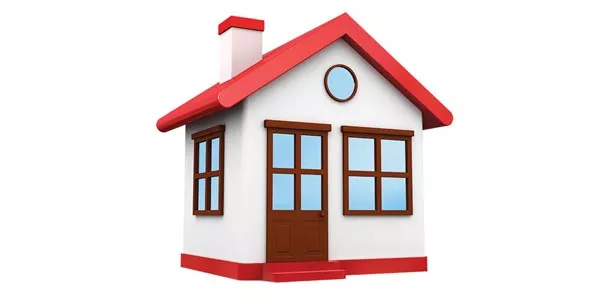
Using prefab Minim Houses designed by Washington, D.C.-based architect Brian Levy, Picker hopes to populate Garfield — and other neighborhoods — with 336-square-foot houses that settle nicely on standard 40-by-23-foot lots. Presented as what she calls a “total package,” each buyer-ready Minim features spiffy finishes, queen-sized bed, desk, kitchen and bath, storage space — even a deck and a yard. “It has everything you need — just small. All you have to bring is a couple of chairs,” Picker says, “and you’re good to go.”
Even better, she says, is that this cracker-box marvel can be had at $350 to $500 per month, including principle, interest, taxes and insurance.
“They’re one-person houses,” she says. “Or two people who really like each other,” she laughs, then waxes serious. “They’re going to change our cities.”
In three ways.:First, here, as elsewhere, tiny living spaces are a global trend. From Tokyo to Edinburgh, people are making do with smaller, modular places — often like a ship’s stateroom with amenities built in.
Second, the units are highly energy-efficient, code-compliant, transformative — dotting landscapes with houses instead of weeds.
Third, with the low cost of vacant land and pre-fab construction, the Minims give rise to smaller, democratized investing. “It’s very difficult to build traditional housing these days,” Picker says. “Construction costs are high. So is land. Plus we’d have to go to a bank and raise the money. But banks make financing decision based on the past. Garfield?” she shakes her head. “And Minim houses? There are no comparables here.”
Instead, Picker plans to raise the initial equity — $750,000 or so — from scratch, looking to small investors and the Internet. Promising a good return on investment, she says, “We’ll put ourselves in the hands of a crowd who want to see more, who want to see spectacular changes. Because we want to provide both a social and financial return, it’s very important that these projects transform cities.”
OK, nice, but why? Why work to transform cities?
“I love cities,” she says. “I love the built environment. I’m fascinated by how cities work — and what makes them better. These houses will make cities better.
“It’s amazing, isn’t it?” Picker asks. “The technology — going online, raising money electronically, democratically, incrementally. Not having to wait for a banker. Or a politician. The idea that we, the people, do have power to make change is fascinating.” She pauses. “The only question is how we can put it to good use.”
Picker gestures at the map where she’ll be creating affordable houses for young people, retirees and others who previously could not afford to own a home. “I’m excited about that,” she smiles. “I’m also excited that it’s a way to rebrand a neighborhood that has so much vacant land.”
This article appears in Nov 26 – Dec 2, 2014.



I am converting a small shed (10 by 16) into a tiny house in Preston County WV and plan to build one from scratch on wheels starting in the Spring of 2015. I see the Tiny House Movement as a solution to the housing issue as well as one way to cope with climate change. The tiny house uses less energy, is more adaptable to renewables and encourages it’s occupants to have a smaller carbon footprint in every way. My daughter lives in Garfield and I’m going to be interested in visiting the tiny house construction sites whenever they get underway. http://www.carriebstone.com
I am very interested in this Vision. I have researched many tiny home designs, and have found that the biggest limitation is not with the house, but with a community willing to support the idea of tiny homes. Yeah, Garfield! As a single senior, who would love to also go car-less (as I once was in Philly), is there any vision to also extend a car-sharing program into Garfield? Garfield could become a model of the new approach to urban dwelling. Small, locally-owned businesses, in a mixed use approach, would also add even more vitality.
I’ve met Eve and she is one tough business person and determined. But being determined and focused cannot turn the impossible into the possible.
City codes requirements prohibit the spirit of a mobile TH… thus much of the cost savings. A TH needs to be on wheels and that in PA is an RV. One cannot live in an RV all year in PA.
Eve wants to develop vacant lots into homes that one cannot usually afford. There is no investment value and thwarts the independence and freedom of TH living….
Portland OR is a great model for housing the homeless, maybe she should focus on that instead of being a profiteer.
wonderful vision and certainly one that could be used in Wilkinsburg and Homewood ..Tiny houses make a great deal of sense and support sustainability and opportunity
She is a great forward thinking person who will achieve any and everything she puts her mind to do!!!Thanks for having a vision,goal and plan to transform communities and help change hearts and minds.
https://www.post-gazette.com/local/city/20…