

Deprecated: mb_convert_encoding(): Handling HTML entities via mbstring is deprecated; use htmlspecialchars, htmlentities, or mb_encode_numericentity/mb_decode_numericentity instead in /var/www/html/wp-content/plugins/super-cool-ad-inserter/inc/scaip-shortcode-inserter.php on line 37
The fight for medical-marijuana legalization in Pennsylvania has now gone on for two-and-a-half years. The bill has passed the state Senate twice and has been stalled more times than anyone can count. Advocates claim they have the votes to pass it in the House, but more conservative voices in the House leadership have blocked it from coming to the floor.
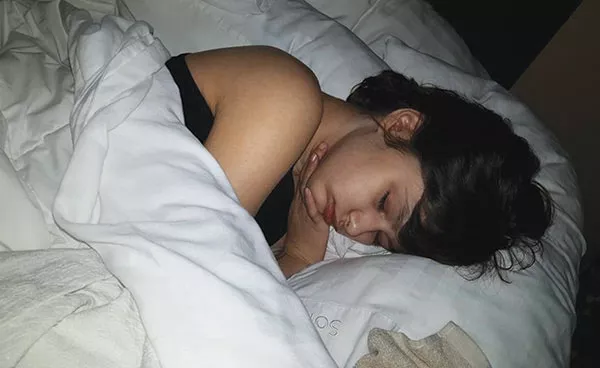
In a way, the bill has made massive headway since 2013, while at the same time not moving forward at all. During this time, though, one thing has changed — Heather Shuker’s daughter, Hannah Pallas, has gotten sicker.
“Look, I’m an optimistic person, and I know this will happen. The question is just when,” says Shuker, whose daughter suffers from intractable epilepsy and has hundreds of seizures every week. “In the time we’ve been fighting this, Hannah has definitely [regressed] to the point that she has atrophy of her cerebellum. Her brain is shrinking. She can’t walk like she used to, she’s not as coordinated.
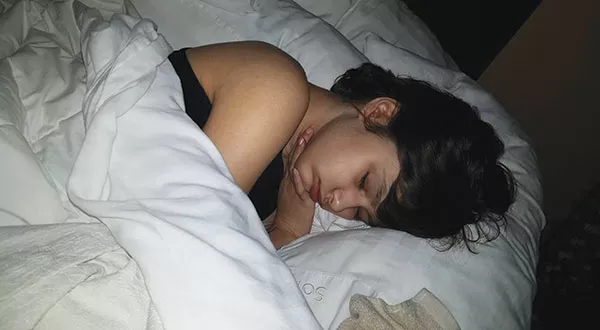
“There’s talk that the medicines she’s on — a dose normally given to an adult male — has played a part in this. We need to get her off these drugs and on something that has been proven to work.”
As medical cannabis has become legal in other states over the past several years, anecdotal evidence has begun to emerge that shows patients with a wide variety of medical conditions, including intractable epilepsy have been helped. Most of that medicine uses an extract from the plant known as cannabidiol, which does not cause a high.
Shuker isn’t the only one who’s growing impatient with the legislature’s stalling of a bill that polls have shown 88 percent of Pennsylvanians support. Last week, dozens of advocates staged a sit-in at the state capitol to protest inactivity on the bill. According to the Reading Eagle, Gov. Tom Wolf addressed the crowd, saying: “We can get this done. We need to get this done.”
But Shuker and other parents are tired of waiting. There is bipartisan support for the legislation. Republican state Sen. Mike Folmer, of Lebanon County, is one of the main sponsors of the bill, along with progressive Democratic Sen. Daylin Leach. The new House Majority leader, Republican Dave Reed of Indiana County, has also pledged his support and appointed a bipartisan task force to come up with compromise legislation. That panel made recommendations, but nothing has been put forward for discussion.
Last week, City Paper obtained proposed legislation from Dauphin County Republican Ron Marsico that amends the Senate bill while making changes that would limit the amount of THC (the the psychoactive component of marijuana) at 10 percent. Unlike cannabidiol, THC is the component of marijuana that gets a person high, but it also has medicinal purposes says the National Institute on Drug Abuse. THC can combat nausea and inflammation and help with muscle control and pain management.
Under Marsico’s proposal, doctors and pharmacists would have to take a four-hour course “regarding the latest scientific research on medical marijuana, including the risks and benefits of medical marijuana, and any other subjects deemed necessary.” Owners and employees of dispensaries would be required to take a two-hour certification course with a more specific purpose in mind. The course will show the employees how to recognize “unauthorized suspected activity under this act and the regulations … including criminal diversion of medical marijuana and falsification of identification cards.”
Reed has promised that a bill will come to the House floor for discussion in the next legislative session, which begins March 14. It’s a pledge that pleases Leach, who told CP last week: “I was encouraged to learn that the House will hold a vote on my medical-cannabis bill during its first week of session in March. I’m eager to see how my colleagues want to amend the bill and am hopeful that the needs of patients will be the top priority.”
Shuker is hopeful that the needs of patients like her daughter will be considered sooner rather than later. Once a law is passed, it will take time to get a program up and running. In the meantime, her daughter’s quality of life decreases every day. Now, for example, she is fed through a tube and is unable to eat or drink by mouth, due to a high risk of aspirating into her lungs causing pneumonia.
Last week, Shuker sent an email to House leadership, including state Rep. Mike Turzai (R-Moon), one of the bill’s biggest opponents. She tells Turzai that “it’s actually kind of sad that you are so far behind your peers” on the issue. She continues: “I do not know how you sleep at night. I only pray you never have to suffer as we have. My daughter and sick Pennsylvanians need legal access to medical cannabis now. Your excuses are old and ignorant.”
For his part, Turzai has said he worries that marijuana would not just be used for medical purposes and could be an “entry drug” for high school students. Research studies, including those from the National Institute on Drug Abuse, have long ago debunked the gateway-drug theory.
For Hannah, Shuker says the powerful prescription drugs she’s on now are not helping.
“It’s extremely frustrating that my daughter has to take drugs like Ativan and phenobarbital that make her worse,” Shuker says. “Why is she taking these powerful drugs when she could be using medical cannabis? It doesn’t seem real to me sometimes that a sick child in the United States can’t get a natural plant that would actually help her.”
This article appears in Feb 17-23, 2016.

Keystone state lacks the common sense younger generation legislators duh
Funny how I see remarks from Turzai all the time but I can’t get a response to any email I send, call I make, message I send or even door I knock. How do you folks get him to answer you? I guess he’s just afraid of me.
I went to grade school with heather shucker , I’ve known her for a long time, I know for a fact this is not some hippie girl just trying to smoke a j on the corner legally her daughter is sick, I have a disabled child as well and wonder sometimes if cannabis would help him, although heathers daughter is in need of it more. It seems to me that heather has educated herself on what will work as parents we know what’s best for our children and Pennsylvania just cares about money – that’s what it boils down too all these pharmaceutical companies won’t be making the money they would if cannabis were legal. It makes me fuckin sick to think this little girl fighting for her life every day could be handled with something as simple as a natural plant . $$$ is what it boils down too. Not caring for people- too me that’s a shame, as long as the right people pockets are getting filled they will never help. Moving to somewhere else in the USA where it is legal is a lot easier said than done. All I guess I’m really trying to say is I hope these assholes that won’t help get what’s coming to them carma is a bitch, and heather keep up the good fight you are an inspiration.
The PA (R) legislators are more concerned with the private prison and pharma industries than their own citizens.
The main jerk-off is Matt Baker: follow the money
http://www.votesmart.org/candidate/campaign-finance/9080/matthew-baker#.VsVEPsct90U
If you want to learn more about Medical Cannabis, join the 18.6K followers already taking advantage of the Twitter account. Twitter.com/AmericanGanja
From what I understand Cannabis Paste is sold legally. Its an over the counter remedy because it has .03% or less of THC. Heather could easily get this for her daughter and heal her. From what I’ve read, Cannabis Paste has healed epilepsy along with cancer, diabetes, autism and a number of other debilitating diseases. Don’t get the oil–the oil has been over-heated and the healing elements destroyed. Please pass this on to Heather.
Yes, as with any medicine, if one looks hard enough (over 95% of the thousands of studies regarding cannabis have been designed to find harm) a handful of potential, relatively mild, adverse effects of uncontrolled recreational cannabis use can be found, however, perspective is important.
In the U.S., each year over 2,000,000 people are hospitalized due to serious adverse reactions from PROPER USE of prescription drugs. Over 100,000 of these people die from these drugs. [Lazarou et al. 1998]
For arthritis treatment alone, NSAID drugs such as Aspirin, Ibuprofen, etc, cause over 16,500 deaths every year in the U.S. They cause 103,000 hospitalizations for serious complications with costs exceeding $2 billion.[Wolfe et al. 1999]
Two large studies, one involving 45,540 Swedish conscripts, and another involving over 65,000 people, found that recreational cannabis use is not associated with greater mortality once adjusted for confounding variables. [Andréasson et al. 1990; Sidney et al. 1997]
The side effects of pharmaceutical medicines are often worse that that of cannabis, and many of them do make a person “high” as well. This is one of the main reasons people switch to cannabis, less withdrawal and less side-effects:
“Over 41% state that they use cannabis as a substitute for alcohol, 36.1% use cannabis as a substitute for illicit substances, and 67.8% use cannabis as a substitute for prescription drugs. The three main reasons cited for cannabis-related substitution are ‘less withdrawal’ (67.7%), ‘fewer side-effects’ (60.4%), and ‘better symptom management’ suggesting that many patients may have already identified cannabis as an effective and potentially safer adjunct or alternative to their prescription drug regimen.” [Lucas et al. 2013]
Even with uncontrolled, unregulated recreational use of a street product that is likely smoked and contaminated with molds, pesticides, fungus and possibly more, cannabis is still safer than many pharmaceuticals. In some cases, such as those with Dravet Syndrome and cancer, cannabinoids can be life saving. It is a travesty that these people should be forced to suffer at the hand of a government claiming to have patients’ best interests in mind. It also is both ironic and a travesty that cannabis can reduce deaths attributed to government approved opioid pharmaceuticals. [Bachhuber et al 2014] Let doctors decide which medicines are best for their patients, not politicians!
SOURCES:
-Andréasson S, Allebeck P. Cannabis and mortality among young men: a longitudinal study of Swedish conscripts. Scand J Soc Med. 1990.
-Bachhuber et al. Medical Cannabis Laws and Opioid Analgesic Overdose Mortality in the United States, 1999-2010. JAMA Intern Med. 2014.
-Lazarou et al. Incidence of adverse drug reactions in hospitalized patients: a meta-analysis of prospective studies. JAMA. 1998.
-Lucas et al. Cannabis as a substitute for alcohol and other drugs: A dispensary-based survey of substitution effect in Canadian medical cannabis patients. Addiction Research & Theory. 2013
-Sidney et al. Marijuana use and mortality. Am J Public Health. 1997.
-Wolfe et al. Gastrointestinal toxicity of nonsteroidal antiinflammatory drugs. N Engl J Med. 1999. Review.