

Deprecated: mb_convert_encoding(): Handling HTML entities via mbstring is deprecated; use htmlspecialchars, htmlentities, or mb_encode_numericentity/mb_decode_numericentity instead in /var/www/html/wp-content/plugins/super-cool-ad-inserter/inc/scaip-shortcode-inserter.php on line 37
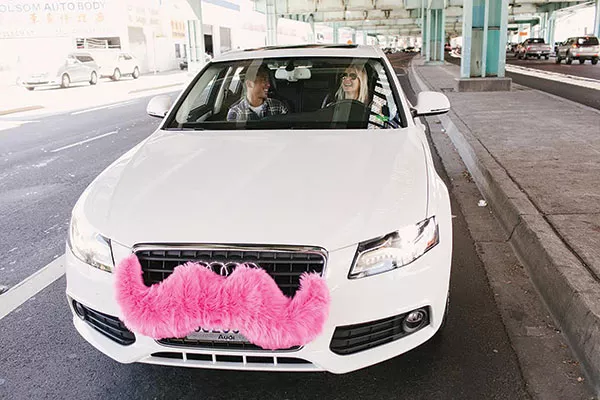
Its service may not yet be approved by state regulators, but ride-share company Lyft, with its pink-mustachioed fleet of cars, is apparently launching in the Steel City on Friday anyway.
It is, in some ways, a jackrabbit start for the company. Lyft and a competitor, Uber, have launched massive social-media campaigns and placed ads seeking drivers in recent weeks, stirring up local interest in the companies. When contacted by City Paper last week, however, neither company said it was sure when, or even if, they would launch. Then, as this issue was going to press late Monday, Lyft spokesperson Paige Thelen told CP via email that “we just confirmed the launch in Pittsburgh for this Friday, February 7.”
Prior to that announcement, officials of the Pennsylvania Public Utilities Commission told CP that if the company begins offering rides, both the firm and its drivers could face sanctions. At the time, PUC spokeswoman Jennifer Kocher said the agency would classify the companies as “unlicensed providers.”
“Anytime someone is transporting someone for any compensation, they would need a Certificate of Public Convenience,” Kocher said. “This is whether it is for a set fare or [what] they call … a donation.”
As of late last week, Kocher said that the PUC knew Lyft was advertising for drivers in Pittsburgh, but that the company had not filed the appropriate paperwork to do business in the state. Obtaining the proper certificate is a hearing-based process, in which existing transportation companies have the right to raise objections.
And local firms seem almost certain to voice them. Jamie Campolongo, CEO of Pittsburgh Transportation Group, which includes Yellow Cab, says he has heard rumblings of Lyft and Uber coming to Pittsburgh and is gearing up for a fight.
“We will file a complaint with the PUC,” Campolongo says. “We just want them to follow the rules. We could bury them if we just could do whatever we wanted, but we follow the law.”
Lyft bills itself as a lower-cost alternative to taxis, linking drivers in their personal vehicles with passengers who pay a suggested donation for the ride, through a smartphone app, while the company takes a cut. Lyft’s ads say drivers can make up to $20 per hour; some ads claim drivers can make $800 in a weekend.
Uber operates a similar service, called UberX, alongside a limo/black-car sedan service known as UberBlack.
While Lyft appears set to launch this week, Uber spokesperson Nairi Hourdajian says her company is in an “exploratory stage” here. Uber has listed openings for a Pittsburgh market community-manager position, which would be based in Washington, D.C., and an associate manager for Pittsburgh, to be based in Philadelphia.
“We think there is a tremendous opportunity in Pittsburgh,” Hourdajian says. “It is an ideal market because there are lots of young people with all of the universities. Cities like Pittsburgh respond well because they have limited taxi service and limited public transit, especially away from the Downtown area.”
Hourdajian tells City Paper that “tens of thousands” of people in the area have downloaded the company’s app, and that many have even tried to use it.
But while customers have been responsive, ride-sharing has drawn the ire of regulators and taxi operators.
Part of UberBlack’s business model, for example, is levying a surcharge for service during periods of peak demand. But Campolongo says state regulations bar taxis from charging different rates at certain times of day.
“If these companies want to apply for a taxi license, and follow the same regulations, I will compete with them,” Campolongo adds. “But we need a level playing field.”
The PUC’s Kocher says the agency’s position is clear: “Once we receive a report of [them] being operational, we would first send them a letter. The vast majority of time, companies bring themselves into compliance.
“If they do not, the next step would be fines, and there could be charges filed through the criminal-justice system,” Kocher adds. Punishment could be directed at both the company and drivers.
Lyft declined to discuss legal questions, but their entrance into the Pittsburgh market seems similar to their arrival in other cities.
“We look forward to working with [local officials] as we’ve worked with other city and state regulators like the California Public Utilities Commission to protect public safety while allowing for innovation and consumer choice,” Lyft’s Thelen says.
The companies began operating in California in October 2012, and were immediately hit with cease-and-desist letters. But according to a Forbes magazine account, the CPUC voted unanimously to regulate the companies and allow them to operate as “transportation network companies,” over the objections of taxi companies.
Lyft, Uber and another ride-sharing firm called Sidecar began operating in Seattle last year, though according to The Seattle Times, officials there have deemed the services to be operating illegally. New regulations for such services have been debated, but to date no legislation has been passed in Seattle, and the companies operating there are flourishing — again, over the objections of local cab companies.
Some of the debate has already played out in Philadelphia.
Uber legally operates an UberBlack service that uses an app to dispatch cars-for-hire there. (The company is also authorized to partner with other limo/black-car services across the state.) But when Sidecar launched its own ride-sharing service there last year, it was promptly shut down.
“When we became aware of them operating, we conducted a sting operation,” says James Ney, director of the Taxicab and Limousine Division of the Philadelphia Parking Authority. “We issued stiff citations and impounded the vehicles.”
Ney says Sidecar was fined for dispatching without a license; Sidecar drivers were charged with operating unauthorized taxis.
Kocher says unauthorized taxis pose public-safety concerns. She says the PUC’s regulations ensure the cars are safe and clean and that the proper insurance is in place.
Campolongo, of the Pittsburgh Transportation Group, says taxi companies must conduct criminal background checks on drivers, offer safety training and English-language training for drivers, and carry full commercial insurance.
Uber and Lyft say they also conduct checks on driving history and criminal backgrounds.
Alfred LaGasse, CEO of the Taxicab, Limousine & Paratransit Association, also says his group has concerns about these new companies.
“When you provide transportation for hire, there are standards that have been developed over the past couple of decades to minimize harm,” LaGasse says. He adds that the companies might seem like hip start-ups, but their business model is nothing new.
“You call, get a ride and pay a fare,” he says. “Clicking on an app is the same as dialing a number to have a taxi dispatched.
“I don’t see how that is not a taxi company.”
LaGasse and others have also raised issues with the ride-sharing companies’ insurance practices. Lyft and UberX have drivers rely on their primary car insurance first, and then excess liability insurance kicks in. But the companies offer insurance only when there is a confirmed passenger from their network in the car.
According to the New York Daily News, an UberX driver looking for fares struck and killed a 6-year-old in San Francisco on New Year’s Eve. The family filed a lawsuit against Uber last week; the company denies liability because the car had no passengers at the time.
Last week, Consumer Reports issued a warning that drivers for ride-sharing companies might not be covered, and open themselves up to liability. Steve Long, a State Farm insurance agent in Pittsburgh, says that before signing up with ride-sharing companies, drivers should check their insurance policies.
Typically, he says, insurers “have the same language” and “exclude a covered vehicle when it is used to carry a person for a charge. I’d eat my hat if you found one without this exception.”
Long says he would not insure a Lyft or UberX driver, and believes insurance companies here would aggressively fight claims arising from an incident involving a ride-share.
Uber and Lyft spokespersons would not respond to the insurance issue, except to say they believe they offer the coverage necessary under the law.
And Lyft’s Thelen says that the demand for such services speaks for itself. When the company looks for new markets, she says, “We take into account the reliability of transportation in the city. Cities want us … and once we are there we grow quickly.”
Campolongo concedes that there might be times when it is hard to catch a taxi here, especially on Friday and Saturday nights. He says the city expands on the weekends and contracts on weekdays, making scheduling tricky.
He says Yellow Cab has heard the complaints and has taken action, adding 60 cabs last year, and planning to add another 60 to its 325-car fleet in 2014. But Campolongo says cab shortages are not unique to Pittsburgh.
“There are 18,000 cabs in New York City,” he says, “and you cannot get one when it is raining.”
This article appears in Feb 5-11, 2014.



It’s hilarious to read the gripes of the Pittsburgh Transportation Group here about Uber and Lyft not being up to “standards”. The reality is that every ride I’ve taken with either Uber or Lyft has been a vehicle that’s exponentially cleaner, newer and safer than any Yellow Cab. Not to mention the drivers are always far friendlier and drive more responsibly. Maybe because they have to answer to a driver’s rating at the end?
And besides all of that, it’s nice to be able to get a cab without waiting on indefinite hold, only to finally have to deal with the sass of a bitter Yellow Cab dispatcher. Not to mention your cab may never even show up.
The local cab companies always fight Uber, but are usually unsuccessful. Uber has loyal customers (I am one) who take to social media and letter-writing campaigns to fight for its continuance. It would be a wonderful addition to the Pittsburgh market
Do you know who should be thrown in jail? Campolongo for attempting to make any excuse for the Pittsburgh Cab Service. If I had a dollar for every time I have a received a wait time with the range of 20 minutes to 2 hours I would be taking a black car around our wonderful city.
Jamie Campolongo probably still believes that cell phones or computers will never catch on and are just a fad
Let’s see, owens says he’ll take a black car, but has he ever arranged for one and paid the cost? My guess is NOT!!!. All of you sound like the great young libs who want to change the world via the internet. Sorry, but not everything you wish for on the internet comes true. Interesting that Uber is incorporated in Belguim rather than the states. Is it for ease of incorporation or perhaps small liability requirements. The driver provides his/her insurance and yeah and their excess liability (in the case of Lyft) is $1,000,000. That is not one hell of a lot of money anymore. Did any of you ever take a look at what lawsuits in this country pay out. What if one of you are in the car and the driver gets into an accident for which he/she is at fault and you lose both of your legs. Do you really believe that $1M is going to take care of you? Call the PUC and ask them what a taxi’s minimum liability insurance is. (remember that this is for YOUR safety) Or do you think you can sue Google which is a $250 million UBER angel investor. And what is the young driver’s asset base that you’re going to sue for? $25,000 or maybe you’ll hit it rich and get $60,000. If you do, I have an island in New York that i’d like to sell to you. Next time you’re in a uber or lyft ask the driver what his/her liability insurance limit is and if it covers commercial utiization of the vehicle. Ask your own insurer if he/she thinks that you would be covered by the driver in an accident if the driver did not have commercial insurance.
Ask that driver, especially Lyft, how they are taking care of the taxes that need to be paid. Oh as to the cleanliness and newness of the cars lets look at this. Pittsburgh is not New York, LA, San Francisco or any other major top ten US city with an enormous population and large potential taxi user base. The cabs covering this area are safe and maintained well. Wait till the part time UBER and Lyft drivers discover the high insurance costs they will incur,the increased maintenance needs of their cars and the rising gasoline costs. (Yellow’s got both Uber and Lyft here as they are converting their fleet to LNG; FYI for you tree huggers) Tranny’s don’t like this topography, front ends and tires hate pot holes and the hills around here are not really the BFF of brakes! After all of these “newer” cars are driven over the Pittsburgh roads and winters, and the drivers are not making the $30 / hour (before expenses and taxes) and a couple of them getting held up (or worse shot) and they discover this isn’t the wet dream they were promised lets see what happens with them.
There are hundreds of unlicensed “jitney” drivers all over the city primarily driving seniors and low income people to and from grocery stores doctors appointments for a flat-fee. Additionally, there are countless enterprising car-owners, many of them off-duty or former cabbies who’ve recognized the lack of transportation and inconsistent taxi service in this city and are out there providing people uninterested in driving drunk with transportation to and from bars every weekend. These drivers often have their own business cards, but what they don’t have are “Certificates of Public Convenience,” or any other special license or insurance required by law to provide that service. The reason you don’t hear Campolongo complaining about that is because they pose no real threat to the PTG (Yellow Cab) monopoly in Pittsburgh. LYFT on the other hand does pose a threat. Why? Because the drivers ARE screened, and they ARE insured and they MAY ACTUALLY SHOW UP ON TIME to GIVE YOU A RIDE FOR A REASONABLE PRICE! If you are willing to click “I ACCEPT” to some terms and conditions on your phone and take on the risk of getting into a LYFT car, then you should be allowed to do just that. I suspect the result will be that a car will appear and take you where you want to go. I encourage everyone to throw their full support behind this service. The only way Yellow cab will ever get better is if they have some damn competition.
The person who stated that the cabs in Pgh are ‘safe and well maintained’ has likely never been in a Pgh Yellow cab. I’ve been in cleaner, safer cabs in Mexico City…seriously. The assertion that Pgh does not have a large potential cab user base is faulty. While not the size of NY or Chicago, Pgh does not have the nominal demand but likely a similar demand proportional to the size of population. The difference is that Pgh does not have the supply, reliability or service level. There is likely low perceived demand bc people like myself gave up on a Yellow a long time ago after enough no-shows, comically late shows and experiences with horrible cars, people driving them or a combo of the two. Fear of competition is often fear of being exposed for having an inferior product, service, etc.
I agree with George’s comment above. How is this any different than the jitney drivers? So if I just start making business cards, charging my own fees, and don’t bother being screened and regulated by a company, I’m in the clear because I’m under the radar? But because I sign up on an app and they can track me in a sting, it’s illegal and I need “stiff citations”? As soon as I get my pink mustache in the mail, I’ll be a jitney driver…. with flair.
from forbes magazine a comment sent on-line concerning an article on the liability issue in a san francisco young girl killed by a uber driver and uber trying to skirt any responsibility / liability. I still wonder why uber is incorporated in Belgum versus somewhere in the states? Uber’s founder is not altruistic and interested only in looking out for all of these poor “underserved passengers” Uber’s selling koolaid and a lot of you are drinking it! And remember the last time faith blinded followers drank their leader’s Kool aid.
http://www.wisegeek.com/what-does-it-mean-to-drink-the-kool-aid.htm
Chuck Cotton 1 week ago
UBER operates illegally in the regulated ground transportation industry. Uber and it’s investors who control the $300,000,000 plus have engaged in a concerted effort to circumvent the Judicial System on all levels. They are conducting criminal actions in soliciting the public, taking their money, and then placing them in harm’s way. Uber has no permits or license on any level, and their drivers have no permits to transport the public for hire, let alone the proper insurance for insuring their vehicle for hire transporting the public. Further , UBER is violating IRS laws in not classifying its drivers as employees. Clearly, They are employees by the IRS 20 point guideline in the IRS Code. Uber controls everything, takes the money, places the reservation, instructs the driver where to go , what to do, and how to do it. Workmens comp insurance is not in place. They claim the drivers are insured but only Uber is supposedly covered. The driver can not obtain passenger for hire insurance because he has not permits. His insurance is only the standard non- commercial insurance. thus the public is not protected in case of an accident, injury, or death. Sadly, Sofia Liu’s death recently in San Francisco, well publized, show how UBER was so indifferent to her and the injured but the driver. Litigation has been filed and the family will prevail.
it is necessary for US attorney general, Eric Holder, to get involved as UBER’s operations are certainly criminal and violates anti trust laws, such as the Sherman Anti-Trust Act, the Clayton Act, and the Robinson-Patman Act. The CID division of the IRS must act against the tax evasion crimes. the FBI should investigate RICO criminal acts. Unfair competition is a tort and and a fraud. The department of Insurance certainly needs to investigate. of course state and local regulators must take action to protect the public from being defrauded and jeopardizing their safety.
Law enforcement and the media does not have a handle on the seriousness of this gigantic criminal enterprise that is sweeping our country.