

Deprecated: mb_convert_encoding(): Handling HTML entities via mbstring is deprecated; use htmlspecialchars, htmlentities, or mb_encode_numericentity/mb_decode_numericentity instead in /var/www/html/wp-content/plugins/super-cool-ad-inserter/inc/scaip-shortcode-inserter.php on line 37
Yesterday’s kickoff of the big p4 Pittsburgh summit got a lot of mileage out of this familiar Einstein quote: “We cannot solve our problems with the same thinking we used to create them.”
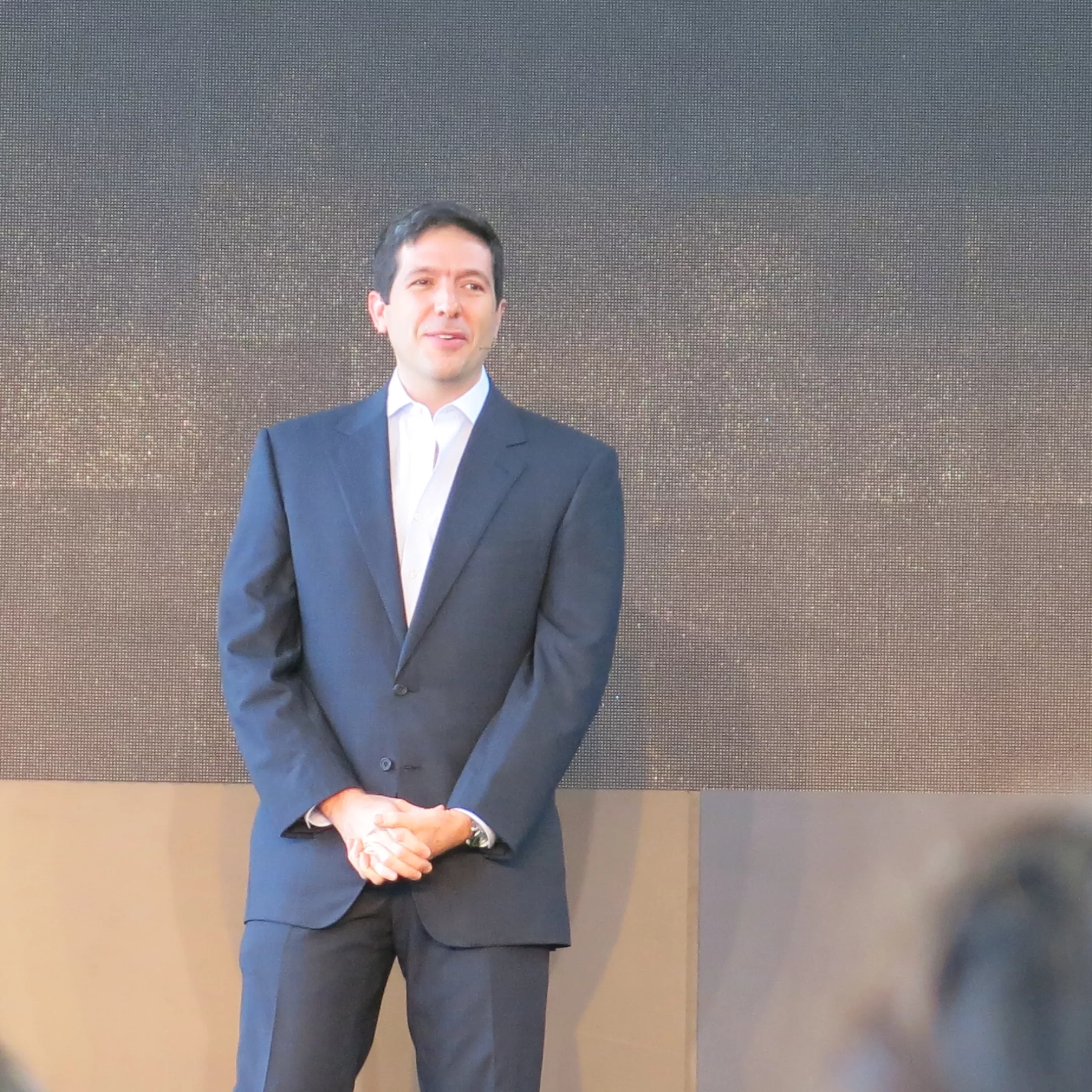
This international symposium organized by the City of Pittsburgh and the Heinz Endowments was meant to herald “a major effort to forge a new model of urban growth and development that is innovative, inclusive and sustainable,” according to press materials. It drew about 200 civic leaders, designers and architects, construction types and more to the Energy Innovation Center to hear speakers from around the country and the world.
The p’s in the title referred to “planet, people, place and performance.” The Einstein quote showed up on the summit website and in at least a couple of yesterday’s talks. (The symposium continued today.) But just how different was the thinking there?
A bit — but only to a point.
I saw three of yesterday’s four sessions, including the first 20 of the day’s 28 speakers. The tone was upbeat, including boosterish welcomes from the Endowments’ Andre Heinz — a clean-tech investor as well as a philanthropist — and Mayor Bill Peduto. “Welcome to the next chapter of Pittsburgh,” said Peduto. “This is a stage for Pittsburgh to get back on the global scene.”
Speakers explored how cities — now home to most of the world’s population globally, and the source of almost all its greenhouse-gas production — can strive to become more livable and less energy-intensive. That’s a transition to which Pittsburgh is “incredibly suited,” said Hal Harvey, of San Francisco-based consultancy Energy Innovation. In the context of redesigning cities, his argument included the interesting thought that “society demands access, not mobility” — meaning, basically, that you can avoid road infrastructure and cars if you build stuff close enough together.
Christer Larsson, planning director for Malmo, Sweden, discussed that city’s newly built climate-neutral district, which claims to have no net effect on the greenhouse-gas emissions that drive climate change. The whole city plans to go climate-neutral by 2030, Larsson said. (Sweden was heavily repped at the summit thanks to Andre Heinz’ ties there.)
Pionnering efficiency guru Amory Lovins talked about the opportunities afforded by high-performing buildings and electric cars. Brookline, Mass.-based author and city planner Jeff Speck discussed how to design urban environments so people want to walk more.
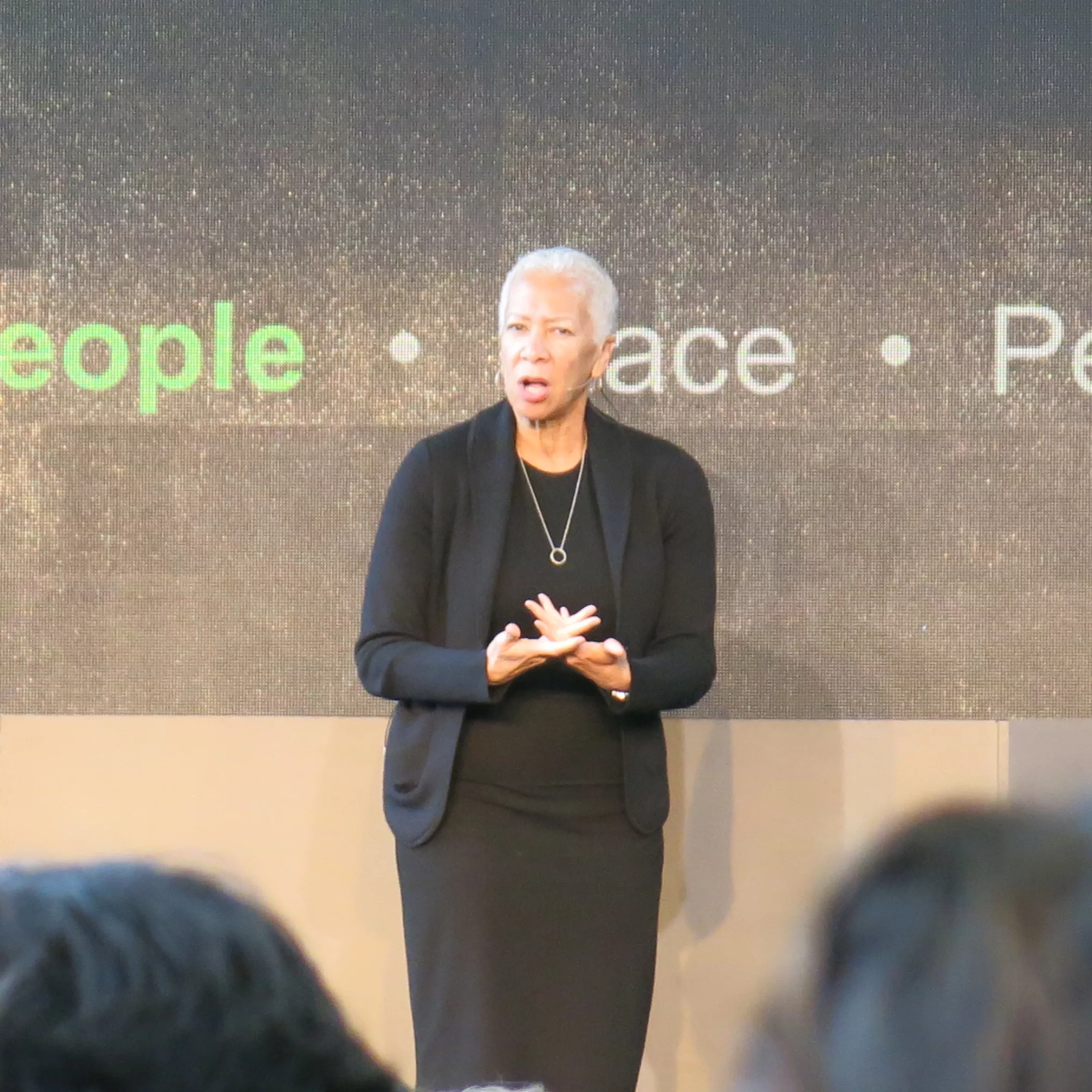
And Angela Glover Blackwell, founder and CEO of nationally based economic-and-social-equity advocate Policy Link, spoke powerfully about why we’re obligated (both morally and practically) to ensure that the benefits of revitalized, sustainable cities benefit everyone, not just the white and affluent. “If you don’t get the inclusion agenda right, you don’t have the right to stand as a model,” she said. “Everybody needs to live in a community of opportunity.”
All good stuff. So why did the summit feel insufficiently “different”?
One, nobody gave a working definition of “sustainability,” which kind of let the term settle into buzzword terrain, as happy-sounding as “innovation” but no better defined than “green.” (Someone in the day-ending session on “performance,” which I missed, might have defined sustainability, but a definition would have really enhanced the earlier talks, too.)
Environmental sustainability is actually a pretty rigorous standard, requiring living in a way that doesn’t compromise the quality of life of future generations. Granted, the summit covered things like quality of life and social equity, too, not just issues like climate change. But the lack of clarity on the matter could easily have left some attendees inadvertently conflating environmental sustainability with, say, business sustainability, which might be related but isn’t the same thing at all. (Plenty of businesses that look “sustainable” are busy trashing the environment, for instance.)
Worse, the summit included some unhelpful, even deceptive framing of some of these issues. One example came from John Manoochehri, the architect and sustainability designer who moderated the “planet” sesssion. Manoochehri’s opening gambit was to note an “extinction” — that of the environmentalist, a species whose services are simply no longer required. “What happens next after environmentalism?” he asked, on the premise that sustainability principles are now so ingrained in our thinking that we need no longer call attention to environmental crises.
Really? Yes, he said, really. “We are sufficiently to grips with the crisis itself,” Manoochehri announced; all that remains, he said, is to come up with solutions, a task for designers and engineers, and architects like him.
That’s probably news to Americans struggling to convince family members (and congresspersons) that climate change is real, let alone that we need to abandon fossil fuels, like yesterday.
Manoochehri, who lives in Sweden, made a point to say that environmentalists weren’t wrong about their issues. But his pronouncement had the air of “thanks for all your help, kids, now it’s grown-ups time.”
His statement might have been said to describe a paradigm shift — if only so many of the summit’s speakers hadn’t proceeded to repeatedly cite problems environmentalists have spent the past half century or more bringing to the fore. Energy Innovation’s Harvey, for instance, showed a slide of the devastation wrought in Canada’s tar-sands region — an area the size of Florida targeted for strip-mining for fossil fuels, a travesty environmentalists have spotlighted tirelessly.
Allow an environmentalist to note another irony: One of the design projects another summit speaker cited approvingly was the complete reconstruction along sustainability lines of Kiruna, a small town in northern Sweden. Lightly brushed by was the reason the town had to move two miles east in the first place: to make way for a huge iron-ore mining operation.
Manoochehri’s bio says his Stockholm-based architecture studio, Resource Vision, worked on the Kiruna project. Yet somehow, nobody mentioned how the vastly environmentally ruinous business of minerals extraction — in a mine slated to run through 2033 — might dent this vision of sustainability.
Indeed, there was a general lack of acknowledgement of such issues. The flip side was statements like Manocheehri’s assertion that Pittsburgh, a “city built on steel,” was now one “built on code,” as though its highways, skyscrapers and Google headquarters were made out of nothing but ones and zeros. Manocheehri also spoke of a “post-industrial, post-resource intensive” economy.
Also unacknowledged: the extent to which Pittsburgh’s much vaunted environmental clean-up was driven not only by legislation, but also by industrial decline. Steel mills that aren’t here can’t pollute. Indeed, even the U.N. (for whom Manocheehri has worked) has noted that Western countries have spent the past few decades outsourcing their pollution: We’re not consuming less, after all, we’re just having someone else pollute for us. That’s got to figure into sustainability conversations, too.
Also scarce at the summit was discussion of the political realities of addressing things like our carbon footprint. Decades of advancing tech and better design have meant hardly any slacking of U.S. greenhouse-gas emissions, and coal still generates 40 percent of U.S. electricity. For his part, Harvey, of Energy Innovation, said governments and universities have to start demanding that energy suppliers give them low-carbon options. He added that the proportion of renewable energy that states require of their grids needs to rise. “You need policy that demands change,” he said (in reference to a variety of issues, not just energy).
How does policy change? Well, maybe if a bunch of people who cared about the environment — let’s call them “environmentalists” — demanded it, it might help. So we’d better hope they’re not extinct, if we want even President’s Obama’s half-measure efforts to reduce carbon emissions to make it past various electoral, legislative and judicial challenges.
Perhaps as glaringly, with just one exception, no one at the summit suggested that our sustainability problem is a matter not of inadequate technology, or of insufficient will to address the problem, but rather of the way we conceive of our economy in general: as a system in which profit is the paramount value, and “growth” is essential.
That’s the sort of thinking that has led us to pillage the natural world for its water, wood, wildlife and minerals. But it’s also the sort of thinking that went mostly unchallenged at p4. Manocheehri’s suggested formula for a new economy, “how do you take limited resource availability and make value out of that?,” could be interpreted merely as a slower path to unsustainability.
The one exception was Greg Watson, a former Massachusetts agriculture commissioner who’s now policy director for the Massachusetts-based Schumacher Center for a New Economics. Schumacher was the British economist who, most notably in his 1973 book Small is Beautiful, critiqued the growth-at-all-costs mentality and advocated smaller, regional economies and things like land trusts and cooperative businesses in place of the corporate model.
Watson spoke about Schumacherian approaches like local currencies. The central question, he said, is “How do we meet our basic needs?” If we can do so locally — through urban agriculture and the like — “it becomes a very empowering process.” He cited examples like Boston’s Dudley Street Initiative, and even how Cubans re-learned traditional agricultural techniques after the fall of the Soviet Union cut off its supply of oil (along with shipments of petroleum-based fertilizers and pesticides).
To be fair, Malmo’s Larsson and another speaker did mention that Sweden and Denmark are trying to strengthen their regional economies. But otherwise, to the extent that the path to sustainability might involve scaling back globalization and embracing localized, low-growth economics, you wouldn’t have heard about it at p4.
Such ideas are not all that outré. Naomi Klein’s 2014 book on climate change, This Changes Everything, is a best-seller that is subtitled “Capitalism vs. The Climate,” and that advocates similar approaches.
Most people aren’t thinking along these lines, it’s true. But then, Einstein wasn’t talking to them, either.
This article appears in Apr 15-21, 2015.





Hi Bill, I want to say I think you have covered this well, and I myself love the attention and care for detail you are putting on this. This is what the media should / must do!
I do want to comment on your analysis of my input here though. I think in seeking to uncover cynicism, you may have over-interpreted some of my points. I appreciate the element of irony, or the extent to which I am referring to myself may not have carried over, but I’ll comment here to make sure you know there’s no cynicism – not an iota – in my input, regarding environmentalism and environmentalists.
To be fair, also, you didn’t correlate my introductory points to my actual presentation, which is pretty critical. You also, it seems, haven’t read or studied any of my actual work (fair enough, but it speaks for itself if you do)!
To start, you seem to have missed the inherent respect I have for all the folks I was quite ironically describing as “nearly extinct”. (Most of half of the ones pictured are dead, but their legacy is historic.) Rachel Carson’s passionate insight about nature damage, to take one example, was on the launch poster for the first event by Futureperfect, the non-profit I created to raise the quality of the sustainability debate. Futureperfect is the project vehicle through which I worked to contribute to p4, so that might give you some sense of how deeply these folks resonate for me personally. Have a look at the poster.
http://goo.gl/1M1erV
For the other environmentalists ‘becoming’ extinct – these are all my personal heroes and iconic change pioneers: biz sustainability guru John Elkington, designer Victor Papanek, policy-maker Maurice Strong, campaigner Julia Butterfly Hill.
Secondly, on resources, you are being multiply unfair, I believe. First, Kiruna is literally one of the cleanest mines in the world. And when I say that, I am as cautious as you of the role of the extractive industries. Kiruna is an iron-ore mine, not a fossil-fuel mine, or a toxic mineral mine, and while it disfigures the landscape to some extent, it is not an open-cast and is to all intents totally non-toxic. The specific type of iron-ore that comes of out it is some of the least toxic of essentially non-toxic iron ores, also. And in any case, the work I did on that project is not for the mine itself – to which no-one was invited to contribute – but for the town around and over the mine. So, I hear your concern, and there’s no reason why you should know the details, but it’s important the record is straight.
Otherwise on resources, did you not see my actual presentation? I situated the entire presentation on the basis that what we as a society (or a set of modern societies) increasingly agree on is “the bad news” of natural resource overextraction. I used the entirely uncynical – and extremely alarm-inducing, but fundamentally science-based – framework of planetary boundaries, I showed the diagram, to set up the whole input I was making.
I even continued to point out precisely what you are most concerned about – that economic growth is a runaway train, a dangerous abstraction – that does not respect these environmental boundaries, calling for an explicitly resource-based economics, so that there can be no more fudging the distinction between environmental sustainability and business sustainability. They are either connected or they are not, and if they are not, that’s a serious problem.
If you doubt my professional focus on the seriousness of rebuilding this link, look up with my UN or research work. I think you’ll be suitably comforted.
I don’t know how you missed this input to the event. I am an environmentalist, and I have no shame in saying so. But I also do believe, and presented this in a rhetorically provocative way on purpose!, that those who have called attention to problem – including me – do not, at least as a function of the alarm-raising, have a guaranteed pathway to solutions. You understand the difference – we all do – between someone who dials 911 (critical to saving a life in one way), and the first responders themselves (also critical, in another, and somewhat more complex way). Both are needed, but in sequence.
I think that, in reacting unfavourably to a certain few of my opening inputs, you might have missed the real content of what I contributed in the presentation. I hope so, anyway.
You may indeed disagree that the alarm has been sufficiently sounded, but I still believe myself that the p4 event is proof of my point – that we are building futures based /on/ the understanding and acceptance of resource limits, not a waving, vague regard for them!
And don’t forget, the speakers in the session on Planet were curated by a team including myself! This is no accident. My input was intended to set a forward-looking frame for this, and induce conversation about how these folks in their work – imperfectly but seriously – are basing value-creation (by which I don’t just mean money for shareholders, c.f. Larsson / Malmö!, and Nygård / Copenhagen) on a resource-limits recognition.
You may say the p4 event didn’t talk up sufficiently enough the problem with ‘growth’, but again, I think you overlooked my point about the need for scientific, resource-based economics, but by contrast, did you hear anyone call for unrestrained growth? I don’t think so – because it was out of the question in the concept of the event.
Finally, what becomes most important is this very debate. You will be aware that any new attempt to bring truly sustainable themes to life in any city with a transitioning economy has to speak to many different constituencies – do you think that the leadership in so many sectors would have been galvanised by an event fixed on Naomi Klein’s framework? I don’t know, but I am not confident – even while I know Naomi Klein, and believe she is an incredibly effective communicator.
Anyway, I hope this is a useful comment. What I believe and hope going forward is that this quality of analysis and scrutiny – that you have offered – continues to be part of the ongoing discussion. Everyone involved that I have been exposed to is on the look out for cynicism, and I’ll make sure – for my part – to clarify the seriousness of the base in recognition of resource limits. This is the first time in my career I have been accused of not being environmental enough !, and so I am taking it seriously!
“Kiruna is literally one of the cleanest mines in the world. And when I say that, I am as cautious as you of the role of the extractive industries. Kiruna is an iron-ore mine, not a fossil-fuel mine, or a toxic mineral mine, and while it disfigures the landscape to some extent,”
You are one very funny environmentalist! To say moving an entire town “disfigures the landscape to some extent” – genius comedic underplay!
I wouldn’t call you ironic so much as ironoreonic … Or the corporate brainwashed Manoocherian Candidate?
John — Thanks for your comments and clarifications. I’m sorry if you feel I misrepresented some of your points or was unaware of pertinent information. I have to say that while I am often accused of excessive irony myself, I didn’t pick up on some of your intended ironies. (For instance, while I didn’t think you were truly slagging off Rachel Carson, it did seem to me you were genuinely saying we were past the need to focus on “calling 911.” Obviously, we need solutions as well as alarms.) Additionally, while I was not previously familiar with your work, I did see your presentation, and did grasp your concern about resource limits. What escaped me, however, was a clearer sense of what you mean by “resource-based economics,” or in what fundamental way they would differ from the economics we have now. I have to say, for example, that I did not gather that the concept was critique of “growth” as a standard for success, let alone that it made a case for “steady-state” economics or the like. Admittedly, this disconnect might have been partly due to the limitations of the summit’s format. But while the idea of “unrestrained” growth might have been off the table at the summit, as you say, it’s hard to imagine that too many attendees walked away thinking that sustainability as discussed there poses any threat to the regime of economic growth as we have known it — not when the air is one of general boosterism, and you’re hearing quotes like “we do understand the economic opportunities of making change” (Gabe Klein) and “efficiency is a huge, largely untapped resource … and I hope you all make a lot of money at it” (Amory Lovins). In fact, the summit’s unspoken motto might well have been “sustainability will help us grow,” but without any real modification to our sense of what growth can or should be. (Side note: You cited Phipps’ CSL as an example of an approach to the built environment that you favor, but that further muddied the issue for me: While that building is many things, many of them very good, it was not priced to move, as your talk implied; it was actually quite pricey.) At any rate, I appreciate your thoughtful response and hope to look into your work further.
Searching the blogs in Pittsburgh for sustainable local businesses. We offer green solutions to auto dents, dings and bumper repairs. Not everything is repairable with the paintless method but we can fix some pretty nasty stuff. If you want more info check out our page at http://www.threeriversdent.com