

Deprecated: mb_convert_encoding(): Handling HTML entities via mbstring is deprecated; use htmlspecialchars, htmlentities, or mb_encode_numericentity/mb_decode_numericentity instead in /var/www/html/wp-content/plugins/super-cool-ad-inserter/inc/scaip-shortcode-inserter.php on line 37
Kangaroo: A Love Hate Story
Directed by Mick McIntyre and Kate McIntyre ClereStarts Fri., Jan. 26. Hollywood

The film opens with grainy black-and-white video footage, as a camera shakily makes its way through trees at night. Discernible: a pickup truck and, briefly, a kangaroo caught in a spotlight. The camera operator is agitated, fearful. You might joke, “Ah, Australian Blair Witch Project,” but this new documentary is much more horrifying. Shots ring out, and this kangaroo and others nearby are killed. Thousands more such kangaroo deaths occur each night.
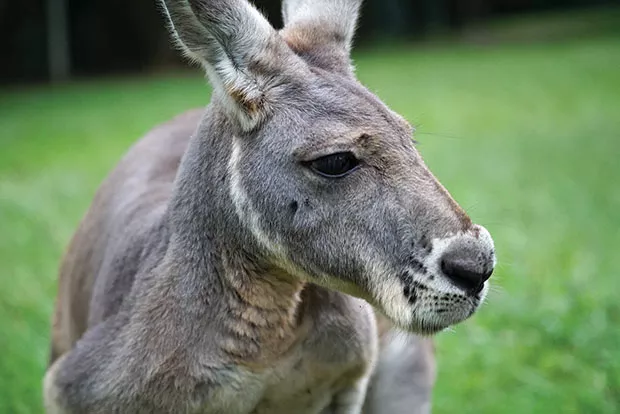
Mick McIntyre and Kate McIntyre Clere’s new documentary, Kangaroo: A Love Hate Story, examines Australia’s truly confused relationship with its signature animal. The creature’s image is synonymous with the country, and yet, as the film’s title suggest, the kangaroo’s existence is deeply polarizing. One interviewee divides the kangaroo’s role into three categories: pest to be eradicated, resource to be exploited for profit (meat and leather), and sacred animal, deserving of protection.
Unsurprisingly, the kangaroo’s troubles began with Australia’s colonization by northern Europeans. The new settlers brought sheep and cattle, and considered kangaroo destructive interlopers on the precious grazing areas. (Among the ironies, it is the kangaroo that has adapted to thrive in the continent’s harsh environment.) Thus, kangaroos were killed as “agricultural pests,” often rounded up into pens and shot by the hundreds. Carcasses were left to rot, or processed as pet food.
Lest you think this is how things occurred in less enlightened times, Kangaroo is here to set you straight. Kangaroos are still legally eradicated as agricultural pests; farmers can hire professional “roo shooters,” who use trucks, spotlights and rifles as depicted in the opening video. Others are killed, in the wild, to supply meat — much of it still goes to pet food, but there’s a movement to market better cuts domestically and to large overseas markets, such as Russia and China. The hides are converted into leather. (Are your name-brand sports kicks made of “k-leather”? That’s kangaroo.)
The filmmakers check in across the spectrum, from meat-processors and farmers to animal-rights activists and scientists. Politicians have their say, whether it’s in favor of increasing the market for a uniquely Australian product, or seeking better preservation of the animals. Viewers also get two images of kangaroos — alive and hopping across the range, or dead and mutilated. The sensitive should take note: The film contains explicit footage of kangaroos — even baby kangaroos — being shot, dismembered and left gravely injured.
Like The Cove or Blackfish, Kangaroo is a muckraking work that advocates a clear position for better management and treatment of Australia’s kangaroos. Having previously known little of the kangaroo “industry,” or how contentious the animal’s presence is in its native land, I admit the film left me startled. It likely will jolt you, too.
This article appears in Jan 31 – Feb 6, 2018.






A future without professional kangaroo harvesting will ultimately fail in animal welfare. I am yet to see this biased film but lets see if you can recognise animal cruelty. Here is the real truth and not the twisted version that I suspect is being portrayed. View – https://www.youtube.com/watch?v=8yeyJK9E4I4 for those that cant, the first kangaroo is still alive and dragged off, the others are gut shot.
Do you really think closing the commercial trade is the answer, ultimately leaving it to amateur shooters and aboriginals that are in no way regulated nor have the same ethics and skills? You are naive to think you are making a difference, kangaroos will always be shot it just depends by who. In WA amateur shooters and aboriginals can shoot them without a license and that includes the occurrence of gut or chest shooting as seen on the internet. It is only amateur shooting that is our shame that shoots to waste or hunt kangaroos without licenses. With wallaby snaring in the top end of the Northern Territory by our armed forces, including Americans and other soldiers that are taught by aboriginals for so called survival training, government paid for exclusion and cell fencing, poisoning or turning off of waters and filling in dams to control kangaroo numbers, all seems to be less impotent to those that still think there meats only comes from the super market shelf that need to get a grip, with wildlife advocacy groups just wanting to suck you in and make money, for this is what I question in relation to their integrity and agenda. Instead the propaganda and comments are nearly always directed towards the professional shooters or the processing industry. Not once have I read an article relating to recreational shooters, farm hands or just some idiot with a gun, who for sport goes out and shoots kangaroos with his mates and then drives on and shoots the next gut shot roo without checking for that poor defenceless little joey thats described. As professional shooters this does not occur, they inspect the pouch and with decapitation its instant death. Yes, its true, it gory and unpleasant but that’s the facts. In Australia we have to cull kangaroos and to think you dont is unrealistic but it shouldnt be to waste and not to be done inhumanely period. There are three groups that shoot kangaroos. The accredited commercial harvesters that are governed by accountable measures for animal welfare issues as carcasses are delivered and checked ensuring head shots, these shooters are highly regulated and enforced by governing authorities including meat quality that is checked by government meat inspectors and if that has to be tightened Im all for it and then there are the amateur hunting and shooters that portray a different story. Any rogue shooters found doing the wrong thing need to lose their permit rights and firearm license. However in saying all this you are having yourselves on, because there is a huge pet meat trade that will never close but what a waste of a valued resource that is better for you than any other slaughtered meats found in your super market that I have been using to make sausages, hamburgers, shish kebabs and even occasionally meat pies and I and my family will continue to do so happily singing Skippy the best ever meat, the bush kangaroo.
Native animal advocates do direct their comments at both amateur and professional kangaroo shooters and at other measures that harm and kill kangaroos (such as snares, survival training and exclusion fencing). There are at least some people from within the Aboriginal Australian community, including Elders, who oppose the killing of kangaroos. Kangaroos are not pests but native animals and should have every right to live in their native homeland, just as they have done so for millions of years. It is the huge populations of sheep and cattle that are destroying the environment in Australia (and other countries). What kind of ‘animal lover’ would support the killing of a majestic animal living in harmony with the natural ecosystem in order to feed a caricature of an animal that cannot live a natural life (such as a ‘pet’ dog)? It is not true that those who oppose the killing of kangaroos do not oppose other kinds of meat from the supermarket since many are vegan. Before anybody answers that vegans kill plants or that soybean farms are destroying forests in South America, I wish to state that: (1) I choose foods that do not have to involve the killing of plants because they are derived from fruits, seeds and minerals and (2) I avoid anything that comes from North and South America, Australia, Malaysia, Indonesia and Congo (due to the continuing ongoing destruction of natural ecosystems in these lands and/or the fact that they are the result of genocide against indigenous peoples). For the same reasons, after living in Australia from 1970 to 1992, I returned to my country of origin, Croatia, and encourage others to do the same. I never saw a kangaroo in the wild even though I travelled a lot and did farm work such as picking potatoes and peas. Humans should stop destroying what is left of natural habitats. That could be achieved if governments stop offering financial incentives to increase the human population (such as one-off baby payments and family allowances; especially to those with more than 2 children) and if they stop encouraging people to immigrate into Australia (and North America).