

Deprecated: mb_convert_encoding(): Handling HTML entities via mbstring is deprecated; use htmlspecialchars, htmlentities, or mb_encode_numericentity/mb_decode_numericentity instead in /var/www/html/wp-content/plugins/super-cool-ad-inserter/inc/scaip-shortcode-inserter.php on line 37
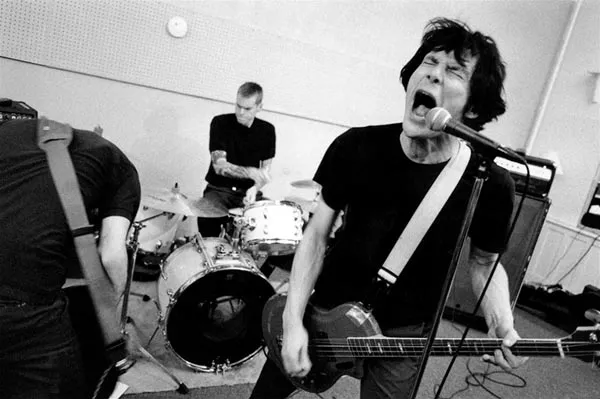
Someone once said of The Velvet Underground’s first album that only 1,000 people bought it, but every one of them started a band. After reading Building a Better Robot, you might feel similarly about the first incarnation of the Mr. Roboto Project.
Active between 1999 and 2010, the cooperatively run, volunteer-operated music venue occupied a Wilkinsburg storefront, where it mostly featured shows by local and touring underground punk bands. It hosted audiences of only about 100, and the place ran on a shoestring: Because the shows were all-ages, there were no alcohol sales. Yet Roboto was culturally significant out of all proportion to its size and resources.
The venue began after musicians Mike Q. Roth and Eric Meisberger visited a similar co-op while visiting Baltimore. Roboto brought Pittsburgh punk out of local basements and sometimes-inhospitable bars. It became a key touring stop on the East Coast punk circuit, luring bands that previously skipped Pittsburgh, and hosting names like Bright Eyes and Ted Leo. It nurtured local talents like Anti-Flag, Modey Lemon, Caustic Christ and Kim Phuc. And the venue’s success arguably inspired Pittsbugh’s new wave of small, independent, often non-bar music venues.
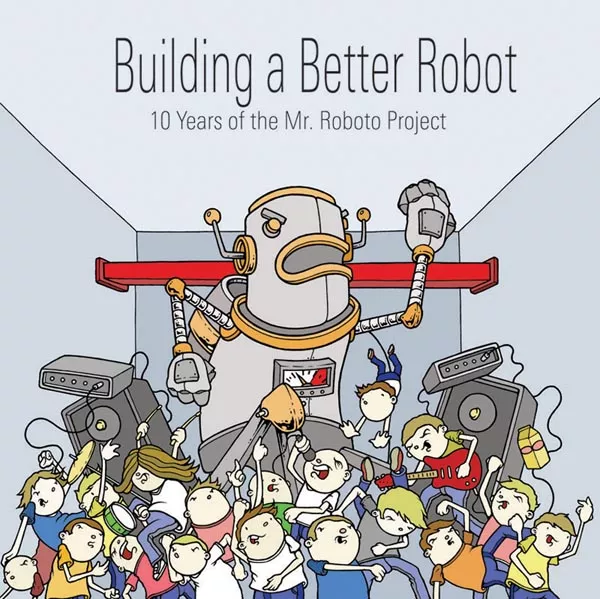
But Roboto was “more than just a venue. It’s a community of people who give a fuck,” Max Gregg, of the band Allies, says in Better Robot. Thanks to its radical, community-building ethos, Roboto changed Pittsburgh in nonmusical ways, too. In an adjacent space staffed by some of the same folks, for instance, were born the Free Ride bike co-op and the Big Idea bookstore, both still thriving in other locations. Roboto also birthed a lively, often contentious online message board, now independent of the venue and called Never Tell Me the Odds.
Building a Better Robot is a self-published, large-format paperback, created by Roboto stalwarts Roth, Andy Mulkerin and Missy Wright, with funding from the Sprout Fund. Mulkerin, who is City Paper‘s music editor, wrote the even-handed prose documenting Roboto’s history. Five Roboto regulars contribute short essays, and there’s a brief roundtable by four female Roboto members about gender issues in the male-dominated scene.
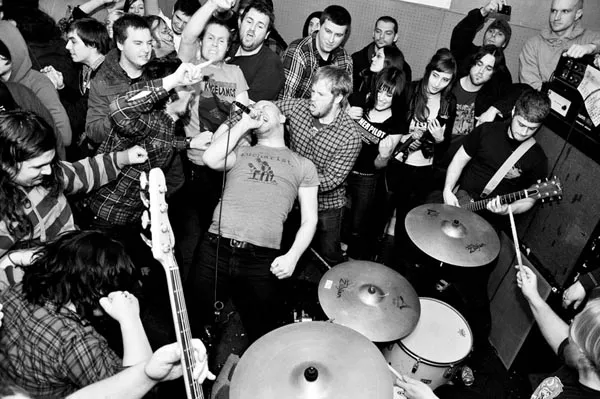
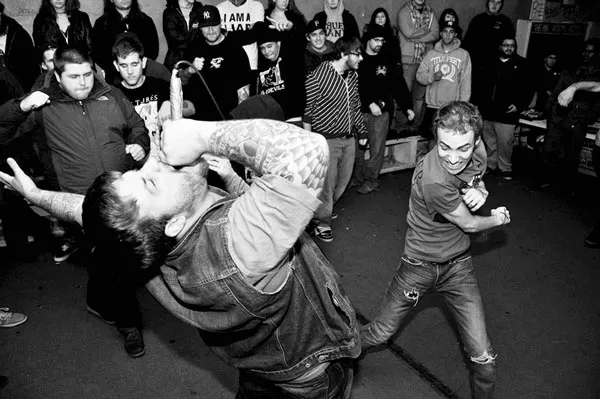
Meanwhile, some 130 of the book’s 192 pages are devoted to photos, mostly of concerts. These churning arrays of circle-pitters, fist-pumpers and flying-leapers were captured by photographers including Wright, Shawn Brackbill and Tanner Douglass. Accompanying the photos are oral-history testimonies recalling everything from great and terrible shows to Roboto’s legendary iced-tea-chugging contests. Also included: a DVD featuring songs (and some video) by 37 local bands that played Roboto.
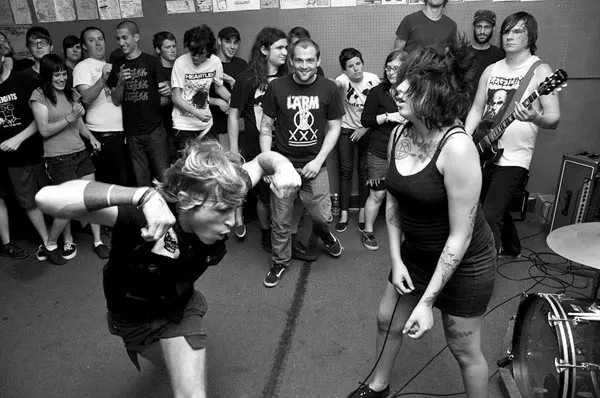
What the photos might communicate best is the egalitarian nature of a venue that didn’t even have a stage: Often, it’s hard to tell the band from the audience, with both blending in the guitars-and-drums ruckus. As Ian Ryan puts it, “I feel like often the crowd was there to entertain the bands just as much as the bands were there to entertain the crowd.”
Roboto closed in 2010, by which time it was competing with several more centrally located venues booking similar music. Last fall, a new incarnation opened on Penn Avenue, in Bloomfield. As Doug Mosurock writes in the book’s forward: “The Mr. Roboto Project was then, and is now, a symbol of what can be done when you have a small group of people united behind a common cause.”
This article appears in Feb 1-7, 2012.
whats up with the profanity
^ fuck off, jim
Historical addendum:
The concept of Roboto emerged out of the (now long gone) Oakland house show scene (influenced by legendary punk venues like SF’s Gilman Street). But meanwhile during the 90s
across the US, a network of non-punk-specific DIY art/show spaces already existed. Some are still around today, such as
the Flywheel in Easthampton MA, The Red Room in Baltimore,
Eyedrum in Atlanta, Soundlab in Buffalo, Lemp Arts in St. Louis, and Solar Culture in Tucson.
That network (plus the existence of previous Wilkinsburg DIY
spaces Sonic Temple & Turmoil Room, ten years before Roboto)
inspired the already DIY, more “centrally located” Millvale Industrial Theater, which was already in full swing for two years
(and could match every Bright Eyes with several Will Oldhams)
when Roboto opened, partially in reaction to it. Founders Roth and Meisberger even stated in 1999, before opening Roboto, that the MIT was unacceptable to their philosophy because it was not “community run” (to paraphrase).
So there was already more than bars and basements. And during
the time that Roboto was open in Wilkinsburg, a plethora of other DIY venues continued to operate in Pittsburgh, up until this day.
Contemporary objection:
“And the venue’s success arguably inspired Pittsbugh’s new wave of small, independent, often non-bar music venues.”
Exactly how would one argue that? The exact opposite is far more apparent. Every current small venue in Pittsburgh was inspired by something other than Roboto: 1) trends and
conditions that existed before Roboto (like the DIY art space
and house show scenes), 2) motivations both personal and artistic that have nothing to do with Roboto (but may be in some ways competitive with Roboto’s philosophy), and 3) simultaneous cultural trends bubbling during Roboto’s first decade (ultimately having more cultural impact than Roboto’s “inclusive yet insular” approach did).
Of course Roboto had a sizeable impact, but it was not as disproportionately large as the writer might have one believe. If it had, there wouldn’t be all of these other forces in Roboto’s own hometown, trying to do things differently than it does – many within the range of a few short blocks. Call it the Pittsburgh scene’s own “fiefdom principle.”