
Deprecated: mb_convert_encoding(): Handling HTML entities via mbstring is deprecated; use htmlspecialchars, htmlentities, or mb_encode_numericentity/mb_decode_numericentity instead in /var/www/html/wp-content/plugins/super-cool-ad-inserter/inc/scaip-shortcode-inserter.php on line 37
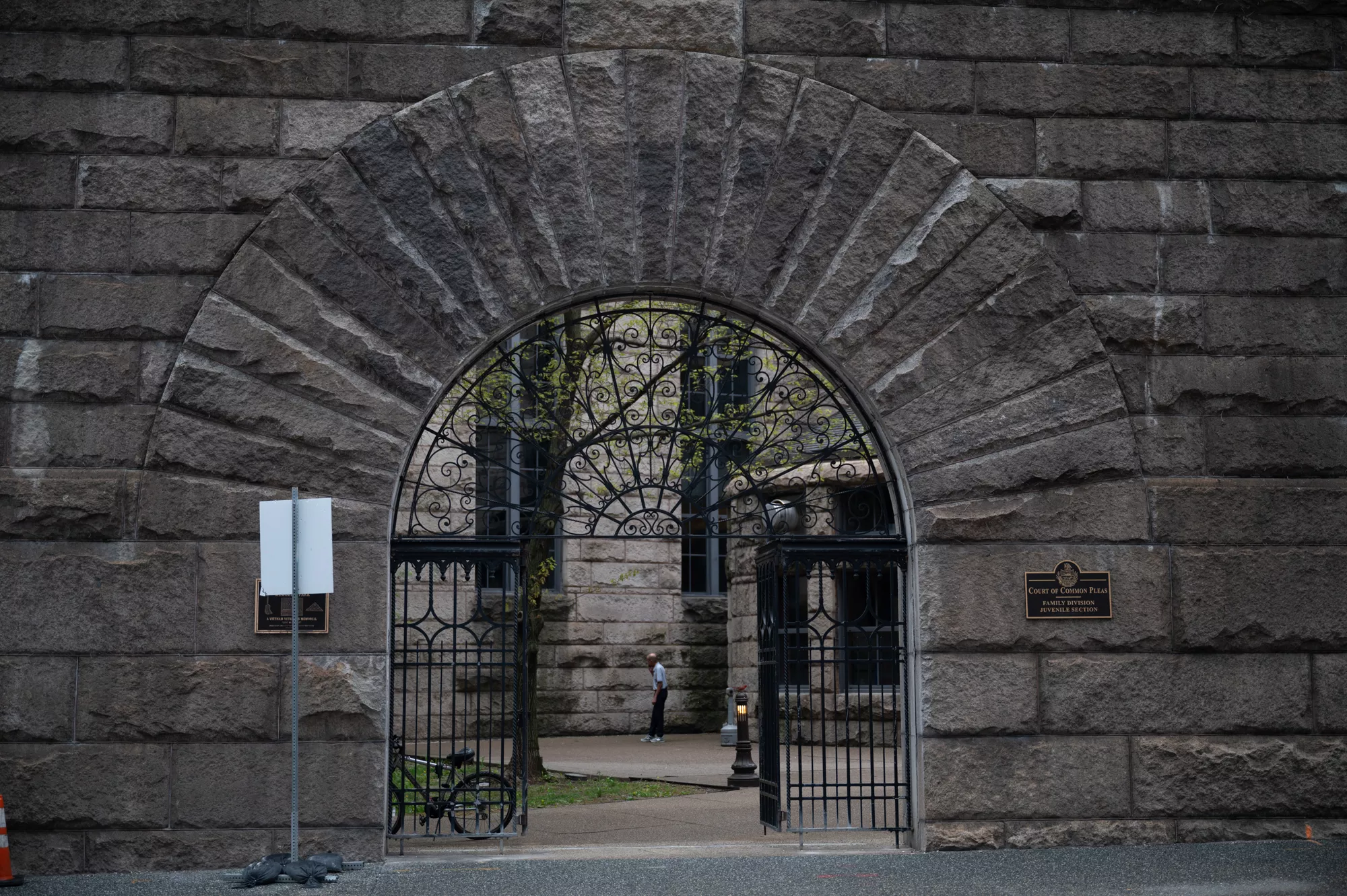
Your average voter probably doesn’t have the Judge of the Court of Common Pleas primary election on their radar, and what makes the situation tougher this cycle is that there are 22 candidates from whom to pick on May 20. However, several political, activist, and labor groups have endorsed slates of eight preferred candidates — the maximum a voter can support.
Court of Common Pleas judges, who serve renewable 10-year terms and have a salary of about $231,000 a year, preside over cases concerning child custody, divorce, evictions, employment disputes, and more. Of the 22 candidates, 16 filed as only Democrats and six filed as both Democrats and Republicans. In addition to the ratings given by the Allegheny County Bar Association (ABCA), Pittsburgh City Paper reviewed the endorsement slates of four different groups, all of which chose eight candidates to support:
-
A coalition of progressive organizations, including 1Hood Power, Pennsylvania Working Families Party, Pennsylvania United, Unite PAC, Straight Ahead, OnePA, and Alliance for Policy Accountability
-
The Allegheny-Fayette Central Labor Council, part of the national American Federation of Labor and Congress of Industrial Organizations (AFL-CIO)
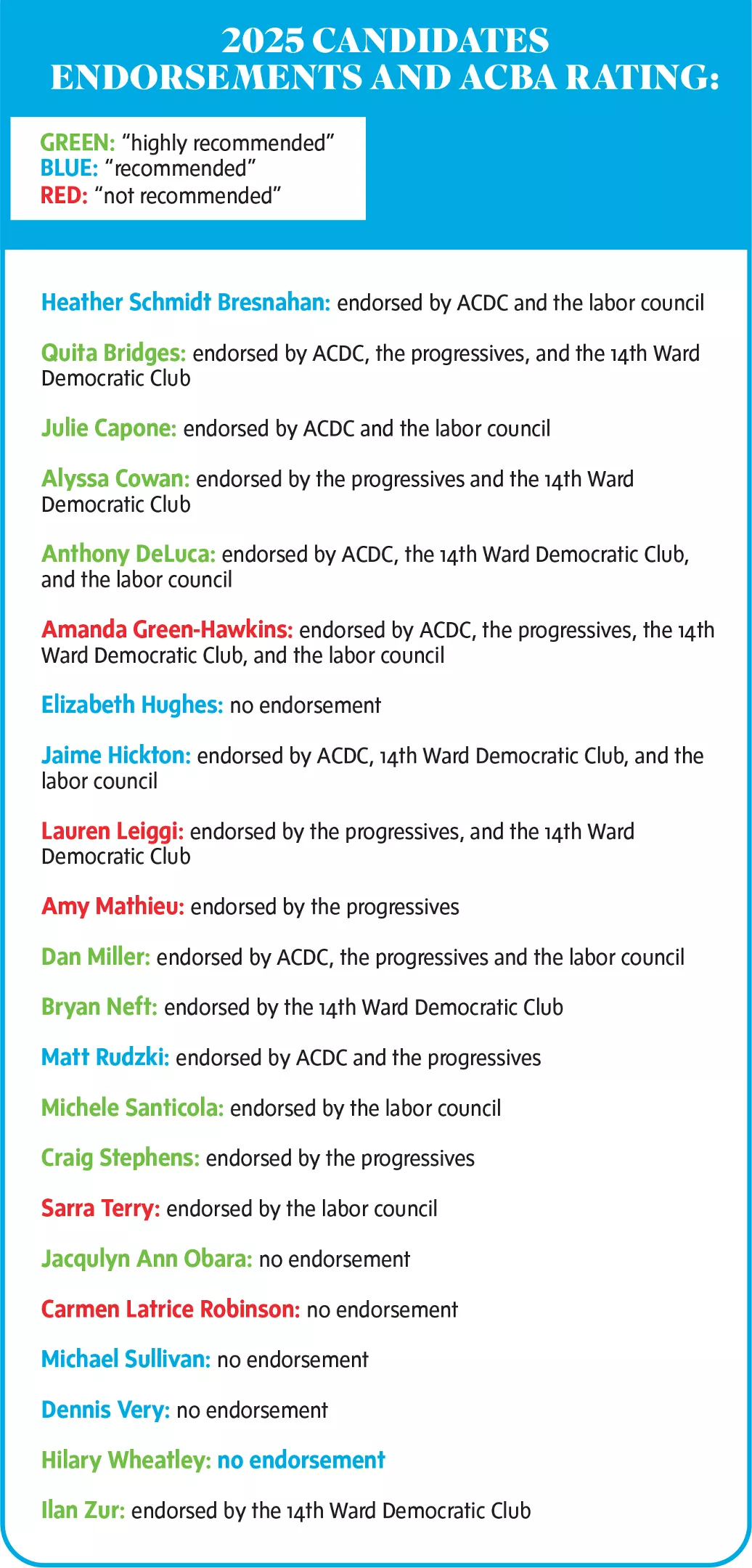
ACDC, perhaps the most sought-after endorsement, didn’t pick any candidate that at least one other group didn’t also pick. The progressive coalition, the 14th Ward Independent Democratic Club, and the Allegheny-Fayette Central Labor Council each chose two candidates that no other group endorsed. The Allegheny County Bar Association rated each candidate but didn’t exactly endorse anyone: 11 come highly recommended, six recommended, and five not recommended.
The only candidate all four groups unanimously agreed on, Amanda Green-Hawkins, an attorney with more than two decades of experience and ties to both AFL-CIO and Pittsburgh United, in addition to a slew of other Democratic and left-leaning organizations, comes “not recommended” by ACBA. ACBA interviewed all 22 candidates and looked for qualities such as experience, reputation, integrity, temperament, citizenship and competence, according to a press release.
“One of our most critical functions as a bar association is to help educate the citizens of Allegheny County so they can make informed decisions when casting votes for those running for judge,” said ACBA President Regina Wilson in the press release. “This is an important duty that our Judiciary Committee takes very seriously. We encourage all Allegheny County residents to use this information to vote with confidence.”
ACBA doesn’t have a political agenda, but because these candidates are democratically vying for public office, the position becomes, in part, inherently political, making way for endorsements by political groups.
About 1,400 ACDC committee members attended an endorsement voting process at the Pittsburgh Federation of Teachers on March 9, according to chair Sam Hens-Greco. To win the endorsement, the judges only needed to win a plurality of votes, but the top two received a majority of votes, he tells City Paper. Many only voted for one candidate.
“Anybody who is running for judge has accomplished a lot … individually, what different work that they do, what will they bring to the bench, those are all things committee members and voters have to weigh,” says Hens-Greco.
The various groups in the progressive coalition gathered in person to interview the 16 candidates who chose to fill out a questionnaire from the Working Families Party. They asked what justice means to them, examples of implementing justice throughout their careers, how they learn about and respect people in the courtroom and more, according to 1Hood Power’s legislative director Miracle Jones. At the end of the interviews, the groups gathered to compare scores and impressions and choose the endorsed candidates. Amy Mathieu and Craig Stephens received endorsements from the progressive coalition but not the other three groups.
“What makes our slate a little bit different than other organizations is that we look at what people’s past track record has been,” Jones says.
Mathieu stood out for her LGBTQ advocacy, as well as her experience representing victims of sexual violence, according to Jones. Jones believes that Mathieu being a newer attorney affected her ACBA rating. Stephens, who has dealt frequently with children through work with the Family Division and Mental Health Unit of the Orphans’ Division for Allegheny County, stood out for recognizing that magistrates have a lot of power in sending kids down paths of incarceration, according to Nichole Remmert of 1Hood Power.
The 14th Ward Democratic Club held a vote by members who are also Democrats in the 14th Ward. Candidates need at least 40% of the vote to be endorsed, and the club uses ranked choice voting to whittle down to eight winners, according to president Mac Booker.
“Court of Common Pleas is kind of a bread-and-butter area for the club, and that’s because, when you talk about say the mayor’s race, there’s a lot of information out there about the candidates in the mayor’s race … but we recognize that’s not where we make the biggest difference,” Booker says. “Where we make the biggest difference are the races where it’s harder for people to get information.”
The club endorsed Bryan Neft and Ilan Zur, unlike the other three groups. Booker praised Zur for his experience as a prosecutor, familiarity with the Court of Common Pleas and dedication for “making sure criminal prosecutions are fair not only to victims, but also to the accused.” He also similarly praised Neft for his experience with the Court of Common Pleas and active presence in the local legal and political community.
“It’s no surprise to me that those candidates were [s]elected,” says the club’s endorsement VP Lynda Wrenn. “They’re both seasoned attorneys with great reputations.”
The labor council, which could not be reached by City Paper by press time, “has evaluated the candidates based on the issues that impact workers, and we believe that these candidates are the right choice for Allegheny County,” according to its endorsement page.
Its standout candidates not endorsed by the other three groups are Sarra Terry and Michele Santicola. Terry, endorsed by Planned Parenthood Pennsylvania Advocates (which also endorsed Hickton and Miller), has worked as a judicial law clerk and defense attorney. Santicola served for 10 years as a Deputy Attorney General, worked as a defense attorney in private practice and was elected Magisterial District Judge serving areas such as Moon and Coraopolis, according to her website.
It’s far likelier for a voter to be informed and opinionated about, say, the mayoral primary election, but the Court of Common Pleas, all groups agree, always proves important and influential. And, because historically the Court of Common Pleas primary has low turnout, it may be even more enticing to participate, according to the ACDC chair.
“Your vote is even more powerful, because you’re one of such a smaller pool of voters,” Hens-Greco says.
Editor’s note: This above copy has been updated May 1 to distinguish between 1Hood, a 501(c)(3) organization, and 1Hood Power, a 501(c)(4), and better reflect Wrenn’s title.
This article appears in Apr 30 – May 6, 2025 and Election Guide (Early 2025).