


Deprecated: mb_convert_encoding(): Handling HTML entities via mbstring is deprecated; use htmlspecialchars, htmlentities, or mb_encode_numericentity/mb_decode_numericentity instead in /var/www/html/wp-content/plugins/super-cool-ad-inserter/inc/scaip-shortcode-inserter.php on line 37
At this time of year, everyone who runs a news outlet of any kind has been busy preparing some sort of year-in-review package. We’ve done the same, of course, but were initially stymied on how exactly to proceed. First off, what passes for news nowadays can make your head spin, with stories about “celebrities” like Kanye and Kim dominating our news feeds. Secondly, in the past we have tried to be all-encompassing by listing every notable news event in Pittsburgh from the previous year. But others will do that, and we questioned whether it really fit our style.
While we spent time last year covering some big or breaking news events, we mainly focused on events that we thought our readers cared about, and tried to take a different angle on them. We also tried to give in-depth coverage to stories that no one else was telling. So we compiled a list — checked seven or eight times — of the top City Paper stories of 2015. We then voted on our top 10, which you will find below.
But first, I wanted to mention some of the stories that didn’t make this list but are still worth noting, talking about and going back to read if you haven’t already. There was Rebecca Nuttall’s piece about Shawn Burton, a man serving time in prison for a crime that others have come forward to say he didn’t commit; Bill O’Driscoll’s coverage of the layoffs and eventual leadership turnover at the venerable Pittsburgh Filmmakers; our Fulbright Fellow and amazing summer intern Jessica Hardin’s story on the importance of making Narcan available to combat heroin overdoses was some of the earliest local in-depth coverage of the drug; and Nuttall’s story on the health dangers of hospital disinfectant Oxycide was the first major piece on the topic written in the country.
As we move into 2016, ready to cover a whole new batch of stories, here’s a look back at our top 10.
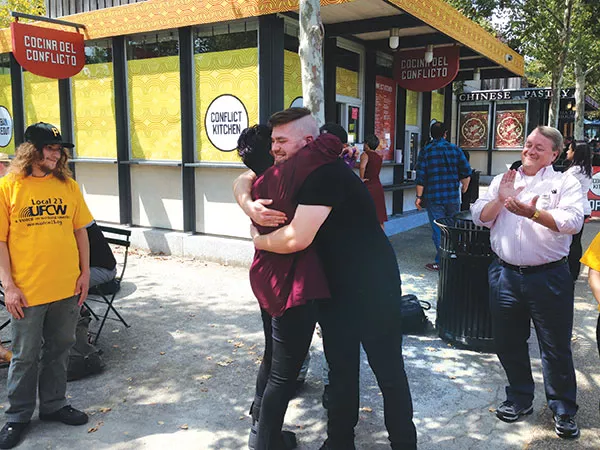
10. The fight for workers’ rights
This year has seen ups and downs for the city’s labor movement. While nearly 2,000 workers at Allegheny General Hospital voted to unionize this summer, UPMC workers say they continue to struggle. On a smaller scale, 59 grocery workers at the East End Food Co-op and 15 restaurant workers at Conflict Kitchen, in Oakland, voted for and negotiated union contracts. Meanwhile, protests and rallies around town localized the national call for a $15-an-hour minimum wage. And local and regional politicians have done their share of playing to those constituents. Campaigning for U.S. Senate, Katie McGinty stopped here to galvanize Fight for $15 voters; Mayor Bill Peduto touted his $15/hour minimum wage for city workers; and last month, Pittsburgh City Councilor Ricky Burgess asked his colleagues to declare support for a wage hike to $15. Along with a higher minimum wage, city workers also received paid parental leave this year. (Some county workers got that in late 2014.) But that’s not happening for non-city workers. And city council handily passed a paid-sick-days bill for all workers within city limits in August — only to face a lawsuit from small businesses, and then watch as an Allegheny County judge struck down the law as “unenforceable.” Though still trying to claim a moral victory, the city says it will not fight the ruling further.
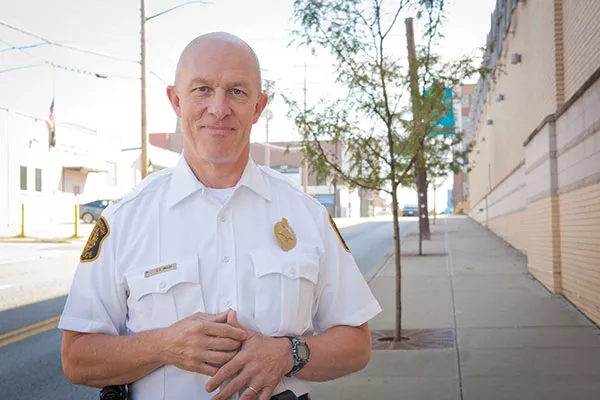
9. Police Chief Cameron McLay makes an impact
The year started off with a bang for Pittsburgh’s new Police Chief Cameron McLay when he was photographed during Downtown’s First Night festivities with a sign that read, “I resolve to challenge racism @ work. #endwhitesilence.” Though it technically happened last Dec. 31, it set the tone for McLay’s 2015.
McLay spent the year focused on community-policing initiatives in an effort to increase trust between the police and city residents following several high-profile cases of alleged police brutality and misconduct that occurred before his tenure and secured Pittsburgh a spot in the federal community-policing initiative. He also began training officers in implicit bias to reduce racial profiling.
In an effort to reduce crime, McLay reorganized the police bureau to better target violent crime, specifically by combining the robbery and homicide squads into one Violent Crime Unit. He also has set the wheels in motion to implement a violence-reduction strategy previously referred to as the Pittsburgh Initiative to Reduce Crime. Despite his efforts, the city saw a spike in violent crime this summer. But unlike in years past, the goodwill McLay brokered kept the community from blaming him and instead led people to ask how they could help. As the year ended, McLay vowed to completely investigate the conduct of city officers involved in a fracas outside the Wood Street T Station in December, in which a teen girl was pushed by an officer wielding a baton.
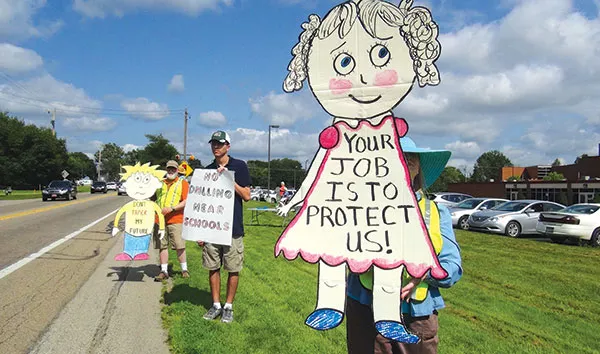
8. Fracking near Mars High School
This year, parents in Mars Area School District organized to shut down an unconventional natural-gas drilling, or “fracking,” site less than a half-mile from their children’s school. Four residents and two environmental organizations filed suit against Middlesex Township for allowing fracking in nearly 90 percent of the community. In 2013, the state Supreme Court ruled that municipalities had the power to regulate where drilling can happen through zoning laws. Fearing this could open the floodgates for municipalities acting as Middlesex Township has, the two environmental groups joined the parents’ efforts, arguing based on property rights and invoking the state’s Environmental Rights Amendment, which says residents “have a right to clean air, pure water, and to the preservation of … the environment.” A judge issued a stay on work at the Rex Energy site located on private land behind a school campus attended by more than 3,000 students. This past November, however, the residents and organizations lost the case in the Butler County Court of Common Pleas. Operations have resumed at the multi-well site, and parents told CP that they’re concerned. Maya Van Rossum of the Delaware Riverkeeper Network, one of the environmental groups involved, says her organization will appeal. “This is a very important precedent-setting case,” she says. “We think a higher court review is necessary.”
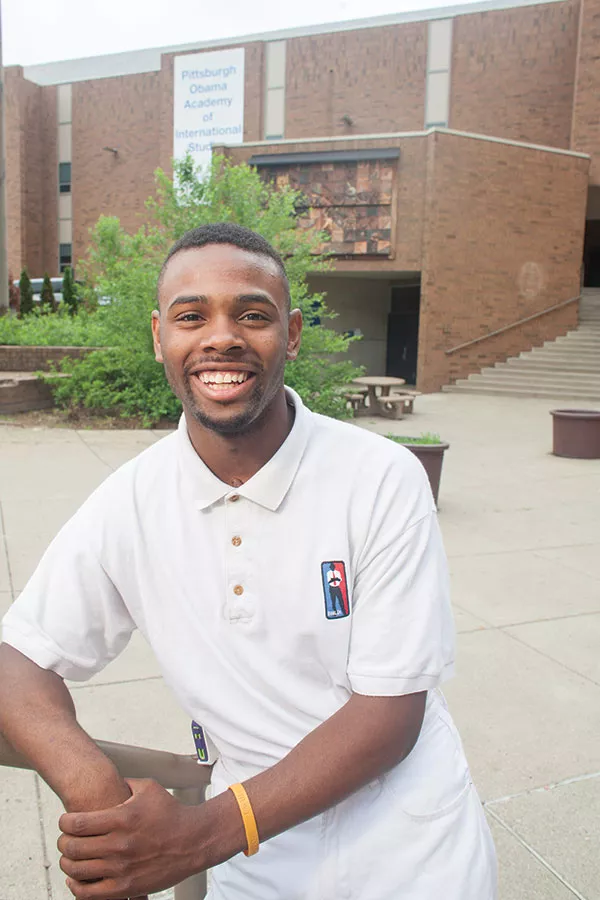
7. Black males and the Pittsburgh Promise
Few CP stories this year garnered as much mixed feedback as did one looking at why so few black males are receiving the Pittsburgh Promise scholarship. The story pointed to the very stark fact that black males (who make up more than 25 percent of the Pittsburgh Public Schools student body) make up just 13 percent of Promise recipients. The piece didn’t question the good work of the program, or how it’s responsible for getting more kids into college. It merely pointed out that the district must do better in aiding these young men, who already face obstacles in life that other students don’t face, in getting this potentially life-changing benefit. And while the story was attacked, called sensationalist and belittled by the Promise’s own executive director, there was one claim that critics couldn’t make: that it wasn’t true.
6. Medical Marijuana
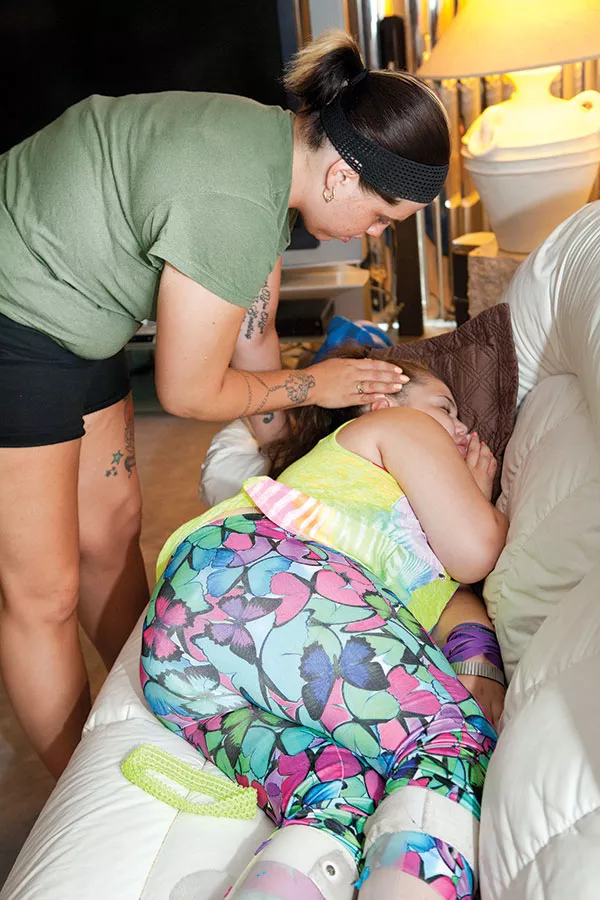
This was the year that medical-marijuana proponents expected the long-debated medication to be legalized. And for a while it looked like it might happen. In September, CP obtained an early copy of a bipartisan list of recommendations that was meant to move a bill forward. While the resulting bill wasn’t as strong as some had hoped, it still brought a reasonable level of legalization to the Commonwealth. But then two things happened. First, the state failed (and is still failing) to pass a budget, which put most other major business on hold. Second, a group of Republicans tacked on more than 100 amendments to proposed legislation that basically cut the guts out of the bill. As CP reported in June, most of the arguments against legalization are based on debunked science and paranoia. In July we told you the story of Jessica Hawkins, just one local mother who has decided to defy the law and give her sick child the medication anyway. Thanks to a December vote by Pittsburgh City Council to decriminalize marijuana, medical-marijuana users won’t necessarily face long prison sentences if they’re ever caught.
5. Pittsburgh Pride Protests
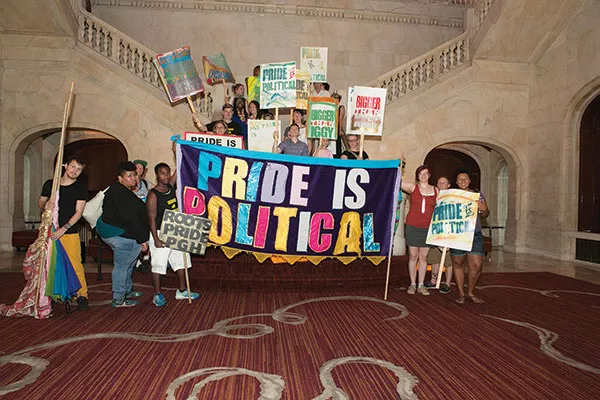
When the Delta Foundation of Pittsburgh announced in June that rapper Iggy Azalea would headline Pride in the Streets, Pittsburgh’s largest LGBT festival, all hell broke loose. Backlash was instantaneous from the LGBT community, with many citing Azalea’s social-media posts that many considered racist and homophobic. A boycott of the event formed, and even Pittsburgh City Council President Bruce Kraus, the city’s first openly gay politician, joined the masses of angry supporters.
Azalea cancelled her appearance and was replaced a few days later by Nick Jonas. But the damage was done, and the anger brewing inside some members of the LGBT community finally erupted.
Protests ensued against the Delta Foundation, the area’s largest LGBT organization, and the alternative festival Roots Pride was formed. Roots Pride called for inclusivity of queer and trans people of color, something advocates felt was glaringly absent at the Delta Foundation and its events. And while Roots gave a voice to LGBT folks who felt excluded, it remains unclear whether Delta has adopted any new inclusionary principles as a result, given that Delta and Roots have yet to have a thorough discussion.
But some hope that the pro- and anti-Delta campaigns stop, and that supporters and funders look at every LGBT organization in the region and spread the love evenly.
4. State Supreme Court Race
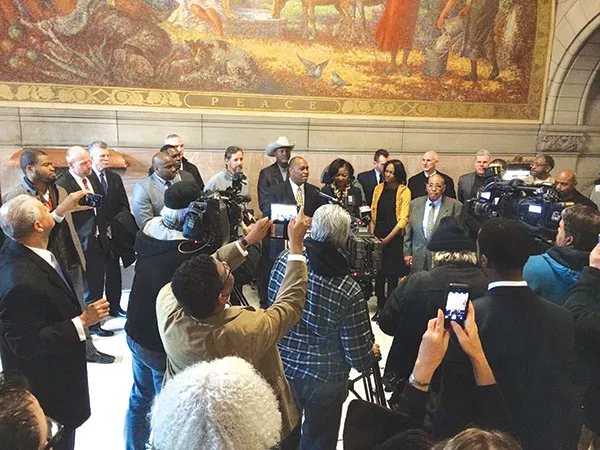
This year marked an important election for Pennsylvania: For the first time in history, three seats on the state Supreme Court were up for grabs at one time. The justices will have final say on a wide range of legal issues, as well as on reshaping state house, state senate and U.S. Congressional districts.
The openings were the result of ethics controversies that forced two justices to vacate their seats. Former Justice Joan Orie Melvin was convicted in 2013 for using legislative and judicial staff for campaign work. And in 2014, Justice Seamus McCaffery resigned after he was linked to the statewide pornographic-email scandal. In January, Justice Ronald Castille took mandatory retirement after reaching age 70.
“It’s probably going to have the biggest long-term impact of any race out there,” said Sam Hens-Greco, chair of the 14th Ward Democratic Committee, one of many groups that spent the year educating voters on the importance of the election.
More than a dozen Democrats, Republicans and even an Independent stepped forward to claim the empty seats. After the votes were tallied, three Democrats, Christine Donohue, Kevin Dougherty and David Wecht, emerged as the victors.
This race was also marked by another milestone: With spending totaling $15.8 million, it was the most expensive judicial election in U.S. history.
3. Coverage of Transgender Rights
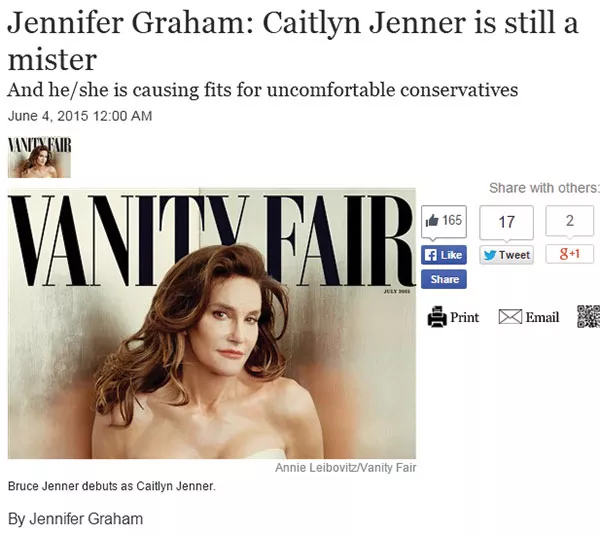
Civil rights for transgender individuals were thrust into the national limelight this year after Olympic gold-medal-winning athlete Bruce Jenner transitioned to Caitlyn Jenner and was subsequently awarded the Arthur Ashe Courage Award at ESPN’s ESPY Awards.
Jenner also created a buzz locally when a Pittsburgh Post-Gazette assistant editor, Jennifer Graham, wrote an op-ed with a headline that included the words “Caitlyn Jenner still a mister.” The piece was widely criticized by the LGBT community, and City Paper criticized the piece’s incorrect usage of gender pronouns and the author’s position that others should do the same when referring to Jenner. Graham is no longer on staff at the P-G. CP also announced that it would be using “they” as a singular pronoun for individuals not identifying with a particular gender.
Earlier this year, the battle to improve transgender rights was also being fought at the state level, where LGBT health-care advocates fought to have transition-related care included under Medicaid coverage. And more recently, the U.S. Department of Housing and Urban Development detailed further protections for trans men and women in its housing guidelines. However, despite these efforts, changes have not been made to Medicaid, and trans individuals are still being turned away from homeless shelters.
But the city also saw a small victory of its own this year when, in October, the Pittsburgh Bureau of Police welcomed its first transgender officer to the force.
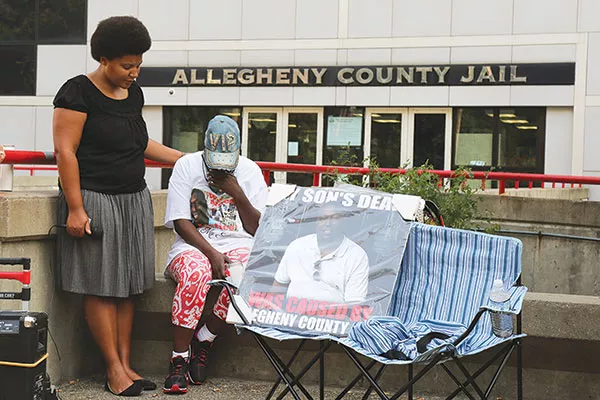
2. Allegheny County Jail Health Care
In May, two inmates died on the same day inside the walls of the Allegheny County Jail. To an outsider, this might seem a freak occurrence, but those paying close attention knew it was the culmination of two years of oft-criticized health services by the jail’s health-care provider, Corizon.
The Tennessee-based for-profit company’s tenure saw the deaths of 11 inmates, which is twice the average at jails across the country. Even more disconcerting, according to a county audit, was that those deaths occurred with inmates spending an average of only 58 days in confinement.
In May, Allegheny County Executive Rich Fitzgerald announced that Corizon’s contract would not be renewed. In September, the county took jail health-care management in house, with doctors provided by Allegheny Health Network (and increased the jail’s health-care budget for 2016 by $3 million, or 25 percent). Since then, there have been no inmate deaths.
But some are still not satisfied. Advocates at the Allegheny County Jail Health Justice Project believe that some culpability for the 11 deaths lies with county officials, and the group is calling for the firing of warden Orlando Harper. Julia Johnson, of the Justice Project, believes treatment of inmates will improve only if those in charge are held accountable.
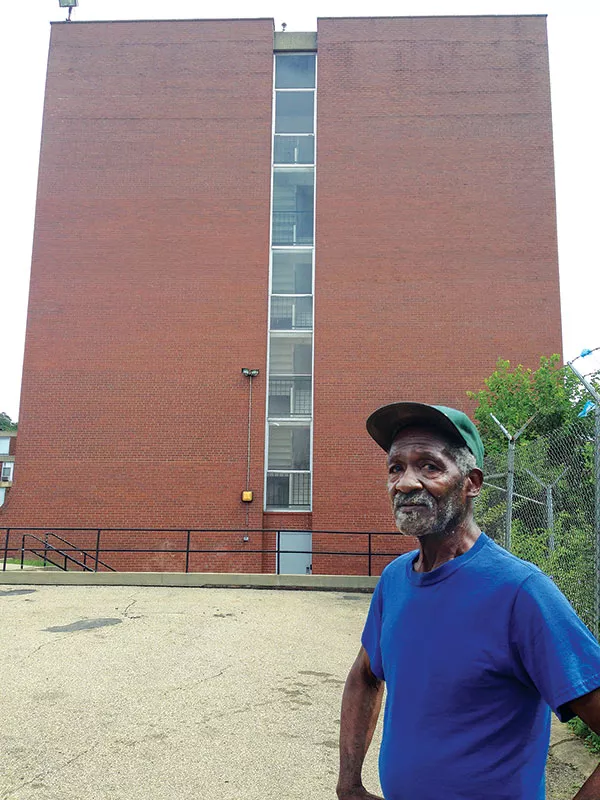
1. Affordable Housing in Pittsburgh
For the past few years, low-income housing has been especially hard to find. Many residents can’t find landlords willing to accept Section 8 housing vouchers, and waitlists at subsidized units are up to five years long in some areas. So low-income residents are moving farther and farther out of the city, and the toll on the city’s African Americans is especially stark. From 2000 to 2010, Pittsburgh lost 13,000 African-Americans residents, while Penn Hills, a suburb just east of the city, has gained more than 4,000 black residents.
As a result, low-income and African-American communities have grown increasingly anxious over the years. Those anxieties came to a head when 90-day eviction notices were issued in July for 200 households occupying the Penn Plaza Apartments in East Liberty. The 312-unit complex was one of the last rental complexes with non-subsidized affordable rents in the neighborhood, which is growing more popular (and expensive) thanks to luxury apartments, big-box stores, and Google moving in nearby.
As a result of the Penn Plaza crisis, Mayor Bill Peduto created a special East Liberty affordable-housing fund and Pittsburgh City Council began to hold regular meetings for its Affordable Housing Task Force. But whether serious and swift action is actually being taken is up for debate. Pittsburgh needs more than 21,000 permanently affordable units to serve its poor population. But of the more than 8,000 units slated for development, experts say only about 3 percent are affordable.
This list was compiled and written by Charlie Deitch, Ryan Deto, Ashley Murray and Rebecca Nuttall
This article appears in Dec 30, 2015 – Jan 5, 2016.