
Deprecated: mb_convert_encoding(): Handling HTML entities via mbstring is deprecated; use htmlspecialchars, htmlentities, or mb_encode_numericentity/mb_decode_numericentity instead in /var/www/html/wp-content/plugins/super-cool-ad-inserter/inc/scaip-shortcode-inserter.php on line 37
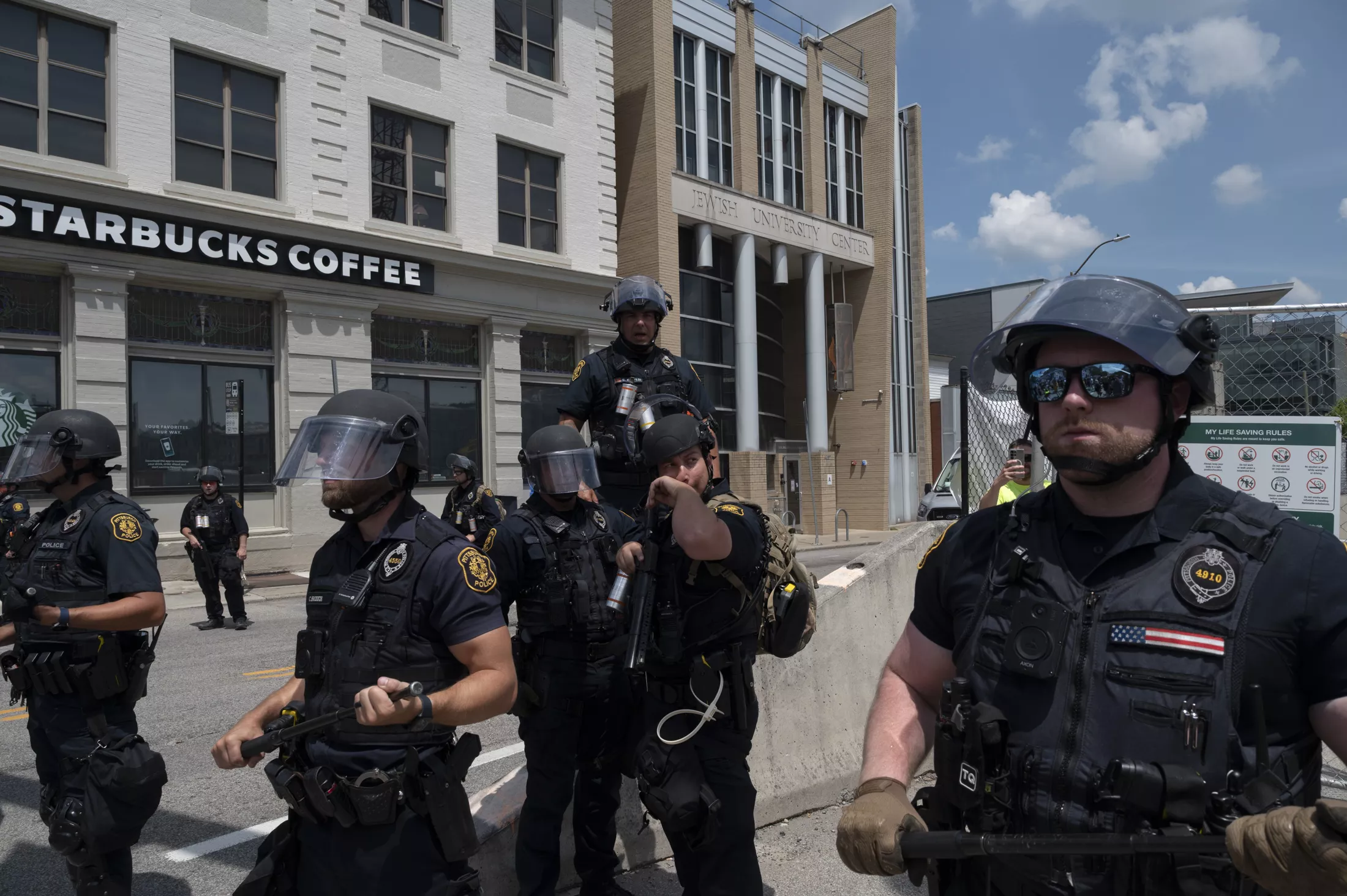
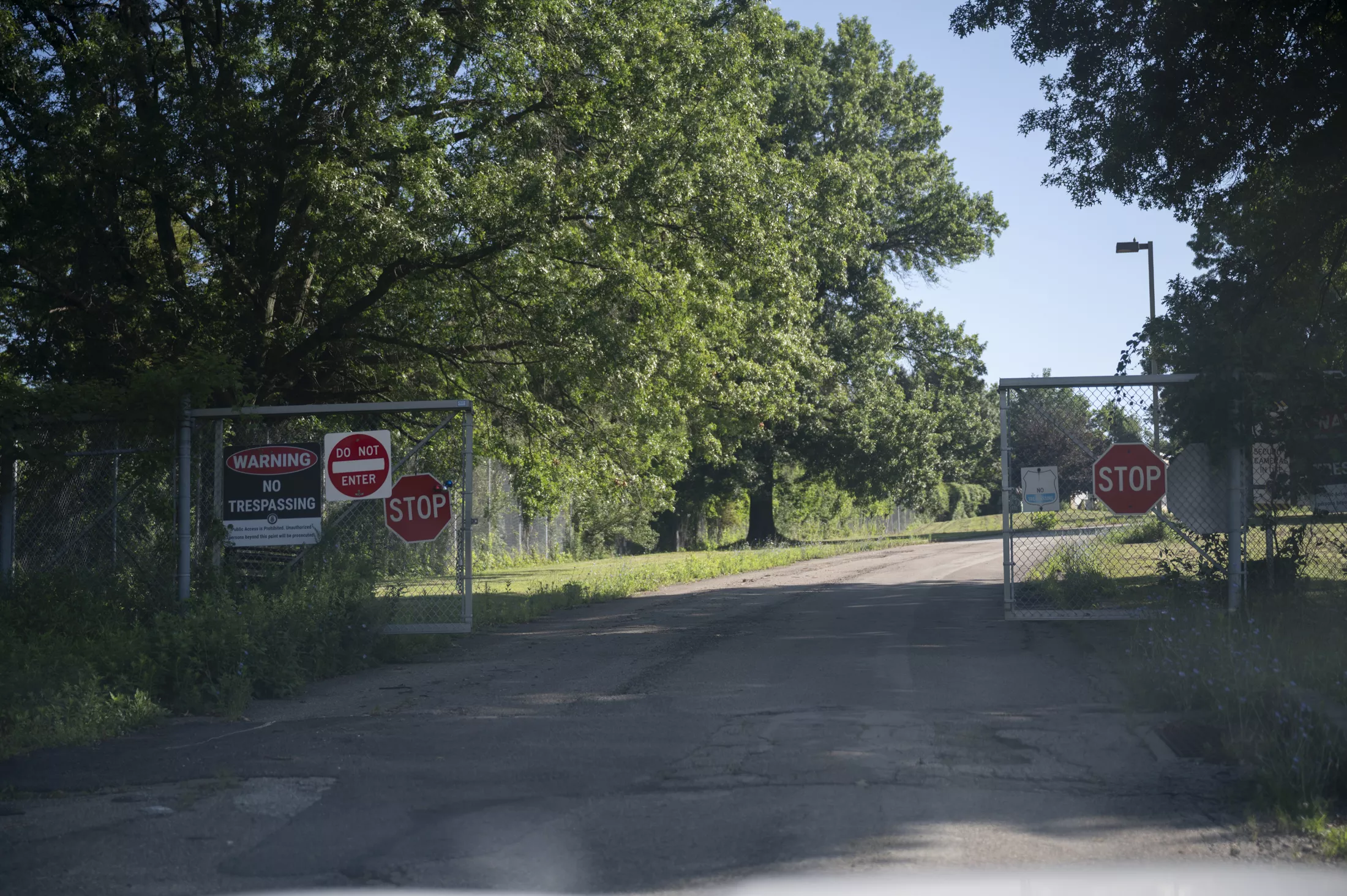
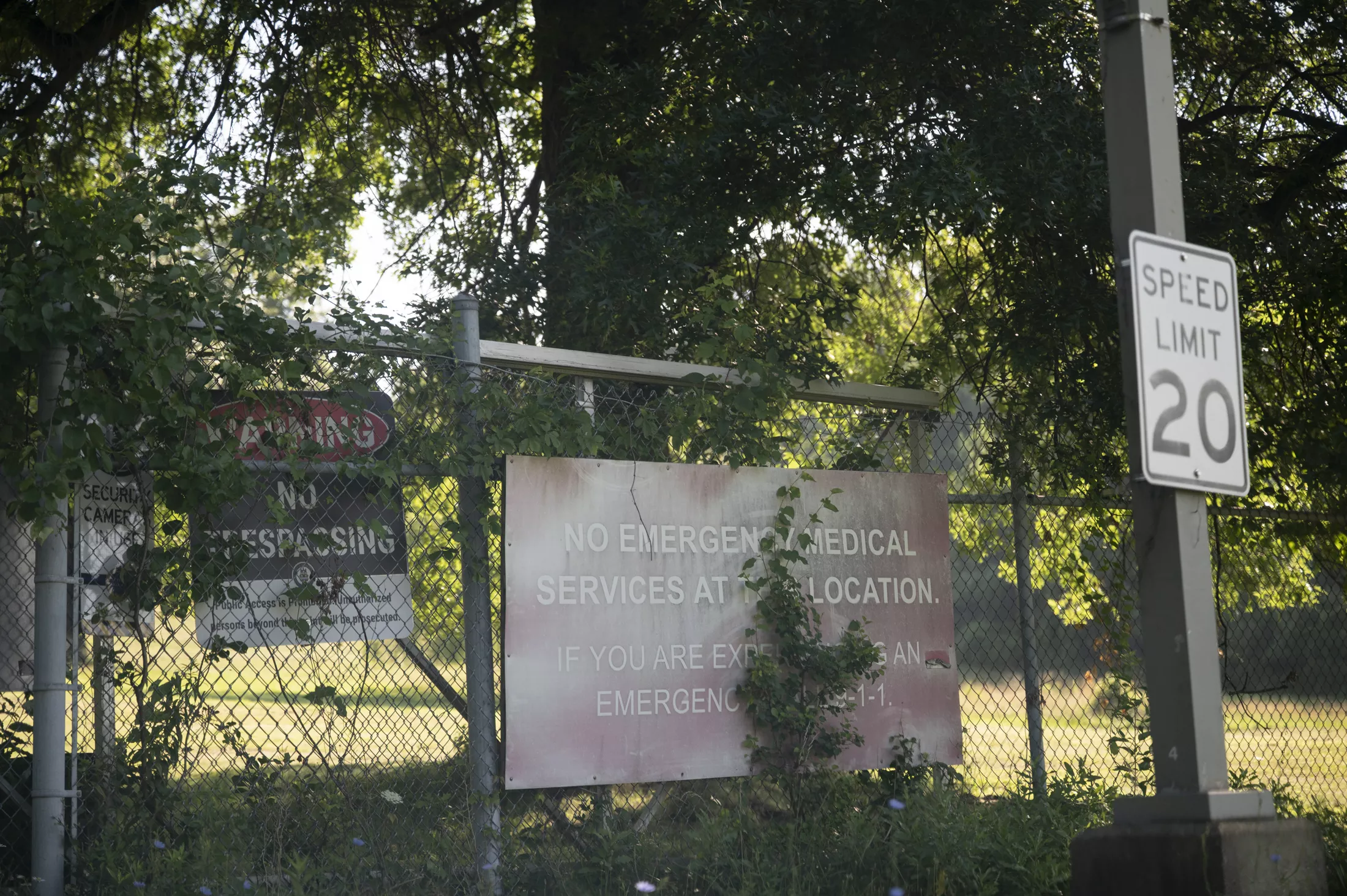
On a mid-July afternoon in Pittsburgh’s Lincoln-Lemington neighborhood, at the crest of Highland Drive and pinched between a U.S. Army Reserve Center and the Southwestern Veterans Center, is a sprawling fence guarding a complex some worry could become Pittsburgh’s “Cop City.”
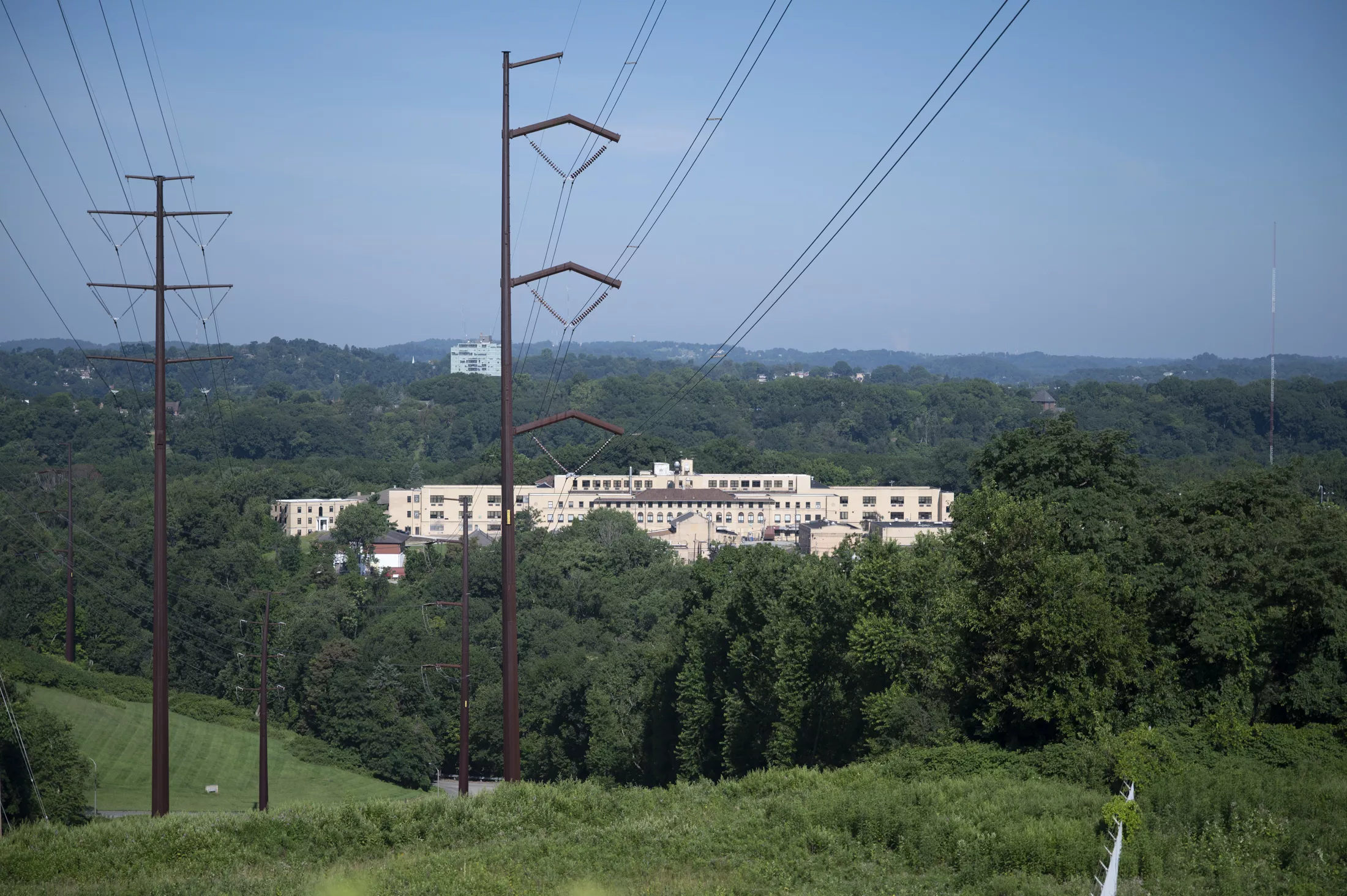
The fence, marked distinctly by several signs that read “No Trespassing,” covers the entire roughly 70-acre perimeter of the old Veterans Administration Hospital, where, in 2019, former Pittsburgh Mayor Bill Peduto proposed reconfiguring it into a center for all things public safety.
The hospital was purchased by Peduto’s administration from the GSA in 2021 — at the behest of both FEMA and the DOJ — for $1.
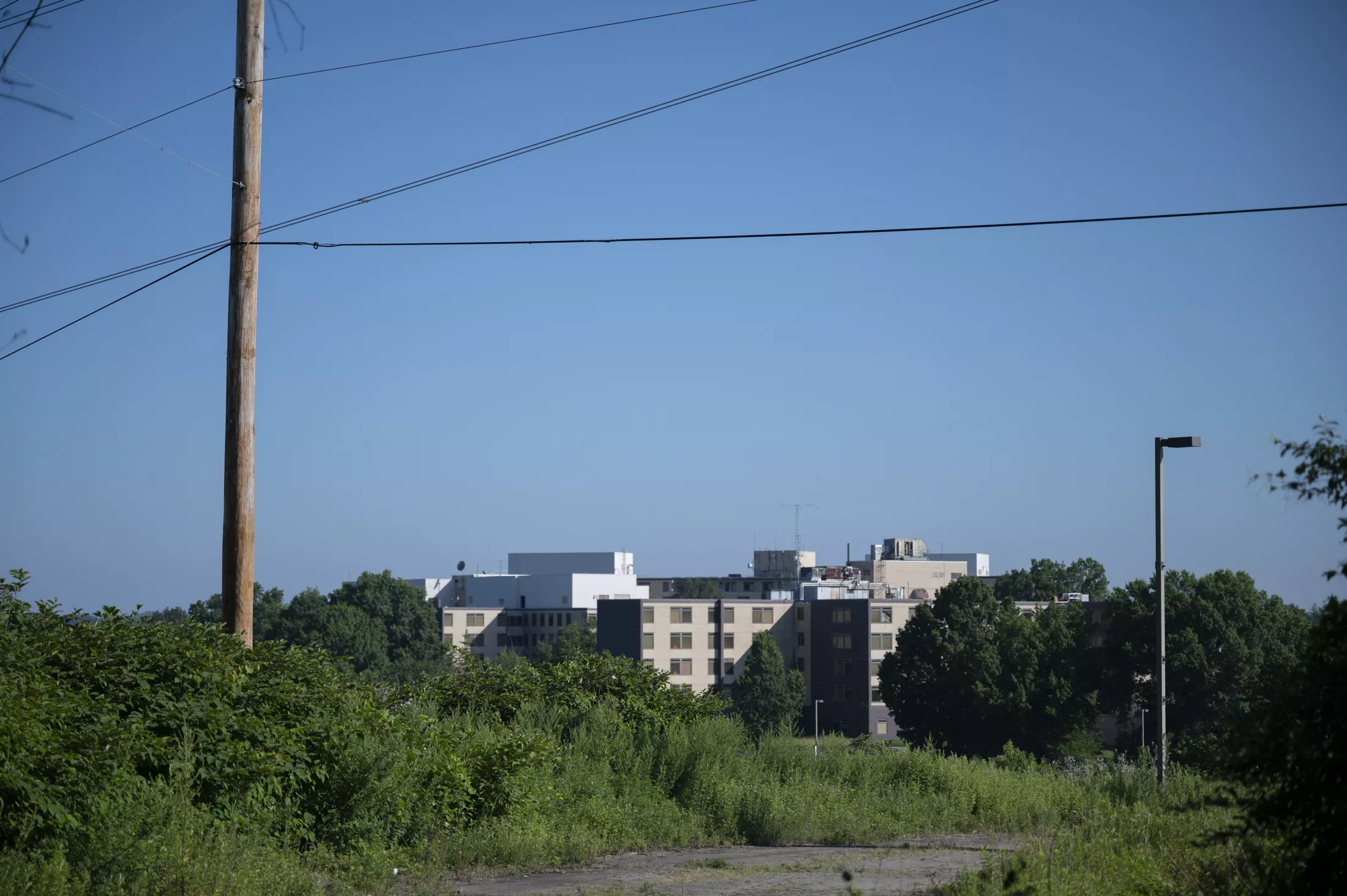
Peduto had hoped to move many of public safety’s training and administrative facilities, namely the Zone 5 police station and city fire headquarters, out of FEMA-designated floodplains. His proposal also included a new regional police training center and special deployment headquarters.
And while Mayor Ed Gainey’s administration axed plans for those aforementioned police facilities after he was sworn in in 2021, the hospital site itself has yet to change — ground has not been broken, and a master plan has not yet been approved.
“We don’t know how we might want to repurpose the facilities, or what they may end up being,” Pittsburgh City Councilor Deb Gross tells Pittsburgh City Paper, adding that her constituents have proposed a multitude of uses for the site outside of public safety, from an indoor community swimming pool to a public baseball field.
But Gross acknowledges that might not be possible, due to the contract signed between the GSA and Peduto allotting use for the space to public safety. She argues a different agreement could’ve been made by Peduto, perhaps with an agency such as HUD, to allow the site to be developed for a different purpose such as housing.

Still, Gross says she believes that an agreement can be reached to use the site as both a police and community asset.
“It’s very clear in that contract that, if we don’t do a public safety training and emergency response center, that the federal government takes back the site,” Gross says. “So how do we do both things? How do we avoid militarized training for our city police force? How do we provide assets that the public is asking for … and then also satisfy the terms of the contract? I think that’s the challenge for most of us.”
Ownership could be transferred back to the federal government if a master plan is not agreed upon by June 2026.
Gross and Pittsburgh Deputy Mayor Jake Pawlak express concern about handing the facility back over to U.S. President Donald Trump’s administration. They’ve both said in council meetings that Trump’s administration could potentially renovate the hospital into an ICE facility.
Henningson Durham & Richardson (HDR), a planning firm previously contracted by the Gainey administration to repair the collapsed Fern Hollow Bridge in 2022, won council’s bid to create the master plan for the public safety facility for $1.8 million.
Gross wrote a letter to the Gainey administration opposing HDR’s bid, citing a Vice article documenting the firm’s history of activist surveillance and alleged astroturfing in Arizona.
Its STRATA surveillance tool is self-described on HDR’s website as a tool that “exposes the truth of the human experience through comprehensive analysis from a technical and empathic lens.” HDR previously employed it to gather data on the social media accounts of activists opposed to its developments.
HDR referred all comments to the City, and did not respond to any further requests for comment from City Paper.
“That is not what we want to see here in Pittsburgh,” Gross tells CP. “We are here, especially as the city council, to hear and to represent and be the voices of our constituents; not to suppress those voices.”
Pawlak tells CP that HDR’s STRATA service was not requested as part of its contract to develop a master plan for the training center.
“[STRATA] wasn’t something on our radar,” Pawlak says. “We put out a pretty cut and dried proposal for design services.”
In an emailed response, Pittsburgh City Councilor Anthony Coghill says he is interested in how HDR’s background was missed in the city’s procurement process. Coghill, who chairs the council’s Public Safety Committee, has been a staunch supporter of the development.
“The facilities we use now don’t fulfill our needs,” he tells CP, “and this training center is a rare opportunity to ensure that future generations of first responders are able to be trained in adequate facilities.”
Those facilities are also a concern for Gross, whose constituents have long complained about noise pollution from an outdoor shooting range in Highland Park.
“It sounds like warfare,” Gross says. “It’s actually really awful to hear.”
The issue of the outdoor range is towards the top of the list of concerns for Gross, she says, adding that she is completely behind finding a site for an indoor range in Highland Park.
Highland Park Community Council (HPCC), a community organization for the neighborhood, chronicles a live calendar that lists dates and times when residents should anticipate hearing gunfire from the range. HPCC did not return CP’s request for comment.
Citing constituent concerns that the new public safety center could potentially solve, Pawlak agrees that an indoor range is needed to replace the outdoor site, adding that lead from bullets fired at the range could have negative environmental impacts.
The true environmental and monetary cost of a new public safety center won’t be clear until a master plan for the site is complete. Gross estimates it could be as high as $200 million, but the city’s capital budget currently allocates $86 million to the project. She declined to speculate on whether or not the center would be built.
City Council deferred a vote to have HDR draw up plans from July to September after Gross’ letter, and substantial public feedback, but Coghill remains optimistic about the future of the site.
“These things take time and money,” he says, “and proper master planning will help us to identify realistic timelines.”
Pawlak says the city desperately needs the facilities. But he also acknowledges that the Gainey administration’s time overseeing the development is running short, with Democratic mayoral nominee Corey O’Connor likely taking office in January. (O’Connor was unavailable to speak to CP regarding the public safety center by pres stime.)
“We’re trying to get the phase that’s within our control across the finish line to keep the process moving forward,” Pawlak says. “Ultimately, other people are going to make the next set of decisions about its future.”
___________________________
Gavin Petrone is a student at Point Park University and one of 10 Pittsburgh Media Partnership summer interns.
This article appears in Aug 6-12, 2025.