
Deprecated: mb_convert_encoding(): Handling HTML entities via mbstring is deprecated; use htmlspecialchars, htmlentities, or mb_encode_numericentity/mb_decode_numericentity instead in /var/www/html/wp-content/plugins/super-cool-ad-inserter/inc/scaip-shortcode-inserter.php on line 37
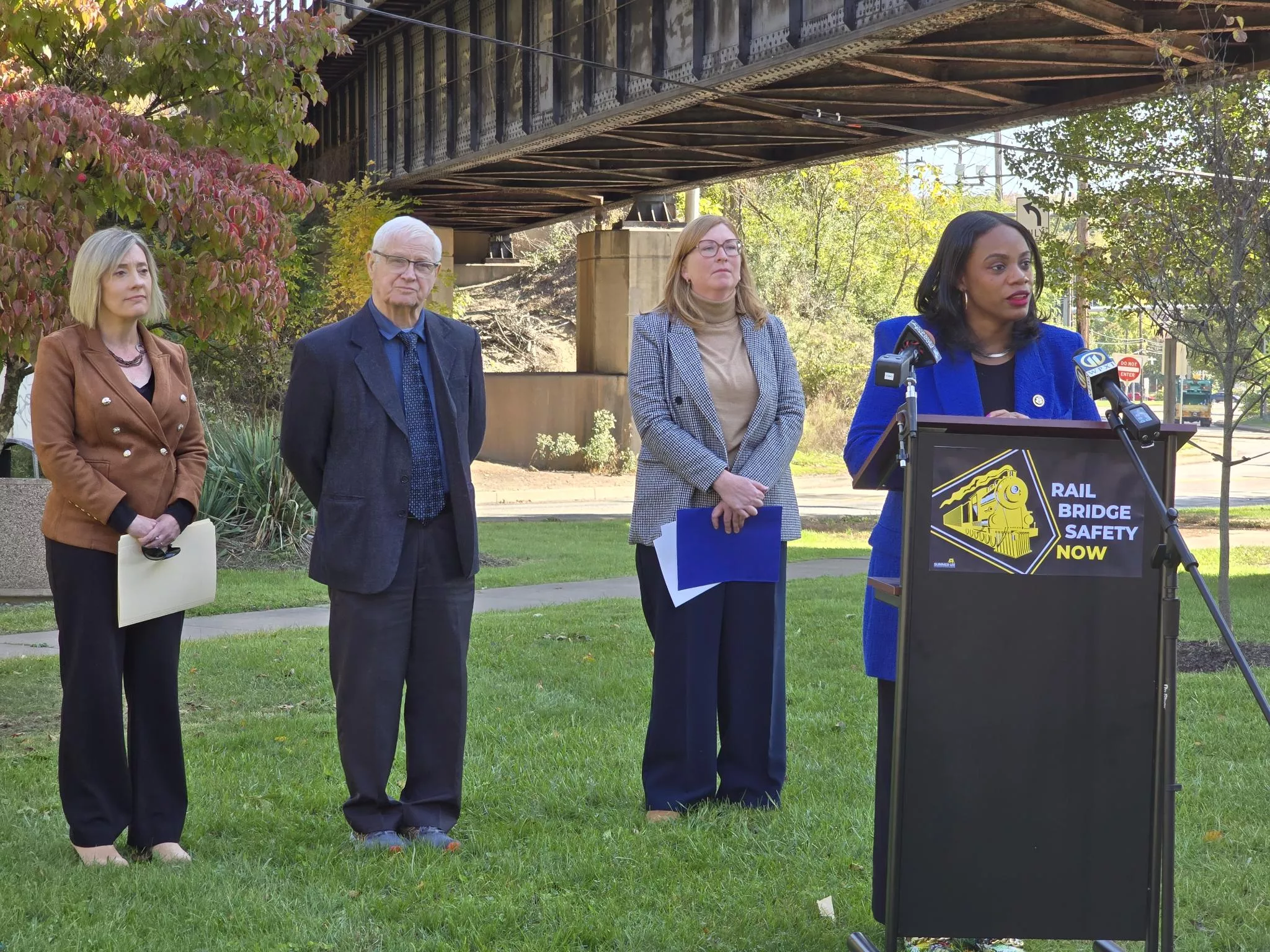
After the disastrous Norfolk Southern derailment in East Palestine, Ohio last year, and other derailments across the country, Pittsburgh-area officials say it’s high time to better regulate the region’s railroads. Several spokespeople, including U.S. Rep. Summer Lee (D-Pa. 12), gathered at Turtle Creek to announce new legislation designed to do just that.
The Rail Bridge Safety and Transparency Act (RBSTA) would establish baseline structural and safety standards, require random auditing by the federal Department of Transportation (DOT), and create a public database of all rail bridge inspections. The potential database would include a report-submission portal where residents can voice concerns.
“We’ve seen bridges collapse, rail cars spill into rivers, and hazardous material leach into our communities,” Lee said at a press conference announcing the bill. “From East Palestine to Montana and beyond, these stories are becoming way too familiar.”
Per Lee, western Pa. has some 338 rail bridges. The true condition of many of these bridges remains unknown — until accidents force regulators to step in, railroads aren’t required to make that information publicly available.
Since economic headwinds forced the restructuring and closure of most U.S. private railroads (and the creation of Amtrak), the National Transportation Safety Board and Federal Railroad Administration (FRA) have largely allowed rail companies to inspect their own infrastructure within loose guidelines set by the DOT. Following the disaster in East Palestine, the FRA itself has called for more legislation to scrutinize railroads. Lee, U.S. Rep. Chris Deluzio (D-Pa. 17), and U.S. Sen. Bob Casey — who sponsored a companion bill in the Senate — say it’s time for more oversight.
“The railroads have a responsibility to maintain their bridges and infrastructure that crisscross our communities — a responsibility that they have, for too long, ignored,” Deluzio said in a press release.
Lee says the Fern Hollow Bridge collapse, though not rail-related, also served as a “wake-up call,” adding, “It was a reminder that it’s important that we not wait until the catastrophe.”
As Pittsburgh City Paper observed, much of the apparent damage can be seen with the naked eye. The heavily rusted Ft. Wayne Bridge, which carries Norfolk Southern’s Pittsburgh Line through the heart of the city, appears to have missing or broken support struts, and its concrete piers are badly eroded. The railroad’s main line through the North Side also sits atop a crumbling concrete retaining wall that’s visibly cracked or sagging in several places despite repairs undertaken in the 2010s. Newer metal bridges beneath its overpasses protect passersby from debris and water falling from the aging viaduct.
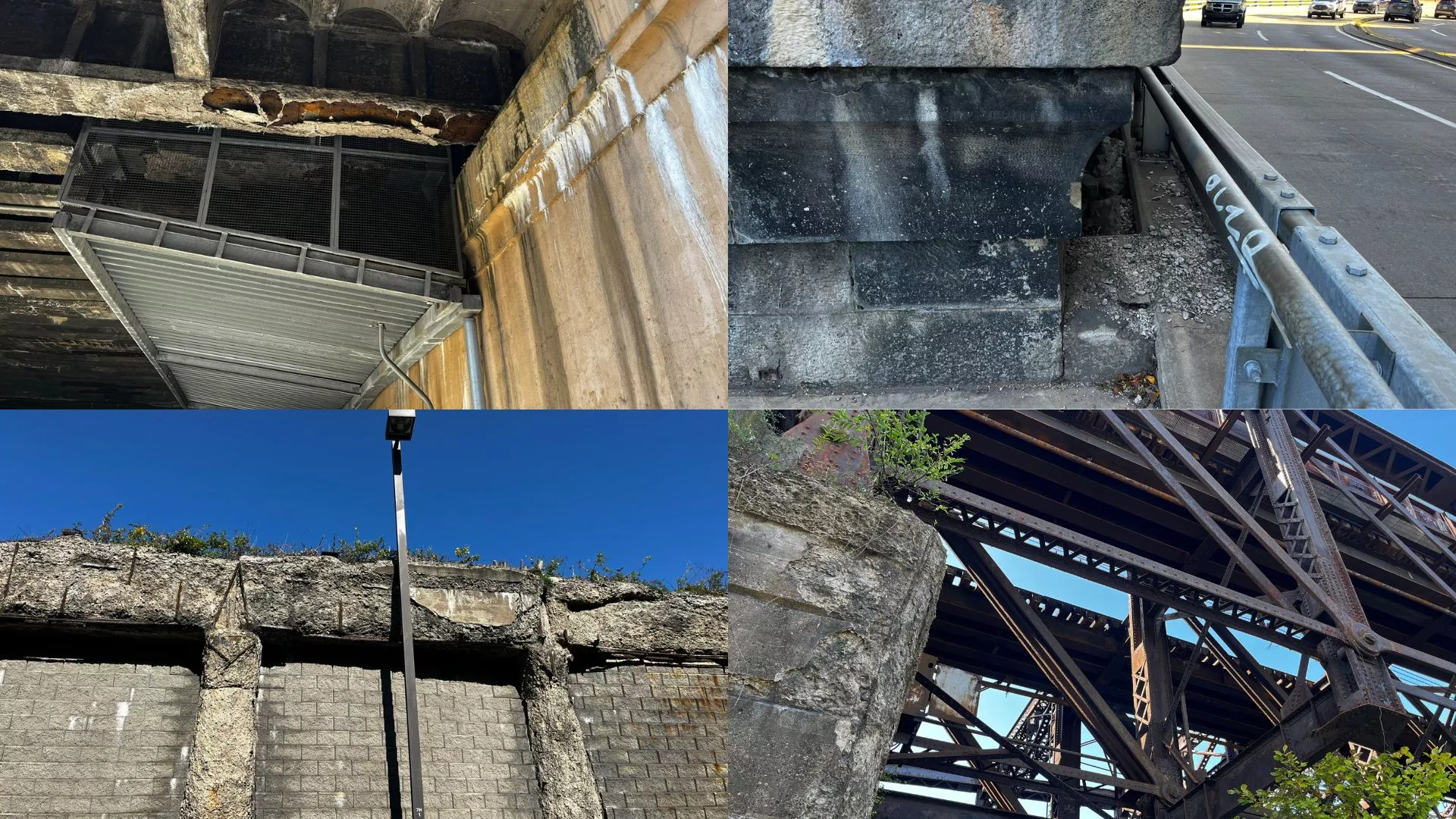
When City Paper asked Lee about the Ft. Wayne bridge, she said the problem was bad enough to transcend individual rail bridges.
“Unfortunately, I think that we’re beyond specific pieces of infrastructure,” she said.
Meanwhile, Norfolk Southern is replacing a North Side bridge that would allow it to run double-stacked trains. While the railroad says this would decrease pollution, some residents expressed concern over the safety implications. Others, including Lee, worry about fuel-filled “bomb trains” causing disaster along densely populated rail corridors.
It’s also difficult to address individual bridges when the railroads aren’t required to show the results of their inspections. “We have a number of bridges in disrepair, but even more frightening is that we’re not sure how or where this information is stored,” Lee told the press. “When do we fix something? When is it time to shut something down? And that’s what kind of sparked this [legislation].”
Lauren Connelly, Allegheny County Economic Development Director, says the consequences of not acting could have dire implications for locals. “Many residents still live near active railroads carrying hazardous materials. Rail bridges cross vital infrastructure, such as the Parkway West, where rail bridge failure can impact hundreds of thousands of vehicles a day, greatly affecting commerce, access to jobs, and education services.”
Connelly notes that the county earned a C-minus grade for its infrastructure and rail grade, meaning it’s “mediocre and needs attention.”
Lee notes the RBSTA faces headwinds given the political gridlock in Washington and the powerful rail lobby, but she and the bill’s other sponsors, including Deluzio, remain optimistic. Lee says greater public awareness of the issues and the bill will help sponsors “counteract the power of corporate interests.”
“Those aren’t partisan issues,” Lee said. “These trains are not derailing in blue or red neighborhoods or swing neighborhoods … This is an important issue to everyone.”
This article appears in Oct 16-22, 2024.