
Deprecated: mb_convert_encoding(): Handling HTML entities via mbstring is deprecated; use htmlspecialchars, htmlentities, or mb_encode_numericentity/mb_decode_numericentity instead in /var/www/html/wp-content/plugins/super-cool-ad-inserter/inc/scaip-shortcode-inserter.php on line 37
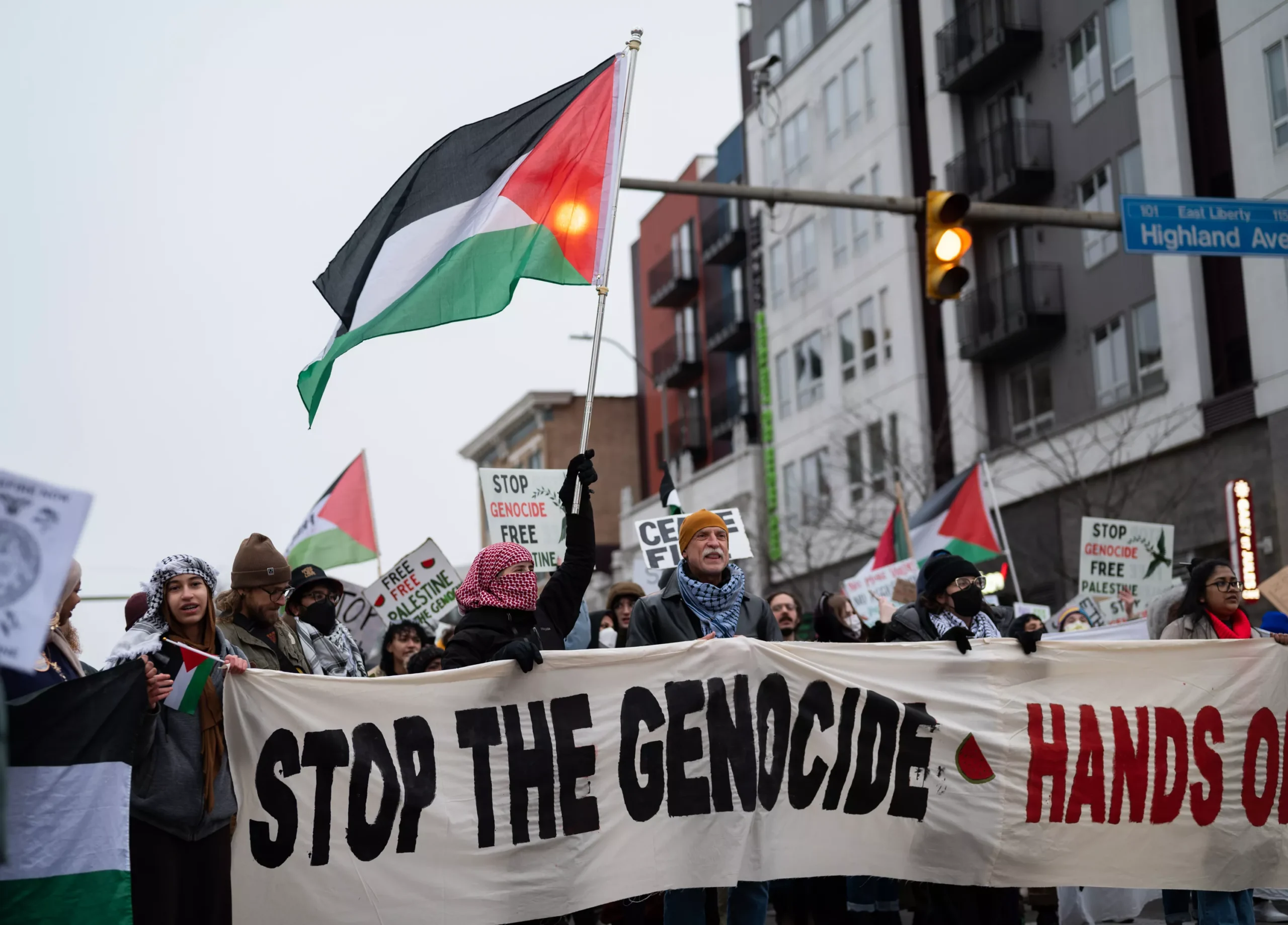
The Not on Our Dime campaign submitted petitions on Feb. 18 for a ballot referendum question that would prevent the City of Pittsburgh from investing or doing business with any government deemed to be actively committing genocide, ethnic cleansing, or apartheid. The potential amendment to Pittsburgh’s Home Rule Charter would apply to any government actively perpetuating genocide, though Israel is specifically named in the text. Not on Our Dime tells Pittsburgh City Paper that hundreds of volunteers gathered a total of 21,411 signatures (slightly higher than its initial count) over a seven-week period, well above the required threshold of 12,459 signatures. If the campaign’s submission qualifies, the referendum will appear on the May 20 primary election ballot.
A prior iteration of the group, No War Crimes on Our Dime, proposed a similar ballot referendum last August that specifically targeted divestment from the State of Israel. The group ultimately withdrew its petition containing 15,253 signatures amidst legal challenges brought by the Jewish Federation of Greater Pittsburgh — which retained lawyers representing Donald Trump in his attempts to overturn the 2020 election — and by City Controller Rachael Heisler. Maria Montaño, who served as Pittsburgh Mayor Ed Gainey’s director of communications of more than two years, also resigned after it came to light that she had signed the petition. The resignation, legal challenges, and ensuing controversies left some supporters demoralized. Ben Case, a Not on Our Dime founder and steering committee member, tells City Paper that, while the group is again preparing for legal challenges, his campaign experience this time has been “extremely positive and inspiring” with broad support from Pittsburghers.
“We know from day one, a majority of people in America wanted a ceasefire,” Case says. “We know a majority of voters want an arms embargo on Israel to stop the genocide, but we have so few politicians who are willing to say something about that.”
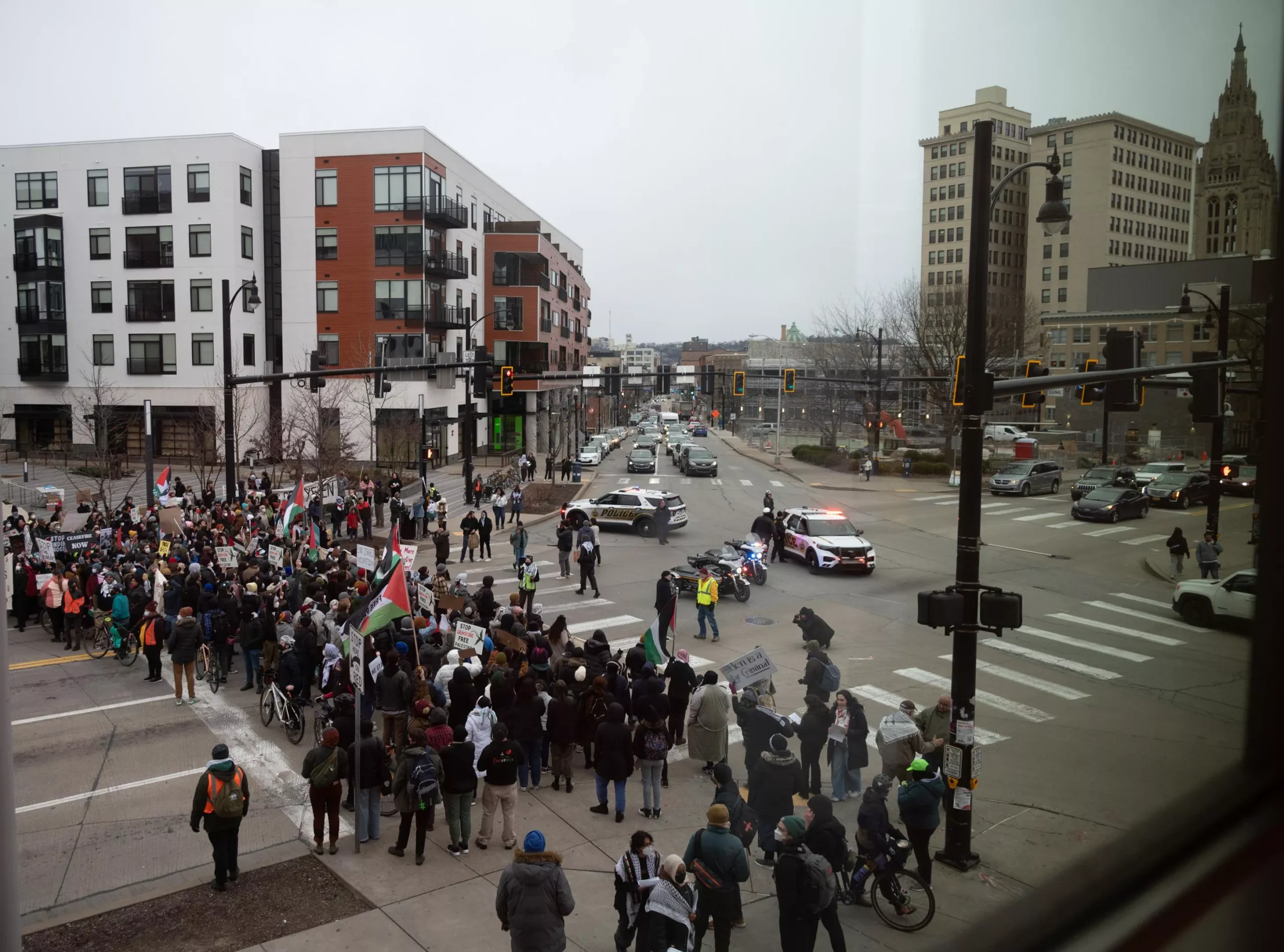
Case says the campaign’s new target of 20,000 to 25,000 signatures initially struck him as ambitious and “the fact that we have gotten into that range is just absolutely incredible, and a testament to how many people have leaned in.” He believes the campaign’s reach underscores popular opposition of U.S. aid to Israel, where violence continues in the Gaza Strip despite a temporary ceasefire agreement.
“Obviously, the goal is for [this] to make it on the ballot and win,” Case tells CP. “But the point here is that a majority of people want a change in policy when it comes to unconditional U.S. funding for the Israeli military. And that’s something that’s not going away. Politicians need to take this seriously.”
Since its efforts last August, Not on Our Dime, which is based in Pittsburgh, has been “learning as we went,” Case says. The group has refined its proposal while combatting what Case describes as misinformation. In addition to redrafting its 70-word ballot question, Not on Our Dime wrote text for the referendum amendment and worked with lawyers to ensure it would be “implementable” if passed.
Similar to objections that arose during the last campaign, advocacy groups and city officials including Pittsburgh Mayor Ed Gainey have expressed concern at the referendum’s potential impact on city governance. In a WESA report, Gainey said he was wary it might impair “City government’s ability to conduct basic functions.”
Case encourages anyone concerned to view the full text of the referendum amendment (in addition to a Not on Our Dime Frequently Asked Questions document), noting that increasing transparency is one of the campaign’s goals.
He also tells CP parts of the amendment are not without precedent. In 2020, the City of Pittsburgh’s pension fund adopted a “sweeping” Social Responsible Investment policy.
When it comes to procurement processes, the amendment would apply only to entities directly contracted with the city. Not on Our Dime asserts that financialization could pose the largest challenge to implementation, writing, “there are now large intermediaries that exist to smooth out corporate contracts with governments, which often resell the services of other corporations.” For example, Pittsburgh-based weapons manufacturer Howmet, which sells aircraft parts to Israel, might not have a city contract, Case tells CP, but the goal of the new amendment would be to bring “more scrutiny on companies like that exist in Pittsburgh.”
“Let’s have that discussion in the public sphere,” Case says.
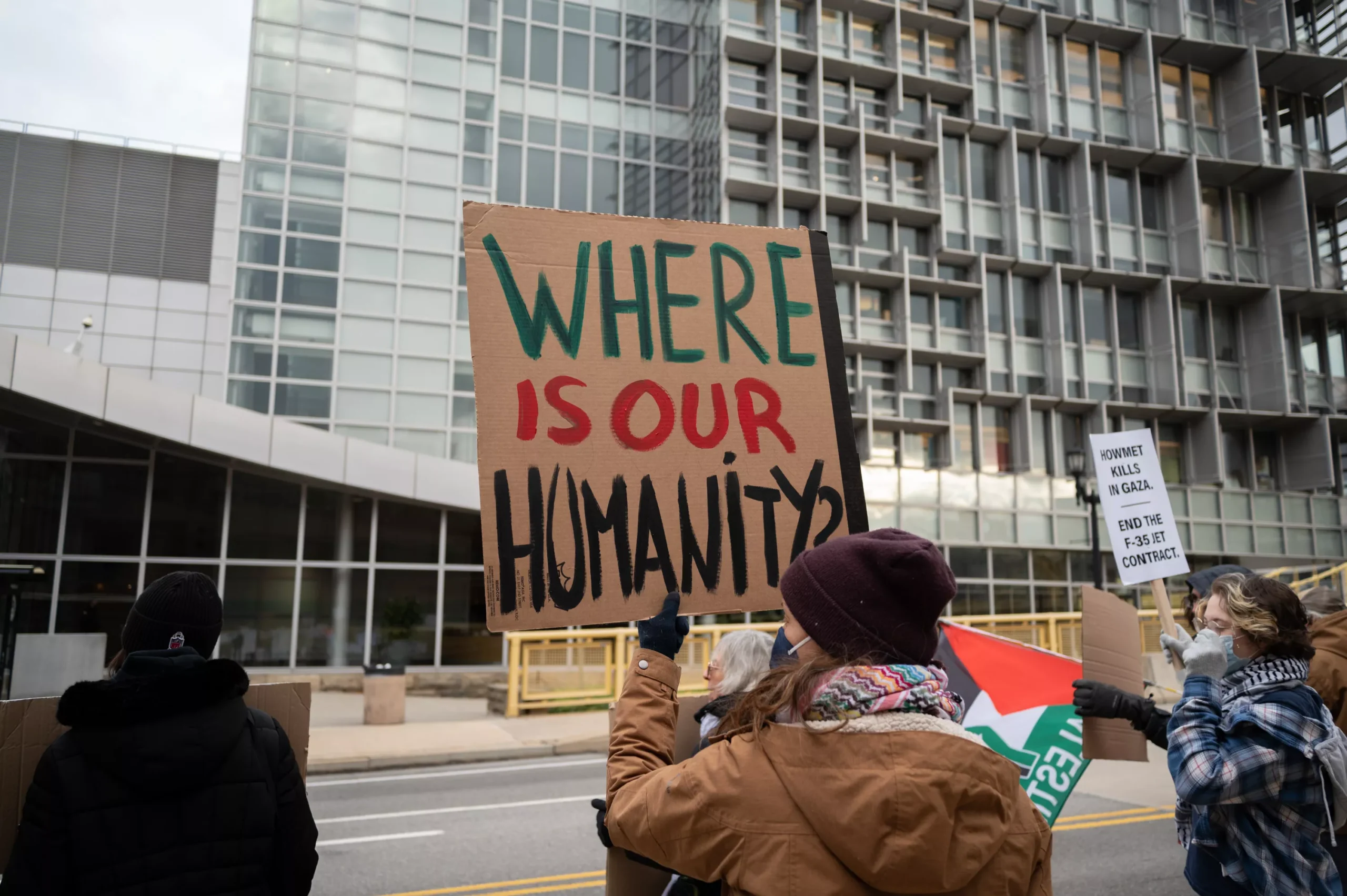
To address concerns such as Mayor Gainey’s that the amendment would curtail or shut down essential services, the new text also includes language specifying that policy be implemented “to the greatest extent possible.”
“This is a hypothetical, but if there’s only one company that supplies a part for ambulances or life-saving services … that does business with the State of Israel, and the city decided it’s not possible to divest from this, that would be permissible under this [new amendment],” Case explains, advocating again for public discussion. He also contends that Not on Our Dime volunteers are Pittsburgh residents who have a vested interest in the city continuing to operate.
“We don’t want our services to stop,” Case says. “We want our city to be better. And one of the ways we want to make it better is to say, we don’t want our money going to support bombs being dropped on children in refugee camps. We think that’s important.”
Though Pittsburgh’s initiative, if successful, would be the first in the U.S. to pass by popular vote, Case points to other cities that have adopted divestment measures through their city councils including Dearborn, Mich., Portland, Maine, and Richmond, Calif.
“Those cities have not collapsed,” he says.
Facing accusations of antisemitism, Case, who is Jewish, tells CP the amendment’s current emphasis on Israel is because the country is the largest recipient of U.S. foreign aid and is committing a genocide against Palestinians in Gaza. Not on Our Dime volunteers, some of whom are Jewish, differ greatly in their views about the Israeli-Palestinian conflict, Case says, but not about divestment and an end to genocide.
The proposed amendment’s language was expanded to be applicable to any country or government in part to represent “universal moral principles,” Case says.
“It’s time we bring Pittsburgh’s finances in line with our values,” the Not on Our Dime website reads.
In a larger sense, Case views Not on Our Dime’s petition for a ballot referendum as a victory for direct democracy, particularly in a chilling environment under the second Trump administration. The United States has no national referendum process, and neither do half of states including Pennsylvania, leaving only city charters as a recourse.
“The challenges of trying to kick [the referendum] off the ballot are just anti-democracy,” Case tells CP. “That’s not good for us in the long run, especially looking at where the federal government’s going. I’d want people to just stop and think for a moment about the implications of closing off avenues of democracy right now.”
This article appears in Feb 19-25, 2025.