
Deprecated: mb_convert_encoding(): Handling HTML entities via mbstring is deprecated; use htmlspecialchars, htmlentities, or mb_encode_numericentity/mb_decode_numericentity instead in /var/www/html/wp-content/plugins/super-cool-ad-inserter/inc/scaip-shortcode-inserter.php on line 37
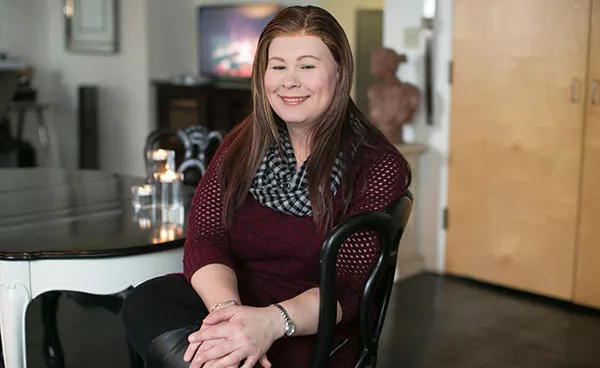
For 35-year-old Emma McFadden, the decision to empty her retirement account was simple.
She could continue occupying a body she didn’t experience as her own and live with the feelings that led to multiple suicide attempts and genital mutilation. Or she could pay $20,000 out of pocket for a surgery that might finally make those feelings disappear, perhaps permanently.
“This whole transition is a life-or-death thing for me,” explains McFadden, a transgender woman who is hoping to have gender-reassignment surgery in September. “If I don’t do it, there’s no point in having a 401(k) because I probably wouldn’t live to see it.”
Though McFadden has health insurance that covers the hormones she takes, it won’t cover the surgery that will help complete her transition. But under a measure recently introduced by Philadelphia state Rep. Mark Cohen, insurers would be required to cover transition-related medical procedures — including surgery.
House Bill 304, known as the Transgender Health Benefits Act, would “require coverage of transition-related care, including hormone therapy, mental health, and surgery in all private, public and Medicaid plans.”
That bill was introduced with a companion (HB 303) that would require schools to allow transgender students to participate in programs and use accommodations in accordance with their gender identity, not the gender that was assigned at birth.
“To my knowledge, [these] were the first transgender-rights bills ever introduced in Pennsylvania,” Cohen says, noting that he introduced them for the first time last year. “It’s just part of the gradual process of establishing the rights and dignity of all people.”
If the bills pass, Pennsylvania would become one of only four states (plus the District of Columbia) that have full transgender health coverage, according to a memo attached to the legislation.
But in a legislature that has failed to secure basic nondiscrimination protections in employment and public accommodations for LGBT Pennsylvanians, the bill’s authors, sponsors and advocates aren’t holding their breath.
“Barring a tsunami, it will be an uphill battle to get these bills passed,” says Jordan Gwendolyn Davis, a trans activist from Philadelphia who helped draft the legislation and has since moved to California because the state’s Medicaid program will cover her transition-related health-care costs. “The religious right is going to throw a huge shit fit over it.”
Still, Davis pushed for the bills for a reason: She’s hoping they prompt a public discussion that lets transgender people explain — on their own terms — how current policies affect them.
And for trans people like McFadden, who have spent their lives scrapping and finagling their way through health systems that often deny care, or schools that won’t let them use the bathroom that matches their gender identity — the chance to explain those experiences publicly can matter a great deal.
“A lot of people think this is a choice, and it’s really not,” says McFadden. The media “have objectified trans people so much. By me and other people telling our story, it makes me a real person and not an object.”
It wasn’t until Jessica McGuinness fell off a bridge on a camping trip in West Virginia 10 years ago that she finally felt comfortable starting her transition. The thought that she might have died without ever having lived in the gender she’s identified with since age 5 terrified her. “I don’t like the person I would have been if I had died. That’s when I started transitioning,” says McGuinness, who works at the University of Pittsburgh.
That process didn’t start until McGuinness was 30, partly because she didn’t feel comfortable transitioning in school. It wasn’t something she’d ever seen anyone do. “When I was little, there was no such thing as trans youth,” she says.
That’s one of the reasons McGuinness, now 40, supports Cohen’s Transgender Students Rights bill, which is modeled after similar legislation in California. Under the proposal, “students would be able to follow the dress code, use facilities such as locker rooms and restrooms, and participate in athletic programs based on a students’ self-attested gender,” according to a memo Cohen attached to the legislation. “This bill would not allow for harassment in gender-segregated spaces, nor would it require the dismantling of such spaces.”
If there had been laws promoting transgender equality when she was in school, McGuinness says, “I might have been able to do this many, many years ago — or felt comfortable with myself when I was younger. Instead, I was dead last in my class. … I hated every moment of school, and I attribute a lot of that with not being able to transition.”
But even among those who do manage to express their true gender identity in school, the outcomes are often bleak. Seventy-four percent of those who expressed “a transgender identity or gender non-conformity” while in grades K-12 experienced harassment, according to the National Transgender Discrimination Survey. Twenty-three percent reported physical assault, 9 percent reported sexual violence and 11 percent left school as a result of harassment.
Whether you come out as transgender, or keep it hidden, “Either way you lose,” says Betty Hill, executive director of Persad Center, a local organization that offers counseling and mental-health services to the LGBT community. “It feels easier to not be myself, but I pay an enormous emotional price for that.”
And since physical and emotional health can be connected to how early a person gets treatment for gender dysphoria, Hill explains, the students’ rights and health-care components of Cohen’s legislation are connected.
If schools are better equipped to accommodate trans students and their transition-related health care is covered, it’s likely more transgender people will get better care sooner, avoiding health complications down the road.
McGuinness says that now that she’s been living as a woman for a decade, “I would have sexual-reassignment surgery in a heartbeat.” But her hemophilia would add thousands of dollars to the procedure, which keeps the surgery out of reach.
“Whenever you come out as gay, there’s not a medical process to make you gay. For us, not only do you need protections … you need the medical benefits,” she says.
Even if comprehensive trans health care is not likely to pass anytime soon at the state level, there are some signs trans coverage might increasingly become included in insurance plans.
Last year, for instance, the Obama administration ended a 33-year ban on Medicare coverage for gender-reassignment surgery. And though Medicare coverage is for those over 65, “If Medicare is leading by example, then Medicaid and private-insurance plans should follow suit,” says Erin Ninehouser, a health-care policy advocate with the Pennsylvania Health Access Network.
“The bottom line is that people’s health needs should be treated equally. If you’re going to cover expensive surgery to treat one illness, why would you not cover a surgery to help someone transition to their true gender?” she asks.
At the state level, Ninehouser adds, Gov. Tom Wolf’s decision to expand the state’s Medicaid program under the Affordable Care Act could open a conversation about covering transition-related care under that program. Wolf “is going to look at what that benefit package is going to be, and they’re going … to figure out if there are any services or benefits that should be added,” she says.
But even as coverage expands, access might still be a problem. Marty Seltman, medical director at Metro Community Health Center in Swissvale, says finding doctors who are familiar with trans care can be tricky — and patients aren’t always comfortable revealing their gender identity.
“Many people would love to have surgery, [but] most people can’t afford it,” says Seltman, who has seen hundreds of trans patients. “And there’s nobody in Pittsburgh who does full transgender surgery.”
That’s why McFadden plans to travel to Philadelphia in September to get gender-reassignment surgery from a doctor she discovered online. She’s paying for it all out of pocket — just like the voice-feminization therapy, the facial-hair removal and the lawyer who helped her change her name.
She often dreams about the surgery and relishes the few moments after she wakes up, feeling for a moment like she finally inhabited the right body.
“I was born this way and I had every intention of dying as my former self … and I almost did.”
This article appears in Feb 25 – Mar 3, 2015.