
Deprecated: mb_convert_encoding(): Handling HTML entities via mbstring is deprecated; use htmlspecialchars, htmlentities, or mb_encode_numericentity/mb_decode_numericentity instead in /var/www/html/wp-content/plugins/super-cool-ad-inserter/inc/scaip-shortcode-inserter.php on line 37
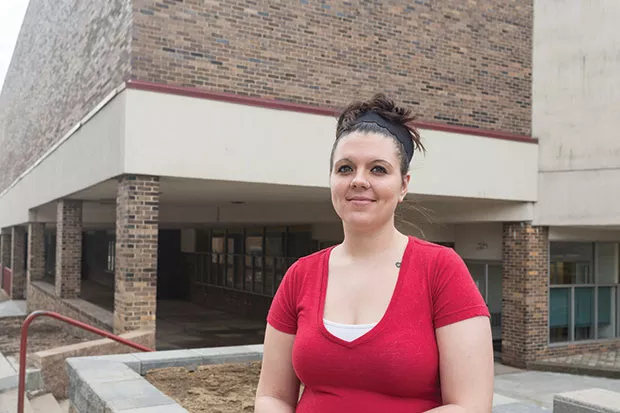
Twenty-four-year-old Tommee Morrow lost both her parents at a young age. She started smoking marijuana at age 12 and, along with other members of her family, later turned to heroin.
“I was sad all the time and depressed, and I didn’t see having anything else in my life,” Morrow says. “Since I lost them, everything else in my life was not good; I didn’t see any good.”
But after years struggling with her addiction, this past September Morrow graduated from Recovery United’s outpatient treatment program.
“My problem wasn’t just drugs. I had a problem with myself that I needed to work on,” Morrow says. “But in here, I learned that there is hope; there are good things I can work toward.”
Recovery United’s Administrative Director Ali Bradley says Morrow is just one of many success stories to emerge from addiction-treatment programs. Last week, she met with another recovering addict who had also come in for help.
“When the woman first came to us, she was crying about where her addiction has taken her,” Bradley says. “I just saw her a few days ago. She now has custody of her 2-year-old daughter and was just this smiling ray of light in my office. Just to see the transformation in people is amazing, and knowing we played a role in their journey makes all the horrific things we see worth it.
“Recovery is possible and we’re proof of that.”
But ensuring addicts have access to the kind of life-saving treatment provided at Recovery United and other addiction programs can be difficult. In many cases, people are resistant to seek treatment; other times they simply can’t afford it; and overall there remains a shortage of addiction-recovery programs and counselors.
Pennsylvania state Sen. Jay Costa (D-Forest Hills) is working to tackle two of these problems with two pieces of legislation that ensure addicts have access to the resources they need. But despite the improvements on the horizon, the ability of many addicts to pay for such treatment is in jeopardy, as tens of thousands are at risk for losing insurance if the Affordable Care Act is repealed.
“A little under 125,000 people accessed drug and alcohol services through the Medicaid expansion across Pennsylvania. It has been the biggest expansion of drug-and-alcohol-services access. If the Medicaid expansion is repealed, they face the possibility of losing coverage or losing insurance to get treatment,” says Kait Gillis, communications director for the state’s Department of Health and Human Services. “That’s obviously bad for anyone who’s trying to get to recovery. It’s particularly bad in that if your treatment is interrupted, the potential that you’ll relapse or overdose goes up dramatically.”
As the largest single provider of recovery housing in Pittsburgh, Recovery United offers both inpatient and outpatient addiction-treatment services in Carrick, Brookline and the Hill District. (These areas are among the neighborhoods that have been identified by the Allegheny County Health Department as having some of the highest rates of drug-overdose deaths.) And last week, it announced it would be adding Suboxone treatment to its services. Suboxone is a drug used to relieve symptoms of opiate withdrawal and can be used in conjunction with counseling and psychological treatment.
Morrow says her experience with the organization was so successful because of the family environment the program provides. Originally from Huntington County, she says her peers in the program helped her become more familiar with Pittsburgh and gave her moral support.
“I felt like I was more at home,” says Morrow, whose family helped her pay for treatment until she was able to secure a job to pay for it herself. “It was more safe in here, and I could talk to the people here.”
But the program wasn’t without its challenges. Morrow says she struggled to adjust to the structure of the program and had trouble opening up. She originally entered the program because she was court-ordered to do so, but says she ultimately came back on her own after relapsing. Prior to her time with Recovery United, she says, she tried to get clean on her own, but it “didn’t work out very well.”
“You’re not ready until you’re ready, but if you’re forced there and you stay long enough, your view starts to change. You might get out and relapse, but you know you have options,” Morrow says. “I was just tired of the way I was living.”
Ali Bradley and Recovery United’s founder and president, John Miller, have been in their patients’ shoes. They’re both in recovery and say it makes them uniquely suited to help their patients.
“A lot of us are also in recovery, so we’re always here for the patients,” Miller says. “When people come to our program, they’re training for the rest of their life. Most people in recovery continue to go to meetings. It’s continual care. No matter where I am in my life, I have to always stay in touch, and continue to better myself and stay healthy.”
They say inadequate funding for addiction-recovery treatment is a constant problem in their field.
“One of the biggest problems we see is, with people not being able to afford to come in, they go out and commit crimes and end up in jail,” Miller says.
“Addiction has been identified as a disease for years now, and it does not get the same funding as other diseases,” Bradley says. “There’s so many people that do fall through the cracks.”
Recovery United receives some grant funding that allows it to admit indigent people into its inpatient treatment, but Bradley says paying for outpatient treatment can be a huge burden on addicts.
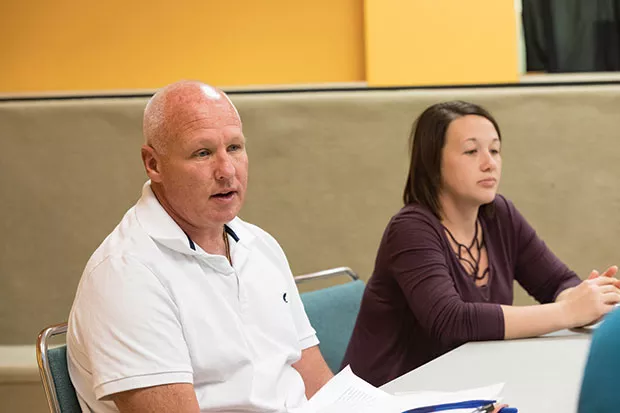
“If you don’t have insurance, it’s very difficult. It’s expensive and costly. Without Medicaid, it’s impossible for a lot of people to pay that,” Bradley says. “Sometimes families will help. But coming in, if you’re an addict, it’s not likely that you have $400 in your bank account. Otherwise, [you] wouldn’t have entered treatment until it’s gone.”
And that’s what makes the potential changes to the Affordable Care Act and Medicaid expansion so terrifying to those in the addiction-recovery field. Last week, a draft of the federal government’s proposal was released. It includes eliminating the Medicaid expansion and would limit future reimbursement for states.
“There are real human beings behind this, and the impact it will have on their life would be devastating,” says Gillis, of the DHS.
While the federal government’s actions would restrict access to substance-abuse treatment, Sen. Costa is looking to expand access. This month, he proposed legislation amending the Mental Health Procedures Act to allow families to seek the involuntary commitment of a family member into alcohol- and drug-abuse treatment.
“I’ve heard from dozens of family members across Pennsylvania, who said to me and to others, that they have no means or mechanism to get treatment for a child or spouse or other loved one, particularly in instances when they have the resources or insurance to cover a treatment program,” Costa says. “They’ve sort of felt helpless.”
Pennsylvania’s bill, known as “Casey’s Law,” is similar to legislation passed in Kentucky in 2004, two years after 23-year-old Matthew Casey Wethington died despite his family’s unsuccessful attempts to help him gain access to treatment. Other states are also currently considering the legislation, but there has been pushback because it infringes on civil liberties.
“Anytime you do some type of an involuntary commitment, you’re removing someone’s civil liberties. And that is true that’s what this would do, but I believe that the addiction a person suffers from is no different than a mental-health problem that allows for the involuntary commitment,” Costa says.
Another problem facing such legislation is that there are shortages of addiction-treatment facilities and licensed substance-abuse therapists. To combat the shortages, Costa has proposed a 10 percent tax on pharmaceutical companies selling narcotics that he and others believe are contributing to the problem. These funds would go toward drug-treatment programs, facilities and student-loan forgiveness for those who go into careers in addiction treatment.
“There’s not significant bed space in treatment programs to handle what can come from this,” Costa says. “We recognize there’s a need for more treatment facilities.”
But the rollback of the Affordable Care Act and Medicaid expansion would mean a decrease in the number of families that have the resources to get their loved ones into treatment. Costa acknowledges the potential problem, but says this legislation will still help thousands who have the resources, but not the will to seek treatment themselves.
“When I talk to folks, a lot of them either have the appropriate insurance coverage through their employer, or have the resources and the means to pay for the treatment,” Costa says. “But if we rescind the ACA, you’re essentially throwing 700,000 folks off the Medicaid expansion, as well as those individuals who purchased their insurance through the exchange. This would exacerbate the existing problem we have today — folks having access to treatment — but at the end of the day, we have to do something.”
This article appears in Mar 1-7, 2017.