
Deprecated: mb_convert_encoding(): Handling HTML entities via mbstring is deprecated; use htmlspecialchars, htmlentities, or mb_encode_numericentity/mb_decode_numericentity instead in /var/www/html/wp-content/plugins/super-cool-ad-inserter/inc/scaip-shortcode-inserter.php on line 37
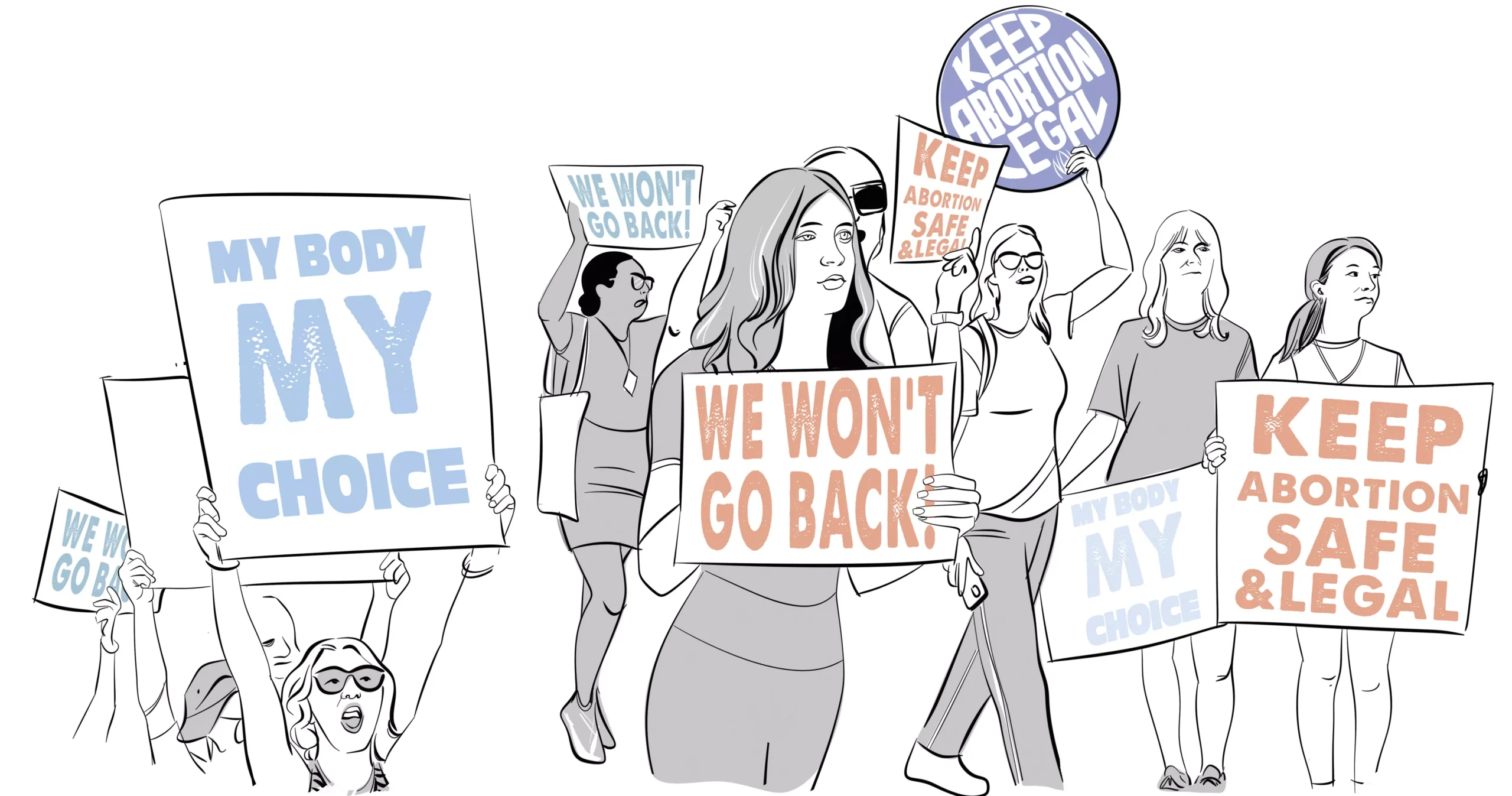
Donald Trump’s second presidential victory is widely viewed as an existential threat to already narrowing abortion and reproductive rights. But more than two years after the U.S. Supreme Court’s Dobbs decision overturned Roe v. Wade and stripped the federal constitutional right to abortion, legal advocacy organizations and activists have already been fighting to uphold laws in state courts, often characterized as the new frontline for abortion access.
Ahead of Trump’s inauguration, Pittsburgh City Paper is reviewing Pennsylvania’s current political landscape and its impact on abortion and reproductive rights. The battle runs through a Pittsburgh reproductive health clinic, a landmark Pennsylvania Supreme Court case, and an upcoming judicial election.
Greer Donley, an attorney, abortion law expert, law professor and associate dean at the University of Pittsburgh, describes the situation in Pennsylvania as “a little bit perplexing.”
In the aftermath of Dobbs, most states can preserve a legal right to abortion either through a state law or by deriving the right from the state’s constitution. In Pennsylvania, the Abortion Control Act, a law passed in 1982, makes abortion legal at up to 24 weeks of pregnancy (tied to the concept of fetal “viability” introduced under Roe, with some exceptions for life-threatening circumstances). However, as its name suggests, the law comes with a number of restrictions. These include a 24-hour waiting period, state-mandated counseling, a parental consent requirement for minors, and a ban on Medicaid funds covering abortions (with very limited exceptions). The Pennsylvania legislature could also further restrict or outright ban abortion if an anti-abortion governor were to take office.
A “stronger” way to enshrine the right is through the Pennsylvania Constitution, Donley explains. This is where complications arise because “we don’t actually have a state court opinion that says there is a right to abortion in the Pennsylvania Constitution yet.”
But an influential case last January might break new ground. Allegheny Reproductive Health v. Pennsylvania Department of Human Services challenged the state’s ban on Medicaid-funded abortions under the Equal Rights Amendment (ERA) of the Pennsylvania Constitution, which prohibits discrimination on the basis of sex. While the battle to add the ERA to the U.S. Constitution has been ongoing for more than a century, about half of states have adopted it in their constitutions in some form, including Pennsylvania in 1971.
“[In Pennsylvania,] we have our own constitution that predated the federal constitution, is better than the federal constitution, is independent of the federal constitution, and that has been extremely underdeveloped over the eons,” Sue Frietsche, executive director of the Women’s Law Project said at a recent post-Dobbs panel at Pitt’s Law School.
In 2019, Pa.-based Women’s Law Project (where Donley also serves as board chair), Planned Parenthood Federation of America, and law firm Troutman Pepper first brought the case to the state Supreme Court on behalf of clinics including Pittsburgh’s Allegheny Reproductive Health Center. After a five-year course of litigation, they successfully argued the state’s Medicaid program refusing to cover abortion is sex discrimination, overturning nearly 40 years of precedent and paving the way for future rulings affirming abortion rights.
“When you’re looking at abortion restrictions, they are presumptively sex discriminatory,” Donley tells City Paper. “And so that really opens the door to strike down many of the abortion laws in Pennsylvania that restrict abortion access.”
The case also marked the first time a state Supreme Court decision impacted abortion rights after Dobbs, paving a new way to protect reproductive rights through state-level Equal Rights Amendments.
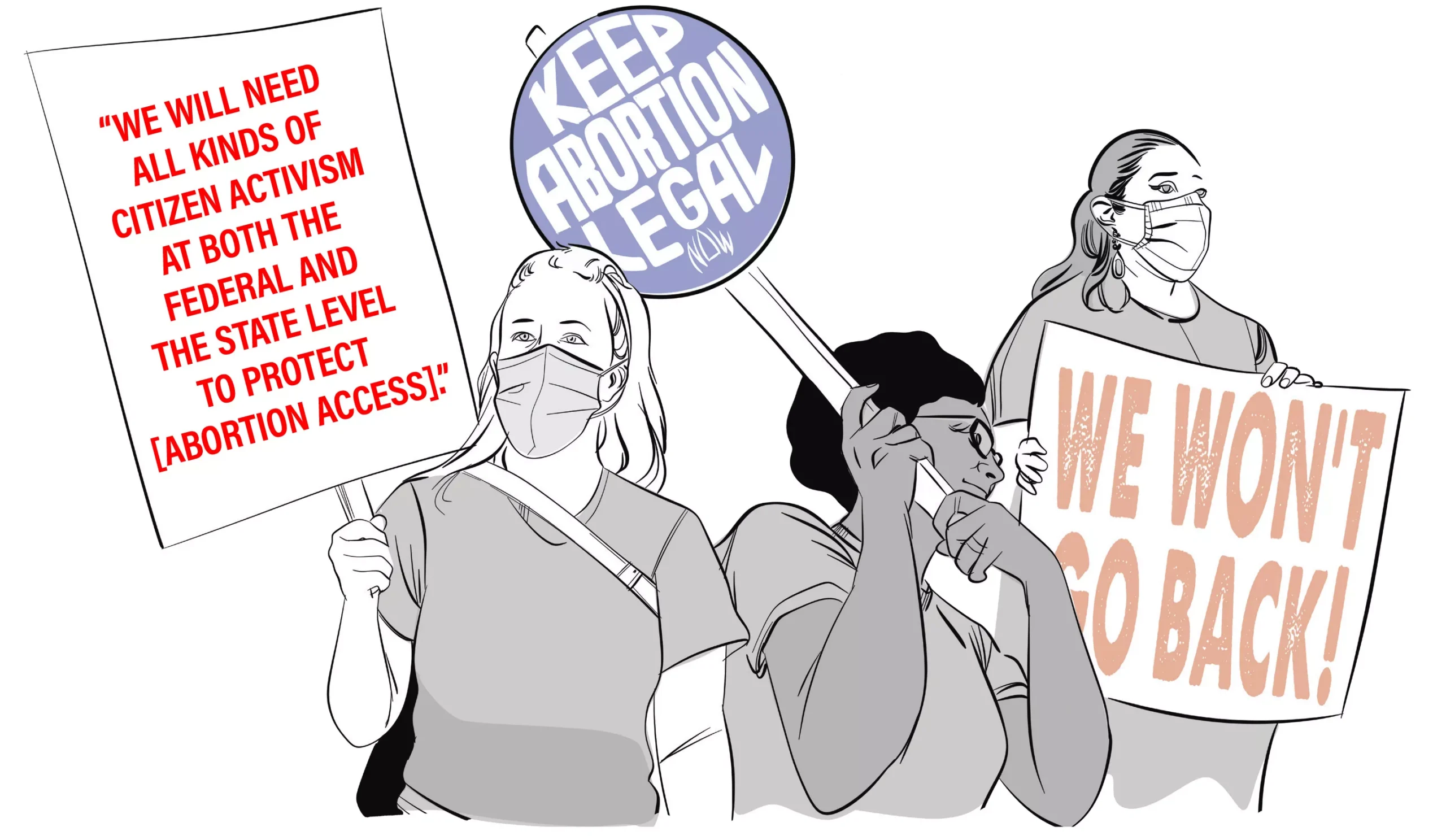
“So there is a really encouraging path forward,” Frietsche said. “We are also asking the court to acknowledge that the state constitution guarantees a right to reproductive autonomy and protects it as a fundamental right, so stronger than anything we had under Roe. But we will need all kinds of citizen activism at both the federal and the state level to protect the gains that we are only just now starting to see at the state level in Pennsylvania.”
The ruling could still be overturned by the U.S. Supreme Court or amended via Pennsylvania’s Constitution, which is more subject to political headwinds.
Additionally, some experts, including Jessica Valenti, the journalist behind the Abortion Every Day Substack, suggest that a nationwide ban could overturn all state protections, making Pennsylvania’s ruling vulnerable to federal laws as well. Still, state protections at least lay groundwork for battling that ban in court.
Unlike other states, the justices that make up Pennsylvania’s Supreme Court are selected for 10-year terms through partisan elections (as opposed to nonpartisan elections or appointment). Currently, the seven-member court maintains a 5-2 Democratic majority, and as long as this holds, “a majority of justices seemed to endorse the view” there is a state constitutional right to abortion, Donley says.
In 2025, three Democratic justices on the state’s Supreme Court face reelection. Justices Christine Donohue, David Wecht, and Kevin Dougherty — all of whom affirmed the state’s ban on Medicaid-funded abortion was sex discrimination — will run for retention this fall. As WESA recently reported, while judicial races typically receive little attention and garner low voter turnout, the possibility of ending the state Supreme Court’s Democratic majority could make for an ugly political battle.
Donley noted that, when it comes to protecting abortion rights, the judicial retention races could receive additional scrutiny, as Pennsylvania does not allow for statewide referendums or ballot measures like other states have introduced after Dobbs.
“When people are voting in Pennsylvania for Supreme Court justices [this year], abortion is more than ever before on the ballot,” she tells CP.

This article appears in Jan 15-21, 2025.