
Deprecated: mb_convert_encoding(): Handling HTML entities via mbstring is deprecated; use htmlspecialchars, htmlentities, or mb_encode_numericentity/mb_decode_numericentity instead in /var/www/html/wp-content/plugins/super-cool-ad-inserter/inc/scaip-shortcode-inserter.php on line 37
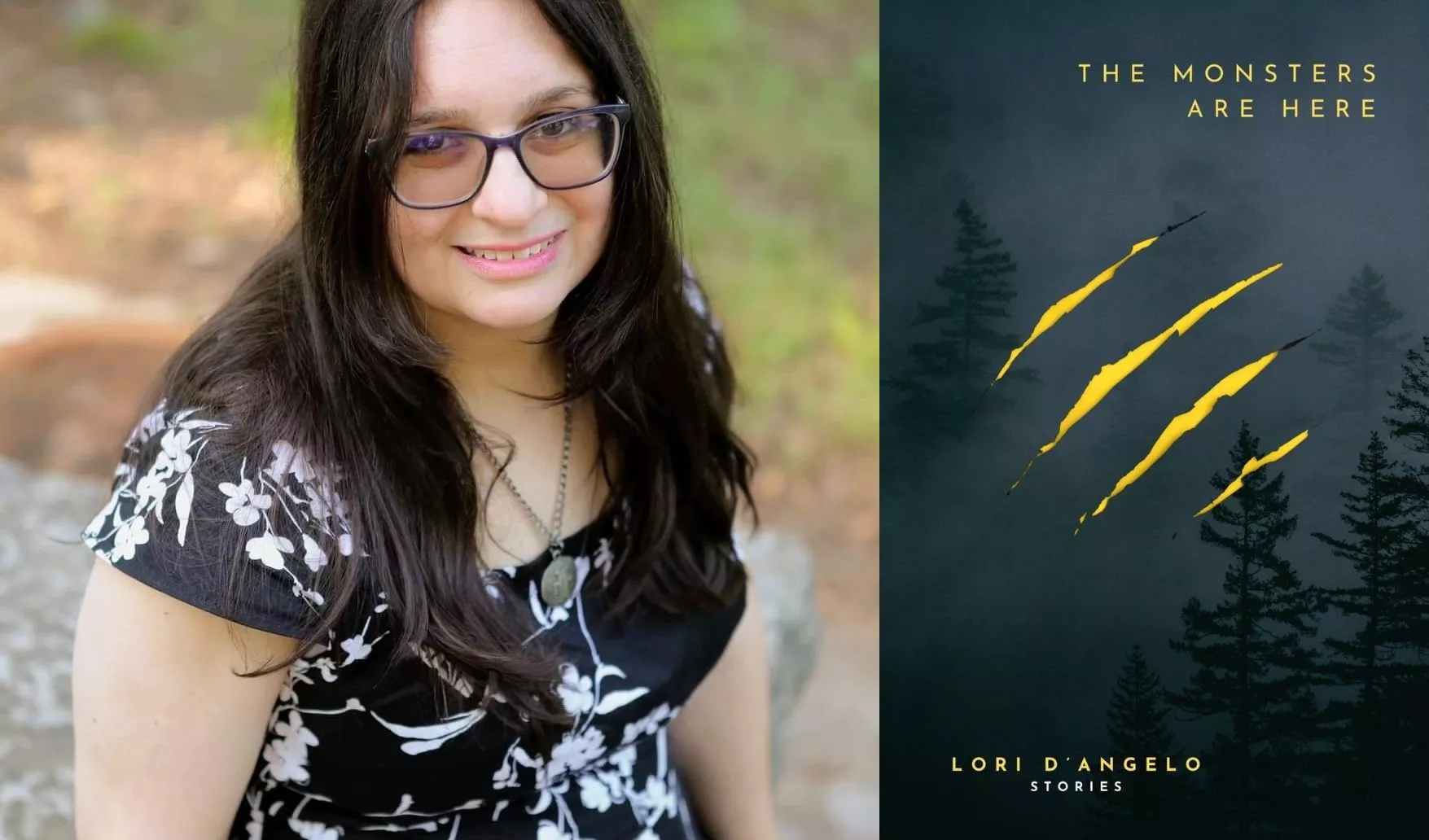
There are monsters in Lori D’Angelo’s world, both literary and real-life.
The Virginia-based author grew up in the South Hills, and she returned last month for a reading of her debut book published on Halloween, The Monsters Are Here. D’Angelo combines humor, feminism and familiar horror tropes — vampires, ghosts and death — in her writing. Those things populate her fiction. D’Angelo’s family has been in Pittsburgh for more than a century, and she recently discovered that her great-uncle was gunned down in one of the city’s most infamous unsolved mob murders. That horror story will provide fodder for future projects.
The Monsters Are Here is a slim 187 pages with 30 stories, many of them previously published in literary journals. The collection includes a tale of a mass-transit-riding vampire accountant and a primer for opening a haunted house: “There are too many spiderwebs and not enough blood,” the story begins.
There’s a thread of strong, empowered women that runs through the creatively conceived stories. D’Angelo’s women aren’t victims; they’re agents with lots of control over their horrific circumstances.
“They’re feminist, literary sci-fi horror,” D’Angelo says of her stories. “A lot of these stories deal with themes like, say, sexism or racism or just I mean, and some of them are more fun just dealing with like ghosts and monsters.”
Growing up in the South Hills, D’Angelo frequently visited the city before graduating from high school and attending Northwestern University. “I wanted to be a writer, but I studied journalism because that seemed like a path for writing,” she says.
D’Angelo had a few journalism gigs, including one with the Latrobe Bulletin. There, she wrote some music reviews while holding down a job in the South Village food court to help pay bills. D’Angelo also interned at the Post-Gazette.
She then moved onto working in radio advertising. “I really hated that,” D’Angelo says. “I decided to apply to Pittsburgh Theological Seminary with the idea of perhaps becoming a religion reporter.”
After getting a master’s from Pittsburgh Theological Seminary, D’Angelo kicked around for a few years before landing a full ride in a West Virginia University MFA program. She’s also gotten a grant from the Elizabeth George Foundation and she’s a fellow at the Hambridge Center for the Creative Arts in Rabun County, Georgia.
“Being a creative writer is difficult, and usually you have to have other jobs because it’s not like you do something unless you’re Stephen King,” she says.
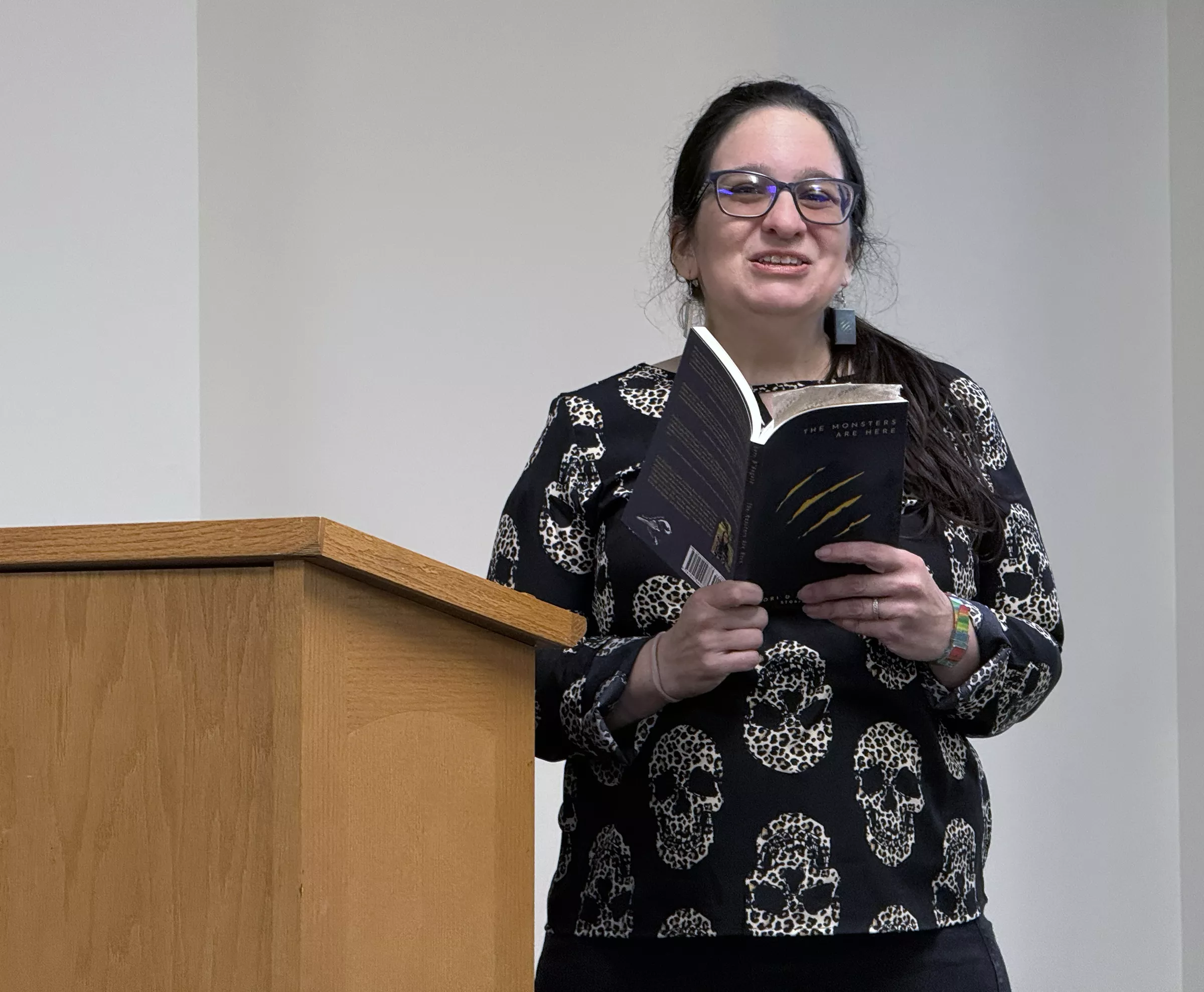
Even with dozens of published stories and now a book, D’Angelo is still chasing her dream of becoming a fulltime writer. She’s married to a Presbyterian minister and still works in retail.
Growing up in Pittsburgh, attending school in Chicago and living in the Ohio River Valley as a young adult armed D’Angelo with lots of experiences to weave into her stories. She camouflages the places just enough to be comfortable writing about them.
“It’s really stressful to write stories that take place in like actual real places,” she says. “I get so worried, like, was it Kaufmann’s here back in the day?”
In “Ohio River Oracle,” D’Angelo used East Liverpool, Ohio, as the basis for a “town that time forgot.” It’s a story about a woman looking for answers from Cassie Jones, a psychic who plied her trade in a place where, D’Angelo wrote, “The lucky ones got out, went off to livelier places.”
After graduating from WVU, D’Angelo got out herself and she now lives in central Virginia. “We live basically in the middle of nowhere,” she says. But it’s close to arts communities in Charlottesville and Roanoke where she does workshops and where she hopes to teach writing.
D’Angelo’s Pittsburgh roots are never far from her thoughts. They’re even more prominent now after learning earlier this year that her great-uncle Gus Gianni was a racketeer. A relative doing genealogical research had sent D’Angelo some articles about Gianni’s 1946 murder on an Oakland street.
Gianni was a numbers writer with powerful political connections who once lost a close race to become an alderman. His rap sheet included arrests and prosecutions for gambling, assault and battery, and voter intimidation. Gianni lived a flashy life and was reputed to run much of the numbers action in Shadyside and Oakland.
D’Angelo began asking questions about Gianni. “My aunt said he was murdered by the mob,” she says. Though Pittsburgh police detectives detained and questioned alleged mob enforcer Joseph Rosa for five days before kicking him free, they never solved the crime.
Her family doesn’t like to talk about Gianni. It’s a story tinged with shame in an Italian-American family with ties to Pittsburgh history that go deeper than organized crime. D’Angelo’s family tree includes ancestors who founded Bloomfield’s popular Tambellini’s restaurant.
The ethnic stereotypes are hard to avoid. “It would always annoy me when people would stereotype Italian-Americans as being the mob,” D’Angelo says. “Well, that’s fabulous, because now I know that my great uncle was involved with the mob, but I didn’t even watch The Godfather until I was an adult.”
D’Angelo isn’t sure how Gianni’s murder will make its way into her work. It could be fictional or autobiographical. She struggles with the powerful but fraught nature of history. “Whenever you’re writing about Italian-Americans, you don’t perpetuate stereotypes. Although some Italian-Americans, like apparently my grandmother’s brother actually had connections to racketeering,” she says.
For the horror fiction author, her great-uncle’s murder is a real-life horror story wrapped inside another, the peril of writing about Italian families where connections to organized crime are literally in the blood.
This article appears in Nov 13-19, 2024.