

Deprecated: mb_convert_encoding(): Handling HTML entities via mbstring is deprecated; use htmlspecialchars, htmlentities, or mb_encode_numericentity/mb_decode_numericentity instead in /var/www/html/wp-content/plugins/super-cool-ad-inserter/inc/scaip-shortcode-inserter.php on line 37
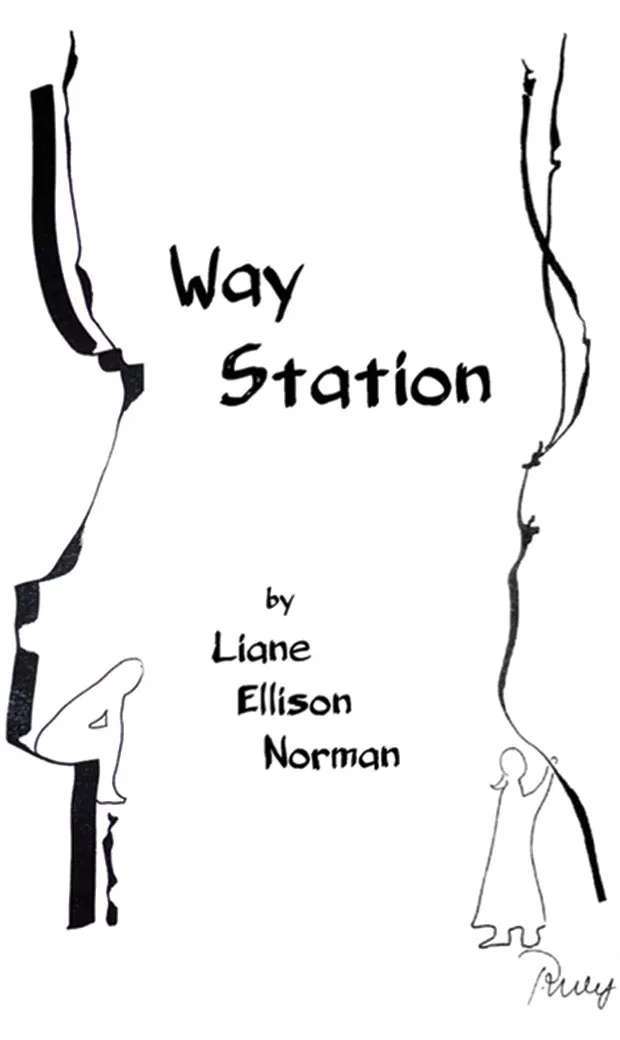
Liane Ellison Norman begins her new poetry collection, Way Station (Finishing Line Press), with “2015,” which reads, “In these latter days / I throw my poems — / small stones — into still ponds / In hope / that someone / will see rings.” She’s looking to make connections with readers. Forgoing experimentation and clever wordplay, the book leaves its mark through Norman’s sincere voice as her speaker observes and explores a life genuinely lived.
Norman, a member of Carlow University’s Madwomen in the Attic workshops and long-time Pittsburgh resident, was born in Montana, the daughter of a Forest Service range ecologist and an elementary-school teacher. This perspective informed much of her previous collection, the solidly written Breathing the West: The Great Basin Poems. Her newer work continues to consider family, aging and the dynamics of nature and human intervention.
Here, poems about a daughter dying young of cancer are especially poignant. In “Mend,” Norman writes of “The lovely wool sweater / hand-knit by a dear old friend / for my daughter’s 36th birthday.” The tactile lines describe the speaker wearing “a cotton turtleneck so the wool / won’t castigate my skin.” With the once moth-eaten sweater now mended, Norman writes, “when I wear it, I feel how short / the time was between Emily’s / birthday and her death / less than a month later.” The garment looms as a tender symbol for the brevity of life.
Meditations on growing old, like the title cut, “Way Station,” show the speaker grieving “for the mind I once had,” while “Self-Portrait as I Am,” concludes by confidently stating, “Blood still courses in veins that stand / ropey and blue, little mountain ranges.” “Lately” finds Norman musing that “I’ve been rehearsing / death — / the next big thing.” While poems on maturing may not be racy, the honesty of these, including “Losing Memory,” with its metaphorical ending: “It’s the small things — / forgetting the name / at the tip / of my tongue … / rainbow trout / in the cold mountain stream,” makes them uniquely insightful.
An appreciation of nature abounds in these 78 pages, relying on crisp images and a tone that swings between wonderment and dismay with humanity. The e.e. cummings-esque “Every Year” highlights the former, as Norman writes, “Although / it’s happened / before / I’m astounded / as the small blades / cut through wet soil / then / as if by magic / everything’s in bloom.” In the end, Way Station is a book that sees the big picture in engagingly personal ways.
This article appears in Aug 9-15, 2017.