

Deprecated: mb_convert_encoding(): Handling HTML entities via mbstring is deprecated; use htmlspecialchars, htmlentities, or mb_encode_numericentity/mb_decode_numericentity instead in /var/www/html/wp-content/plugins/super-cool-ad-inserter/inc/scaip-shortcode-inserter.php on line 37
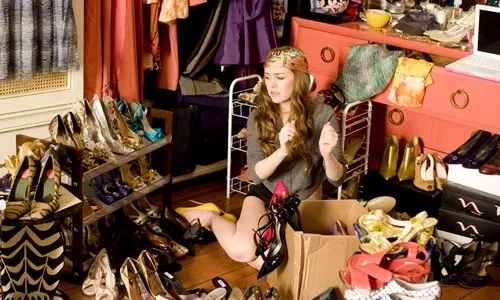
Remember discretionary shopping? It’s the joy — and the bane — of Rebecca’s life. She’s a twenty-something in New York City who can’t stop buying designer clothing, even as she spirals deeper into debt and compulsion. Oh, tra la la! Confessions of a Shopaholic is meant to be a giggle-fest after all.
P.J. Hogan’s comedy is adapted from two of Sophie Kinsella’s best-selling pink-sleeved Shopaholic novels, and stars Isla Fisher as the fashionista Rebecca. The Australian actress who shone as Wedding Crashers‘ nympho gets stuck here: Fisher is bright and lively, but she can’t transcend this clichéd role.
Rebecca lands the ever-popular dream job of effervescent chicks in movies: working at a magazine. I suppose this is a step up from earlier “glam-gal jobs” such as chorus girl or Madison Avenue secretary, but when will frothy movies catch up with reality and give their heroines swoony jobs in sturdy, recession-proof occupations like pest control or plumbing?
But really, Confessions‘ biggest blunder is its perpetuation of the ditzy, handbag-obsessed female, buttressed by the slimmest tacked-on acknowledgements that “she’s smart, too.” Here, Rebecca proves her “smarts” by inventing elaborate lies to stave off a bill-collector; writing fluffy articles that compare economics to various garments; and having a great idea about getting out of debt, i.e. selling her crap instead of buying more.
Rebecca’s just another giggly airhead waiting for her necessary humiliation — and her salvation via a man. Her dream date is, naturally, her boss (Hugh Dancy), who’s conveniently both the scion to a great fortune and a down-to-earth self-made man.
Rebecca’s tragedy — curiously skipped over in a couple of lines — is that her life feels empty, and so, she confesses, she fills it with merchandise. And for reasons too complex to argue about here, so it is for a lot of Americans, men and women alike. But this movie isn’t about solving our twisted problems of affluence and hyper-consumerism, or even examining how we came to be defined by buying things. How can it be when it’s such a glittery showcase for beloved over-priced merchandise? (Our heroine falls for the hero when she hears him “speak Prada.”)
The timing of this film is dreadful: In the New Financial Now, nobody feels much like frivolous shopping — even vicariously — and showcasing barely employed youngsters blithely running up five-digit credit-card debts to purchase utter silliness is hardly the amusement Shopaholic makes it out to be.
Of course, by the story’s end, our naughty, flighty heroine has been transformed into a grounded, frugal type, but I don’t believe her rehab for a second. After all, her latest acquisition is a super-rich boyfriend. (Oh please, this is so not a spoiler!) Centuries of chick-lit have counseled us that the only thing better than spending your money on fabulous, frivolous wardrobes is spending some man’s.

This article appears in Feb 19-25, 2009.