
Deprecated: mb_convert_encoding(): Handling HTML entities via mbstring is deprecated; use htmlspecialchars, htmlentities, or mb_encode_numericentity/mb_decode_numericentity instead in /var/www/html/wp-content/plugins/super-cool-ad-inserter/inc/scaip-shortcode-inserter.php on line 37
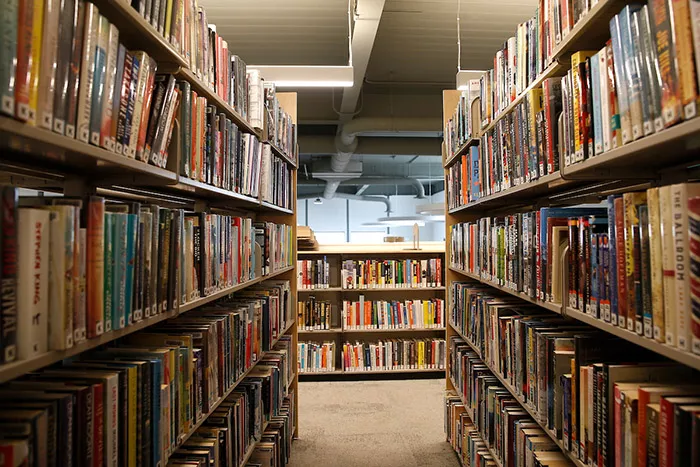
Sarah Beasley, the assistant director of Collection Services at the Carnegie Library of Pittsburgh, says it feels strange calling Banned Books Week — an annual, nationwide event founded in 1982 — a celebration this year.
“In [my] time in this profession, it felt like let’s celebrate this because it’s not something that really happens that much anymore. It’s not really something that we’re confronting on a regular basis,” Beasley tells Pittsburgh City Paper. “That definitely feels different in the past couple of years, with the exponential increase in challenges to materials in schools and public libraries.”
In light of nationwide efforts to ban and censor books and public library materials, including on a local level, the CLP and the Allegheny County Library Association will focus on the freedom to read. This year, the Pittsburgh leg of Banned Books Week, taking place Sun., Oct. 1-Sat., Oct. 7, will highlight endangered writing while providing more resources to help combat book-banning efforts.
The week includes two “30 Books in 30 Minutes” events, where library staff members highlight favorite banned books by sharing blurbs. Participants also receive a complimentary copy of one of the books.
Library patrons can also expect all-ages programming dedicated to threatened books, including a censored poetry activity and displays showcasing famous “challenged” titles. In addition, CLP will debut new graphics and stickers featuring banned books and asserting the need for open access to books and information.
Part of that accessibility lies in Freedom to Read, a new permanent page on the CLP website. The resource allows readers to find information about banned books and follow library efforts to protect intellectual freedom and “the right to read.”
According to the American Library Association Office for Intellectual Freedom, the first eight months of 2023 saw a record surge in attempts to challenge titles in public libraries. This uptick represents a 20% increase from the same period last year when ALA claims it saw “the highest number of attempted book bans” since the organization “began compiling data about censorship in libraries more than 20 years ago.”
As the ALA points out, the vast majority of banned titles were “written by or about members of the LGBTQIA+ community or by and about Black people, Indigenous people, and people of color.” Among the most challenged book titles last year were Gender Queer by Maia Kobabe and All Boys Aren’t Blue by George M. Johnson, as well as books from two Pittsburgh authors — Me and Earl and the Dying Girl by Jesse Andrews and The Perks of Being a Wallflower by Stephen Chbosky.
Pennsylvania is among the states with the highest number of book challenges, with more than 100 titles challenged so far this year. Students in the Mt. Lebanon School District recently mounted efforts to protect inclusivity in their curriculum after conflict arose about a frequently banned book.
Beasley says it’s “fundamental” to the mission of public libraries to build collections that promote open access to ideas and “provide as many perspectives as possible.”
“For people to be able to come to the library and find something that they can see themselves reflected in or to learn about somebody who’s different than them… that’s really important to us,” she says. “When we put items on display, when we have programs that are specifically about things that we know folks are finding objectionable, that can mean that we might have challenging conversations. But we still do it because we really firmly believe that we need to protect [the] right for people to choose for them[selves] and for their families.”
Beasley encourages those who want to push back against censorship to read banned books, reach out to their elected officials about protecting intellectual freedom, and visit their local libraries.
“One of the best ways to protect your right to read is to support public libraries,” she says.
This article appears in Sep 27 – Oct 3, 2023.