

Deprecated: mb_convert_encoding(): Handling HTML entities via mbstring is deprecated; use htmlspecialchars, htmlentities, or mb_encode_numericentity/mb_decode_numericentity instead in /var/www/html/wp-content/plugins/super-cool-ad-inserter/inc/scaip-shortcode-inserter.php on line 37
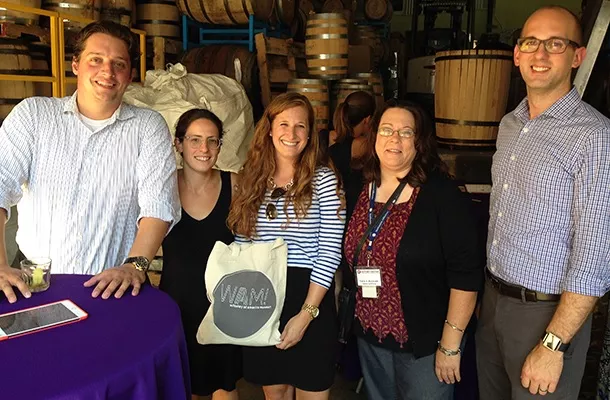
The company that brought back whiskey pride to the birthplace of the Whiskey Rebellion is taking another step toward spreading the traditions of Pennsylvania distilling. Wigle Whiskey is seeking to start an interactive whiskey museum here in Pittsburgh, adding to their mission of reigniting interest in the rye whiskey heritage of Western Pennsylvania.
“It’s time to reclaim our place in whiskey history,” Wigle co-owner Meredith Meyer Grelli said to a small crowd at the Wigle Whiskey Barrelhouse in the North Side yesterday.
Grelli said that while Kentucky and the Bourbon Trail get most of the attention when it comes to whiskey heritage in the U.S., Western Pennsylvania actually deserves most of the credit for popularizing the spirit in America. After all, following George Washington’s quashing of the Whiskey Rebellion in Pennsylvania in the late 1700s, many distillers moved to Kentucky, where they created Bourbon shortly after.
The Whiskey of America Museum, or WAM!, will include exhibits on whiskey’s history in America, cultural displays detailing the spirit’s rise in popularity, do-it-yourself cocktail stations, and interactive exhibits that engage visitors in the science behind distilling. Grelli says that the Pittsburgh community will be an integral part of the process, and local artists, scientists and makers will contribute to the museum. Chris Moehle, of the Robotics Hub, a Carnegie Mellon University-General Electric collaboration, says the group has plans to create and showcase a robot for the museum that will automate the malting process of making whiskey.
“It’s going to be like a kids museum for adults, with alcohol,” says Grelli.
A bottle shop and tasting room will accompany the museum and will feature local spirits, beer, ciders and wine for sale. The museum site will also serve as the trailhead for the new Rye Whiskey Trail, which will stretch from Pittsburgh to George Washington’s historic estate Mount Vernon, just south of Washington, D.C., following the Great Allegheny Passage and C & O Canal Towpath bike paths.
Many regional and national groups have already signed on to help create the museum, which Grelli emphasizes isn’t a Wigle museum, but a whiskey museum. A 16-member committee has formed and includes representatives from the Smithsonian Institute of American History, Heinz History Center, George Washington’s Mount Vernon, Allegheny County Economic Development and Pittsburgh City Councilor Dan Gilman.
Wigle is contributing $250,000 to the project and is hoping to raise an additional $35,000 via a Kickstarter campaign. Pledges to WAM!’s crowdfunding campaign come with prizes like t-shirts, party invites and even engraved mini oak barrels. Grelli says the museum will start as a pop-up at a to-be-determined location in Downtown this November. Then they hope to find a permanent location somewhere in Pittsburgh that could open sometime in 2018.
This article appears in Aug 10-16, 2016.


I collect antique whiskey stuff and have many antique whiskey items from both MD and PA. I would be willing to lend some antique PA whiskey items for display. See “GunOwnerDan” in youtube to contact me.
If Pittsburgh is smart and wants to take full advantage of what WAM and the soon to be Brew Museum have to offer both locals and tourists then let me suggest this.
The STRIP DISTRICT!!!!
I am not sure who owns the land between the Hampton Inn and the long terminal building but across from the Homewood Suites on Smallman Street you have those open parking lots which I don’t believe are being utilized.
You can build both WAM and the Brew Museum next to each other near the Heinz History Center. You’d have 3 museums nearest each other within walking distance to Downtown. Easy for tourists to get to. Instead of building somewhere in Lawrenceville, or Troy Hill which is outside of Downtown and has no mode of transportation for people to travel with.
Pittsburgh’s problem is that as a city it has plenty to offer but very little of it is centrally located. Everything is scattered and isolated where transportation is an issue for the majority of tourists and visitors who have no way of getting to those places. Keep these museums near each other in a centrally located area near Downtown.