
Deprecated: mb_convert_encoding(): Handling HTML entities via mbstring is deprecated; use htmlspecialchars, htmlentities, or mb_encode_numericentity/mb_decode_numericentity instead in /var/www/html/wp-content/plugins/super-cool-ad-inserter/inc/scaip-shortcode-inserter.php on line 37
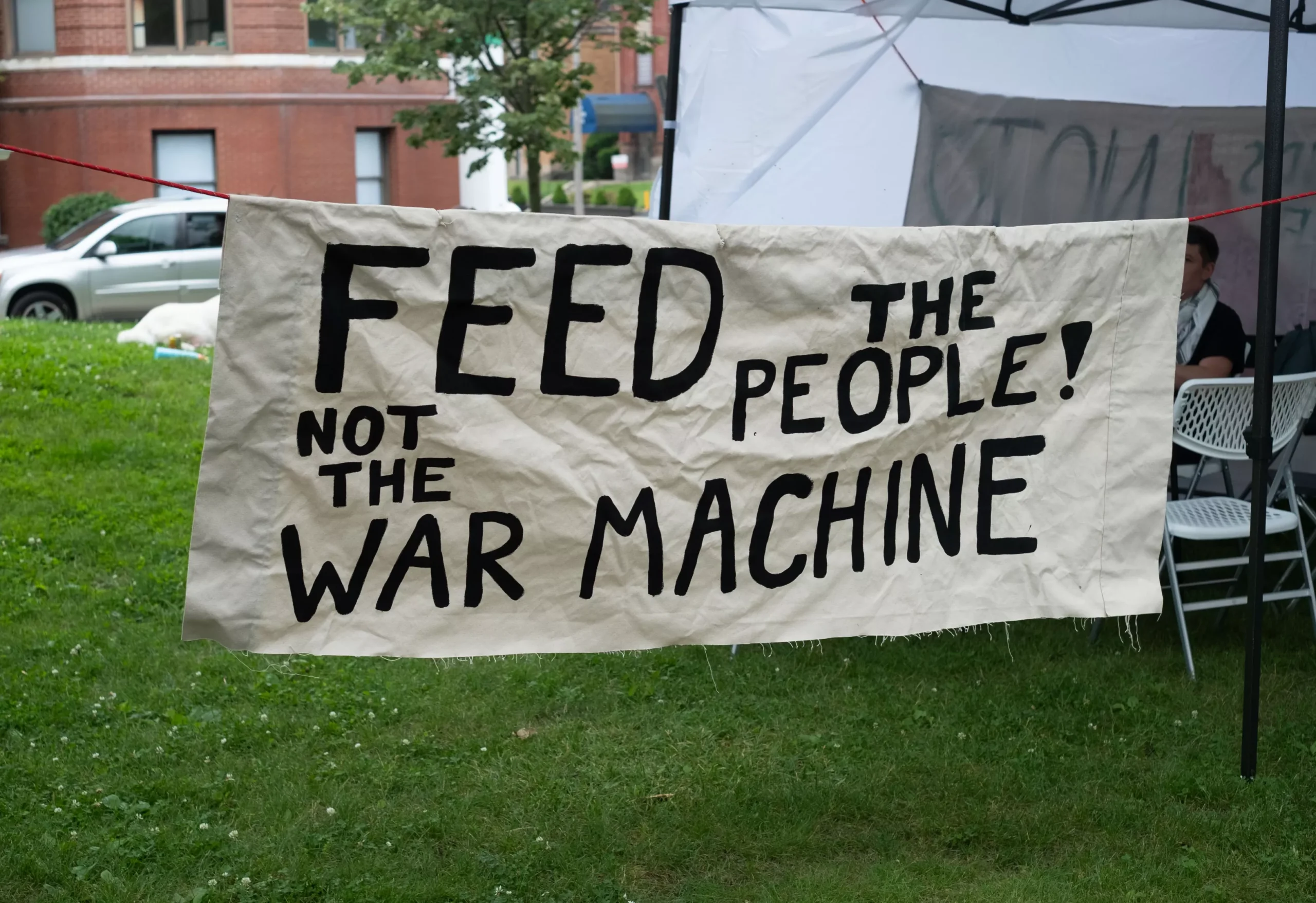
As Israel’s 15-week blockade of the Gaza Strip claims lives and threatens famine, a Pittsburgh group has launched a campaign to address hunger and draw local parallels to the region’s rising food insecurity.
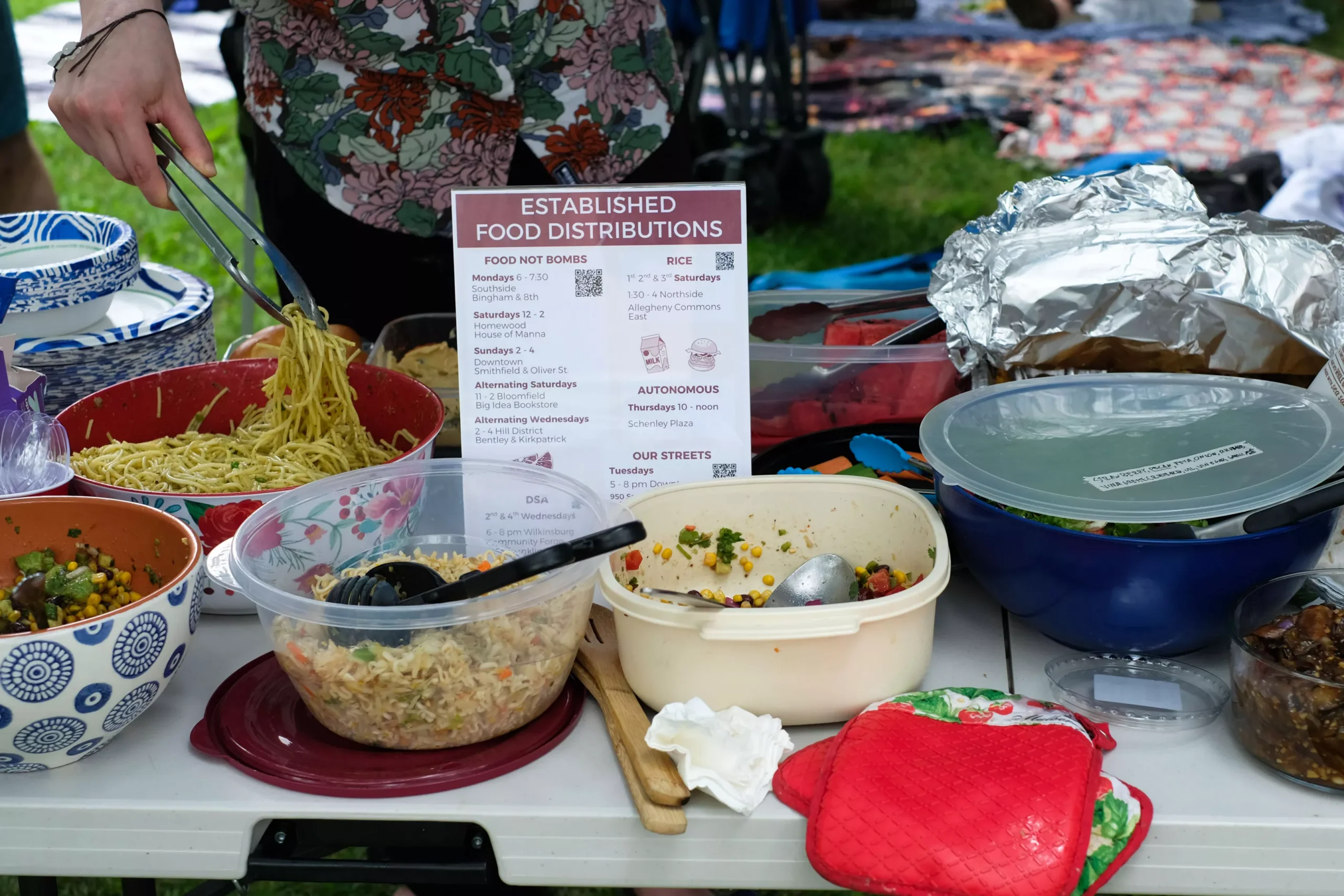
Jewish Voice for Peace Pittsburgh hosted a community potluck and food share in Friendship Park on June 15, the first in a series of distribution and advocacy events. About 30 people gathered, including community members, organizers, neighborhood residents, and staff from nearby West Penn Hospital. The event also highlighted local organizations with established food distribution events, including Steel City Food Not Bombs, Pittsburgh DSA, Our Streets Collective, and RICE, an autonomous collective that distributes free hot meals and toiletries.
“It’s a no-brainer to me, the connection between hunger here and starvation in Gaza, in terms of how we spend our money and how we fund the war machine,” JVP organizer Melanie Redden tells Pittsburgh City Paper. “We’re going to be bringing that message visibly to as many locations around Pittsburgh this summer as we can, and really looking to hold our lawmakers accountable for how they spend our money.”
JVP’s Pittsburgh chapter describes itself as “organizing toward Palestinian liberation and Judaism beyond Zionism,” and has previously held potlucks, public rallies and protests, and film screenings, including bringing the Oscar-winning documentary No Other Land to the region.
Redden says the idea to combat hunger arose from JVP’s national member meeting held in Baltimore last month, where Palestinian partners told the Jewish-led organization that starvation in Gaza had dropped out of media coverage, even as it represents a “new escalation in the genocide.”
Though Israel has shifted its focus to war with Iran, 59 Palestinians were killed trying to reach food on June 17, the single deadliest incident since the Gaza blockade began in March.
Jacob Blumenstein Paul, a JVP Pittsburgh organizer, describes the blockade and risk of mass starvation as “the most ruthless the Western world has seen since World War II.”
“We had this idea addressing hunger here could help bring people into this in a new way … It helps us understand how we are all political and all a part of the system,” Blumenstein Paul tells City Paper. Other JVP chapters, including one in Albany, N.Y., have signed onto the campaign.
“What we really want is to bring home to people why they should care about this and how much this does impact Pittsburghers, quite a lot of [whom] are food insecure,” says Redden.
Redden and Blumenstein Paul cite statistics from Feeding America’s most recent Map the Meal Gap study, which reported food insecurity in the region rose to 13% in 2023, including 18% of children — or about 1 in 5 — up from 16.6% in 2022. Proposed federal funding cuts to food aid programs like Supplemental Nutrition Assistance Program (SNAP), rising food costs, and tariffs would also squeeze food banks and worsen hunger and food insecurity.
“People can’t eat, people can’t afford food here, and our government does not help with their material needs,” says Blumenstein Paul. Regular food sharing events will “call attention to how our government invests more in starving people in Gaza than in feeding people here, unfortunately.”
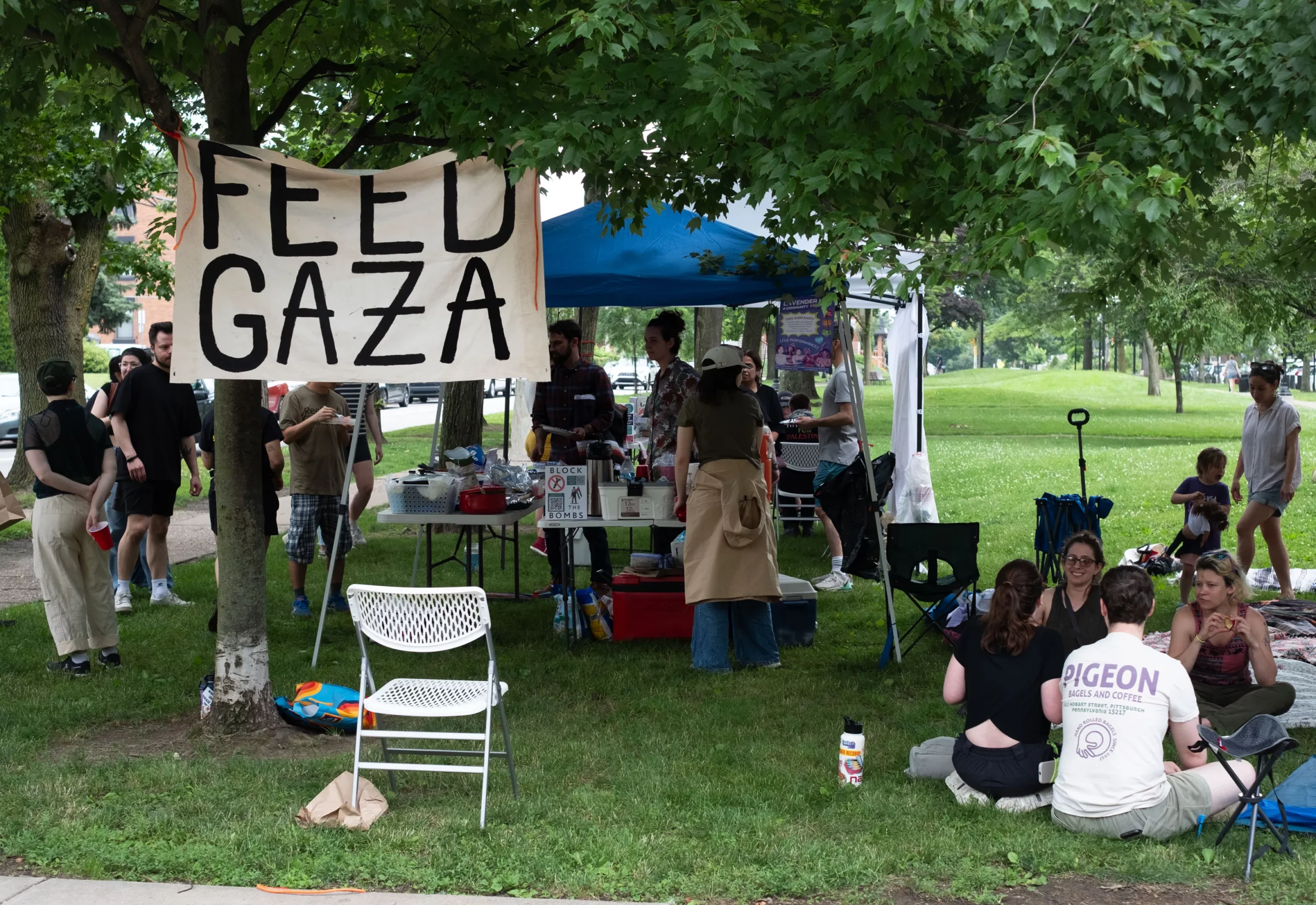
JVP Pittsburgh’s potluck also took place the day after thousands of Pittsburghers joined demonstrations against Donald Trump as part of nationwide No Kings Day protests. Blumenstein Paul also spoke at a protest Downtown.
Organizers say another aim of the new campaign is to galvanize the community’s energy from protests into political action.
“People don’t really know what to do right now,” Redden says. “I think there’s so much going on in the world that’s bad and scary, and I think that feeding our neighbors is one of the most basic things we can do.”
This article appears in Jun 11-17, 2025.