
Deprecated: mb_convert_encoding(): Handling HTML entities via mbstring is deprecated; use htmlspecialchars, htmlentities, or mb_encode_numericentity/mb_decode_numericentity instead in /var/www/html/wp-content/plugins/super-cool-ad-inserter/inc/scaip-shortcode-inserter.php on line 37
Filmmaking takes passion, vision, belief that a story is worth telling, and acceptance that your work will likely not make it big. This persistence fuels artistic movements, and now, Pittsburgh Sound + Image is leading an effort to champion and celebrate those who helped make the local film scene what it is today.
Pittsburgh Sound + Image received grants to restore more than 10 short films by three Pittsburgh filmmakers: Billy Jackson, Natalka Voslakov, and John Kirch. Funding from the National Film Preservation Foundation and the Al Larvick Conservation Fund have covered about $23,000 of the necessary $30,000 to restore and showcase these works.
The organization also launched a Kickstarter campaign — titled “Preserving short treasures of Pittsburgh film history” — to cover the remaining $7,000. The deadline for the campaign is Wed., March 12.
A press release states the grants and Kickstarter donations will cover “new 4K scans of the original prints along with new 16mm film prints of Jackson’s and Voslakov’s films.” PSI plans to premiere these restored prints in Pittsburgh later this year.
Those supporting the Kickstarter campaign will receive perks, including tickets to the films’ premieres, prints designed by local artists Janel Young, Mary Tremonte, Lucy Chen, Rosabel Rosalind, and Njaimeh Njie, PSI-designed totes, and more.
PSI co-founder Steve Haines spent years working with Pittsburgh Filmmakers, the Oakland-based school that taught film, photography, and other visual media until the mid-2010s, when it essentially closed and came under the ownership of Carnegie Mellon Univeristy. It was there that Haines connected with Jackson, Voslakov, and Kirch.
“The common thread [between these three] is a caliber of work that should earn them a bigger place in the discussion of Pittsburgh film history,” Haines tells Pittsburgh City Paper. “Also, John and Natalka knew each other; they were both part of the punk scene, and all three filmmakers were affiliated with Pittsburgh Filmmakers. So there are connections in the way that, in any subculture in Pittsburgh, everybody knows everybody. Most importantly though, all three are under-discussed when we talk about Pittsburgh film.”
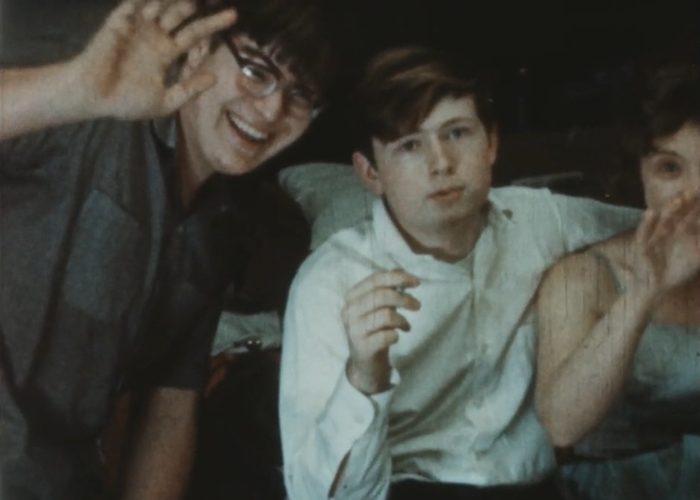
Kirch — who, as a teenager, played a zombie in George A. Romero’s seminal horror film Night of the Living Dead — worked as an editor at KDKA and WQED while spending his off hours producing his own projects. He took what he learned at the California Institute of the Arts and applied it to the Pittsburgh film and music scene, and his films about the local punk scene are vital, experimental time capsules put onto 16mm.
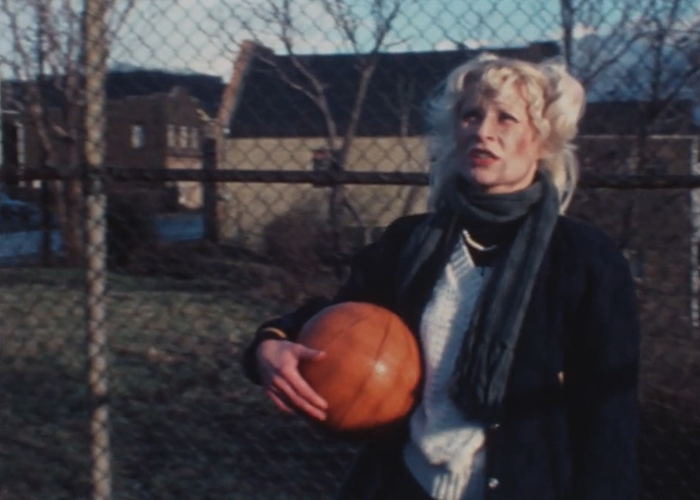
Voslakov has been described as the nucleus of Pittsburgh’s film community for much of the 1970s and 1980s. The documentarian captured the world she knew, including her experiences as a single mother and what it meant to be a female artist at the time. Her short Time Capsule With True Bird Flight is the subject of PSI’s restoration.
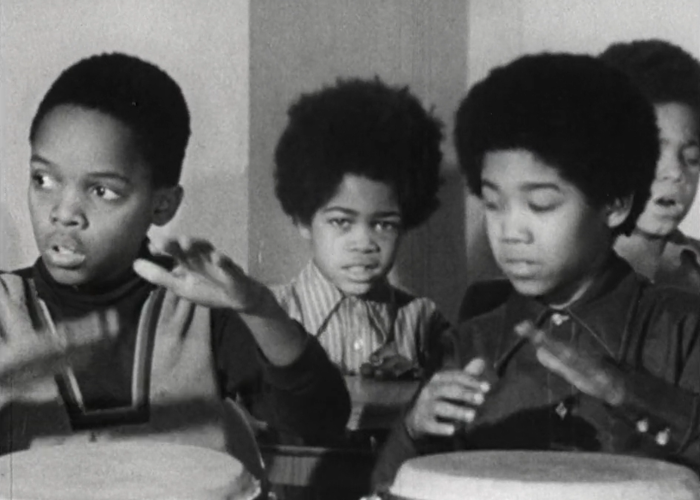
Jackson, the only one of the three filmmakers still living, invited Haines to see his basement of films. He became a seminal part of the independent Black film scene in the 1970s. PSI is restoring Jackson’s We Are Universal, an exploration of the Black is Beautiful movement of the 1960s and 1970s, and Didn’t We Ramble On, a short history of Black marching bands narrated by Dizzy Gillespie.
PSI states that the Museum of Modern Art in New York City invited the group to screen the preliminary digital restoration of Jackson’s We Are Universal.
“It’s an eclectic bunch of filmmakers, really, and I hope it gestures somewhat towards the breadth of Pittsburgh Sound + Image’s interest when it comes to local film history,” Haines said. “But they shared that they are or were all working class folks, always struggling to come up with funding for their next project or getting another gig as a hired hand on a bigger film production.”
“They were passionate about filmmaking. This notion of artists having this drive to create but also [having] that energy be impeded by economic factors is relatable to me, personally. It’s quite sad when an artist is not able to get to a place where they can do what they do best: create!”
Haines adds, “They were all working with analog film. It’s thanks to the versatility and stability of film as a medium that we can still be confronted by a particular movie’s physical existence if we choose to look for it. This is why we’re able to restore and preserve these works 50 years on.”
This article appears in Feb 26 – Mar 4, 2025.