
Deprecated: mb_convert_encoding(): Handling HTML entities via mbstring is deprecated; use htmlspecialchars, htmlentities, or mb_encode_numericentity/mb_decode_numericentity instead in /var/www/html/wp-content/plugins/super-cool-ad-inserter/inc/scaip-shortcode-inserter.php on line 37
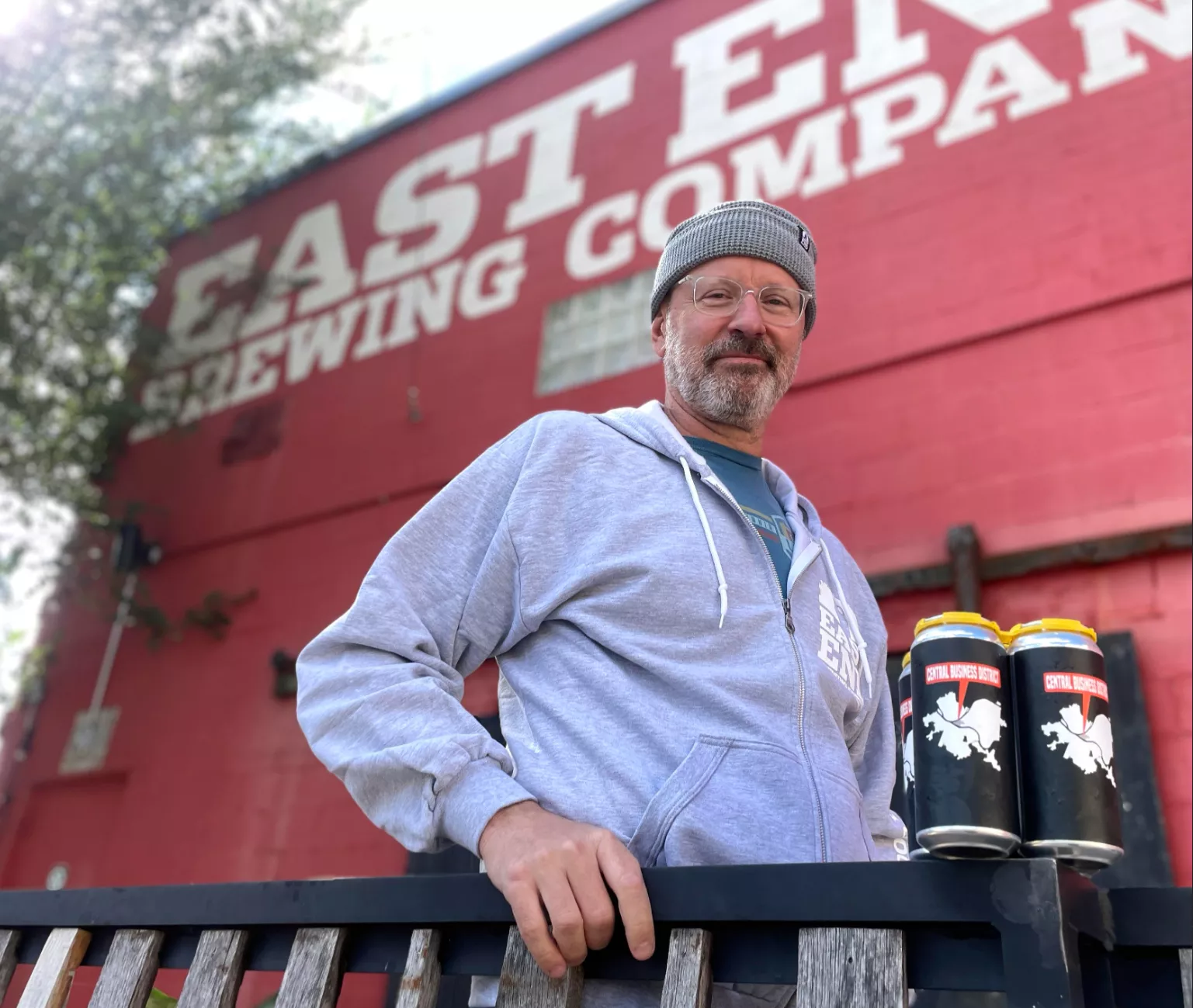
When East End Brewing Company kicked off its neighborhood beer series with Allentown, owner Scott Smith wasn’t sure what to expect. Ninety brews later, he says the project was a huge success.
The brewery’s YOU ARE HERE neighborhood beer project, begun in May 2019, pledged to make a beer honoring each of Pittsburgh’s 90 neighborhoods and celebrated its inaugural release at a street fair two months later. While some assumed that Allentown was chosen as the series’ first neighborhood in order to move through the list alphabetically, Smith tells Pittsburgh City Paper that, in actuality, it was the brewery’s ties to design partner Commonwealth Press — creators of their can art — who were opening a warehouse nearby the same weekend.
Hoping to build on the community event and draw in locals, Smith and East End staff loaded up the first cans of Allentown #1, an imperial shandy made with lemon juice and tea from the Strip District’s Prestogeorge, and waited. To their delight, a crowd arrived, and the beer sold out.
“We had to send reinforcements back from the brewery, because we had no idea. And we brought a lot of beer,” Smith remembers. The event also cemented East End’s connection to the neighborhood, a goal of the YOU ARE HERE project.
“That neighborhood has changed so much in the last 90 beers. That’s my calendar,” Smith laughs.
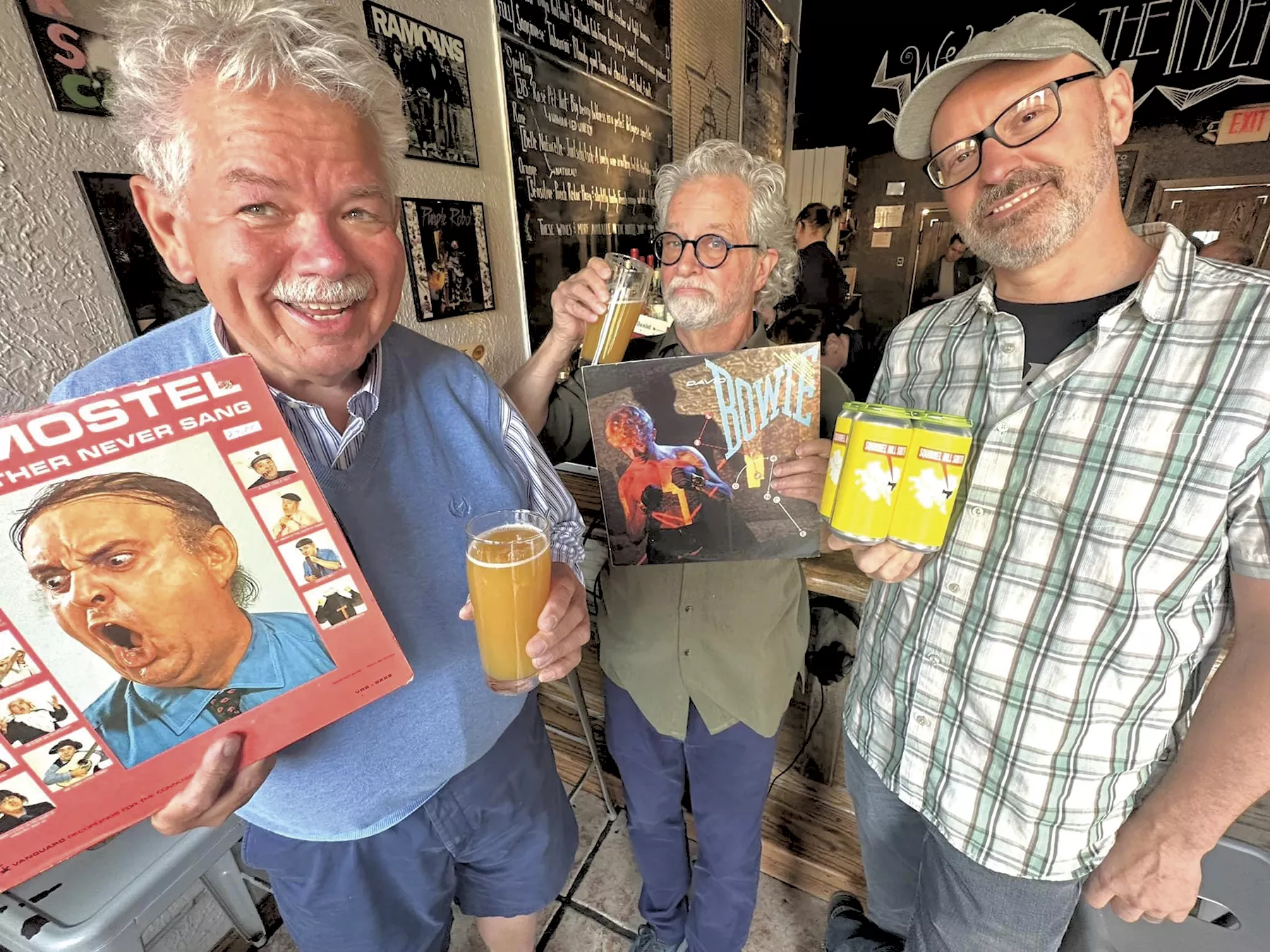
Five years later, East End completes the journey with the release of its 90th YOU ARE HERE neighborhood beer, Central Business District (“aka Dahntahn”). To mark the occasion, East End will host a party, The (east) End Is Here, on Sun., Nov. 3 from 2-4 p.m. at Downtown’s Arcade Comedy Theater. The event will feature Pittsburgh neighborhood trivia by Drew from Drew’s Clues Trivia, an appearance by Rick Sebak, and the chance to taste Central Business District #90, a 6.5% golden imperial pilsner. The party also doubles as a celebration of East End Brewing’s 20th anniversary this December.
The idea for a neighborhood beer project came at a time when East End, founded in 2004, was “having lots of deep conversations about what it means to be a brewery in Pittsburgh and how we can better connect to the city we call home,” Smith said in a press release.
East End head brewer Brendan Benson belonged to an unofficial “burger club” where he and friends tried to eat a burger in every Pittsburgh neighborhood, which inspired Smith.
“The notion of a quest of touching every little corner of the city was interesting,” Smith says. He had “one of these three o’clock in the morning, sit-up-in-bed [moments].”
Since then, he and the brewery have “been to parts of this city that I never would have any reason to go to,” Smith says. “I’ve learned the history of certain neighborhoods and histories of the names.”
The project’s first step remains its most controversial — determining how many neighborhoods are in the City of Pittsburgh, no small task given residents’ fierce loyalty.
Smith recalls that, in 2019, Wikipedia listed 93, and the city’s official map designating 90 distinct neighborhoods wasn’t available online. East End wrote to the mayor’s office who mailed them the now well-known list of 90 (in addition to “half a dozen other neighborhoods that aren’t official neighborhoods”). To this day, Pittsburgh neighborhood boundaries are still debated at every beer release, Smith says.
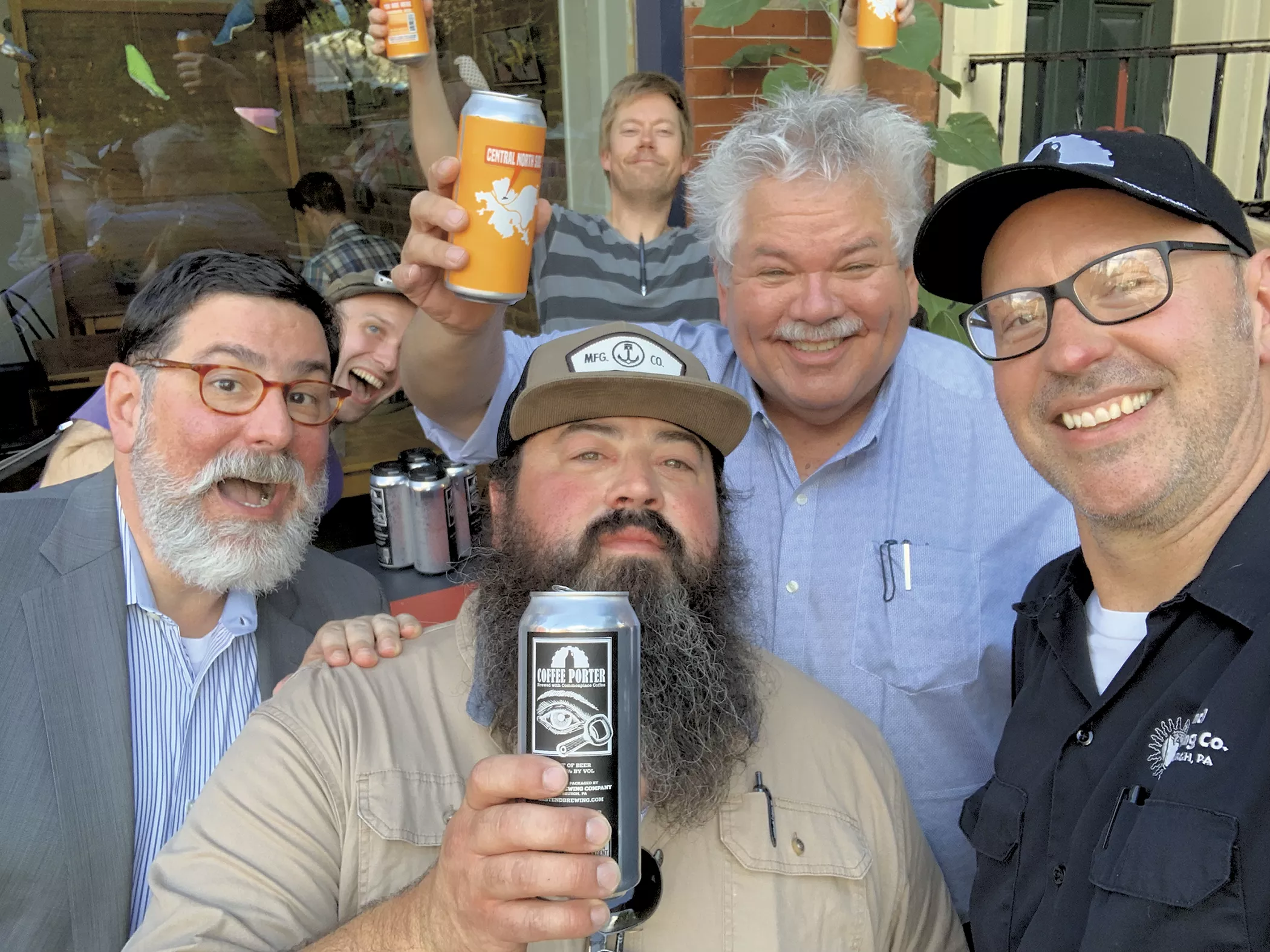
In case there was any doubt about the city’s enthusiasm, by the time East End released YOU ARE HERE beer #3, a Czech-style pilsner brewed for the Central North Side, Pittsburgh Mayor Bill Peduto and “unofficial mayor” Rick Sebak were on board. The pair came to the release party at Commonplace Coffee in the Mexican War Streets, held on a “gorgeous” day the same weekend as Picklesburgh 2019. Smith remembers being mobbed with partygoers at a table in front of the coffee shop.
“We had about three feet of table space and [were] trying to stay within our licensed area,” Smith says. Concerned about legality, “of course, the mayor pulls up with his security detail. And I’m like, ‘Hide your beer! It’s the mayor!’ And half a dozen people turn around.”
But the most memorable part of the event, remembers Smith, was hearing neighbors talking to each other.
“We’re talking to a guy, [and] he’s like, ‘Yeah, I live right there,’ and pointing to a house that’s 20 feet away. And the person next to him says, ‘Wait, which one do you live in? Oh, I’m your next door neighbor,’” Smith says. “And they meet each other, shake hands, and strike up a conversation … That’s the beauty of beer: bringing people together that were already together [and] maybe didn’t know [it].”
Naturally, another key element of the project is the beers themselves. Smith described the opportunity to create 90 different beers as a “brewer’s dream,” and, in the beginning, East End contemplated what each Pittsburgh neighborhood should taste like.
Hoping not to ruin anyone’s fun, Smith says that while they initially tried incorporating “some defining characteristic of a neighborhood that makes sense to put together in a beer,” they found it too difficult to scale for 90 beers. Thus, there have been different series of beer styles including IPAs, stouts, and pilsners.
“It’s truly random in terms of the style and how it’s assigned to a neighborhood,” Smith says. Yet tasting each beer, Pittsburghers can’t help ascribing a neighborhood’s qualities to it, believing they’ve “cracked the code.” (The sequence of neighborhoods was also largely random, and for a time, the brewery invited Pittsburghers like Bill Peduto to draw neighborhoods out of a growler.)
While Pittsburgh’s obsession with itself didn’t surprise him, Smith found it “pales in comparison to the attachment that people have for their neighborhood.”
This is because “their neighborhood attachment is generational,” he says.
At the release for Garfield, beer #11, a “hazy, Citra-foward” IPA, Smith remembers someone posted a picture of their octogenarian grandmother holding a can. She had a “delighted look on her face and her hands up in the air.” The photo’s caption mentioned her grandchild’s excitement at getting to bring the beer to “a lifelong Garfield resident [who has] this great connection to the city.”
In the West End’s Elliott neighborhood, the party for beer #54, a spruce lager, was sparsely attended until a police cruiser pulled up.
“My teenage instincts kicked in, and my adrenaline is, I’m ready to run,” Smith says. “And he walks up and says, ‘Can I get a four pack, please?’” It was the Pittsburgh Police Chief, proud to buy beer in the neighborhood where he’d started years ago. East End staff watched in surprise as he snapped a picture of the beer on the hood of his police car.
Smith also came to appreciate the egalitarian nature of the project — “seeing people getting excited about finally getting their beer for their neighborhood,” he said in a press release — and the brewery held firm to making a beer and throwing a party regardless of a neighborhood’s size or population.
“We may have eight people turn out for the release, or we may have 80 people turn out for the release,” Smith says.
For Fairywood, the city’s westernmost neighborhood, which is largely depopulated, East End held the release of beer #10, a coconut stout, at Cellone’s Italian Bread.
“There’s a UPS center, one or two other other businesses, and this giant bakery,” Smith says. “[So] we did the release in the lobby of the bakery’s offices [and] timed it so that when people came off shift, they could come and have a beer.”
The COVID-19 pandemic hit while beer #20, a milkshake IPA for Windgap, was in the tank, inspiring the brewery to get even more creative.
The Stanton Heights release of a Belgian Tripel (#58) in Nov. 2021 was held at a private home. A neighborhood resident volunteered her house for the party, and East End sold beers in the driveway while she cooked burgers in the backyard.
As time went on, the sequence of beers became less random and more in service of supporting neighborhood events.
The calculus became, “we’re going to do a release in Friendship? Well, the Pittsburgh Glass Center is having their big Hot Jam event in a couple of months, [so] maybe we can brew the beer and connect with that neighborhood in that way,” Smith says. “How can we best connect with an address? What’s a representative business or establishment or institution in a neighborhood?”
Befitting a Pittsburgh-wide quest, Smith also remembers some big swings. Bloomfield’s beer, to the chagrin of some residents, was not Italian, but a wee heavy Scotch ale, made in whiskey barrels that East End sourced from Laphroaig, a Scottish distillery founded in 1815. The North Side’s Manchester neighborhood was honored with a beer that staff called an Oceanic IPA (#72), made with malts originating from Australia and “all of the hops were from that part of the world,” says Smith, “which gave it a wonderful flavor characteristic.”
While East End didn’t intend for any neighborhood beers to return, they’re considering polling fans about their favorites early next year for a possible “greatest hits reprisal,” says Smith.
Asked how he feels about the end of the project, Smith says it’s bittersweet, though he considers it a resounding success, connecting the soon-to-be 20-year-old brewery even more deeply to the city and its neighborhoods.
“All these little unexplored corners of the city and connections with places and business owners that we did releases with, and old friends, new friends,” Smith reflects. “It’s really been quite a path, [and] it’s been the most successful and interesting beer series we’ve ever conceived. It’s definitely elevated what we do as a brewery to places I never thought we’d get to.”
This article appears in Oct 23-29, 2024.