

Deprecated: mb_convert_encoding(): Handling HTML entities via mbstring is deprecated; use htmlspecialchars, htmlentities, or mb_encode_numericentity/mb_decode_numericentity instead in /var/www/html/wp-content/plugins/super-cool-ad-inserter/inc/scaip-shortcode-inserter.php on line 37
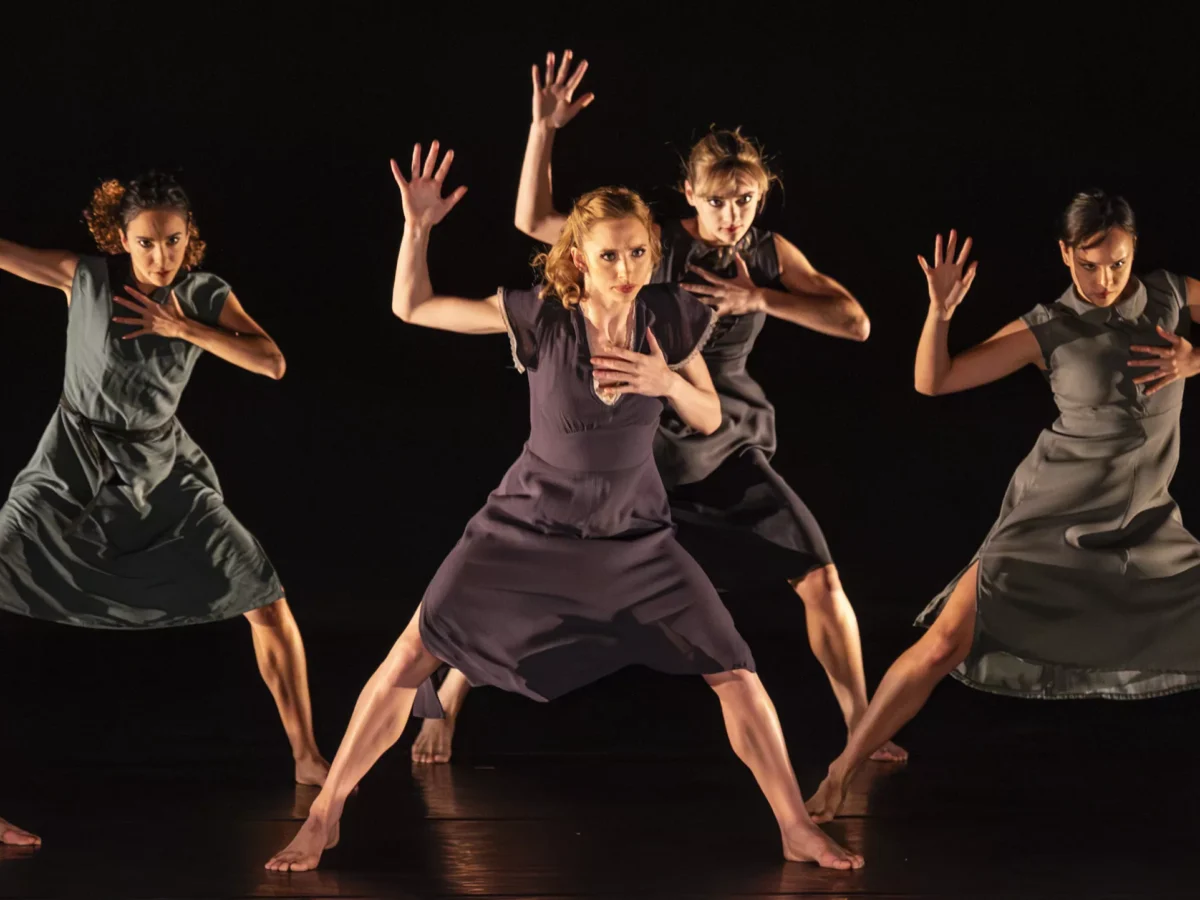
It seems so mean to slap down people as earnest as the folks in the Apple Hill Playhouse production of The Last Night of Ballyhoo. The show is a comedy-drama that falters on the timing necessary for the former, and on the passion required to fuel the latter. It’s not just the wandering accents and dialogue flubs — heck, people muff their lines in real life all the time — but the failure to enter the characters for anything more than a superficial reading of the script.
Certainly, playwright Alfred Uhry knows from superficial; his Driving Miss Daisy took shallowness to new depths. But his 1997 Ballyhoo, for all the subtlety it lacks, does give inspired actors some good bits to chew. Set in 1939 — the beginning of World War II, but well before the United States’ entry — Ballyhoo focuses on an upper-middle-class Jewish family in Atlanta. They’re as wrapped up in “society” and “breeding” as any dedicated WASP — the sort of person from whose exalted company they are excluded despite their long assimilation and rejection of Judaism. In turn, the “society” Jews repeat the pattern of snobbery and exclusion against their more openly Jewish brethren. Further darkening this world of prosperous but self-hating Jews is the war in Europe and the rise of Nazism.
The play’s fluffy overlay is a sit-com plot about two young ladies and their dates for the big dance, an affair which supplies the play’s title. “Ballyhoo” is the genteel Jewish equivalent of the gentiles’ Christmas-time line-up of debutante balls and parties. The young ladies have mothers who alternately cluck and coo, and the genial henpecked uncle/brother/brother-in-law completes the family picture.
The story begins on the evening of the celebrity-studded (and off-stage) premiere of the film Gone With the Wind. But among so many themes and sub-themes, the significance of that cinematic saga’s faux-romance and faux-history are rather lost in Ballyhoo. When the upper-crust characters use anti-Semitic epithets to describe other Jews, the lines don’t sizzle as they should. When a young Jewish woman mocks Pesach (Passover), the reaction should provide an ache, not mere embarrassment. Worries about the war and what it means for Jews are tossed away or swallowed, so that the play’s “affirmative” ending comes out of nowhere. We rarely get a glimpse below the fluff to find characters worth caring about, or the drama that drives the comedy.
The Last Night of Ballyhoo continues through Sun., Sept. 9. Apple Hill Playhouse, Delmont. 724-468-5050 or www.applehillplayhouse.org
This article appears in Sep 6-12, 2007.





While this article is very clearly well written, I’m fairly certain that the author may have been watching an entirely different show. Perhaps she forgot to go see it, read the play and made up a review (hence the no substantial evidence to her claims). Or maybe she went to see the play when the theater was closed, spending several hours by herself in the dark theater. Either way, shes inaccurate, to say the least.