

Deprecated: mb_convert_encoding(): Handling HTML entities via mbstring is deprecated; use htmlspecialchars, htmlentities, or mb_encode_numericentity/mb_decode_numericentity instead in /var/www/html/wp-content/plugins/super-cool-ad-inserter/inc/scaip-shortcode-inserter.php on line 37
Kratom, a psychotropic herb that’s been gaining popularity recently, has a rich historical background and a myriad of active compounds.
This article delves into its uses, potential health Kratom benefits, strains, forms, dosage, and potential risks to provide an in-depth understanding of this botanical substance.
Get ready to figure out what are the benefits of Kratom and whether or not they are right for you!
>>Check the best prices for high-quality kratom products here
Kratom Historical Background
Kratom, scientifically known as Mitragyna speciosa, has a long history in Southeast Asia, where it has been used in traditional medicine and cultural practices for centuries.
Indigenous communities in countries like Thailand, Malaysia, Indonesia, and Myanmar have relied on Kratom for its various properties.
It has been used to alleviate pain, fatigue, and digestive issues, and was often consumed as a tea or chewed directly.
Active Compounds in Kratom
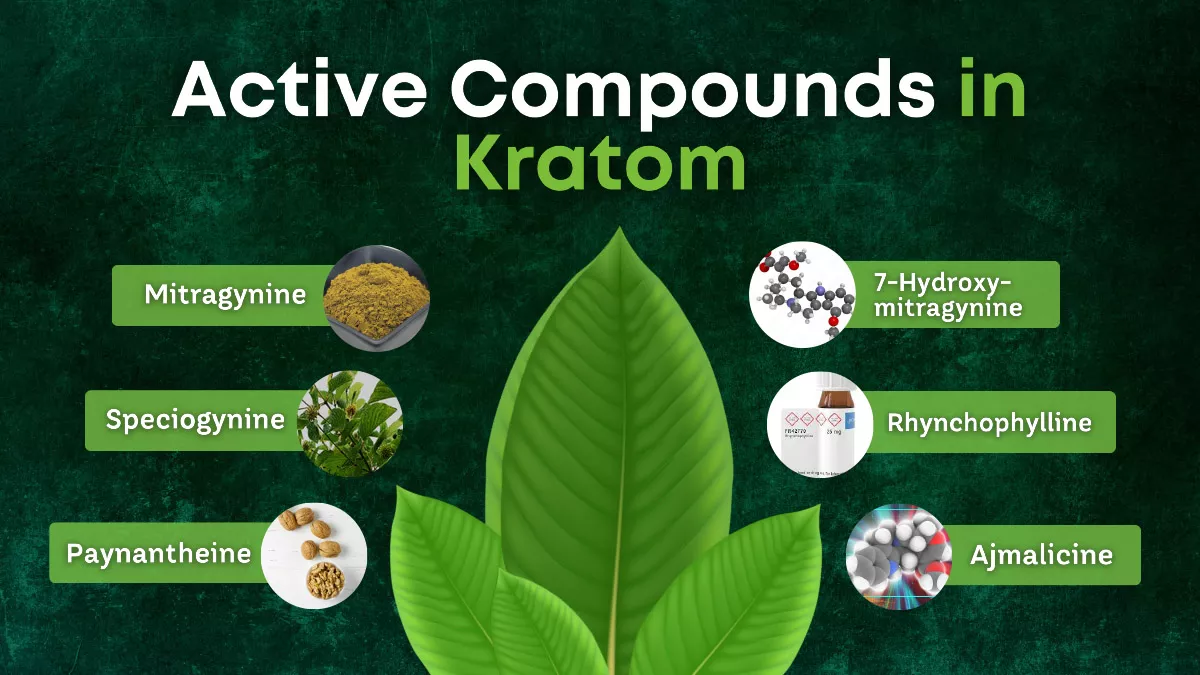
While the plant boasts a rich chemical profile, two key alkaloids take center stage: mitragynine and 7-hydroxymitragynine.
1. Mitragynine
Mitragynine, the primary alkaloid in Kratom, binds to opioid receptors in the brain in a unique way compared to traditional opioids.
This results in a modulation of pain perception and mood without the harmful respiratory depression commonly associated with opioids.
2. 7-Hydroxymitragynine
Although present in smaller quantities than mitragynine, 7-hydroxymitragynine plays a crucial role in shaping Kratom’s effects.
This alkaloid is believed to possess potent analgesic properties, potentially surpassing those of mitragynine. Its interaction with opioid receptors contributes to Kratom’s effectiveness in managing pain.
Common Uses of Kratom
The common uses of Kratom span traditional medicinal practices, recreational pursuits, and holistic wellness.
Here’s a closer look at the multifaceted roles that Kratom plays in different contexts:
-
Pain management
-
Opioid withdrawal aid
-
Managing anxiety and depression
-
Boosting energy and focus
-
Mood enhancement and relaxation
-
Recreational use
Health Benefits of Kratom
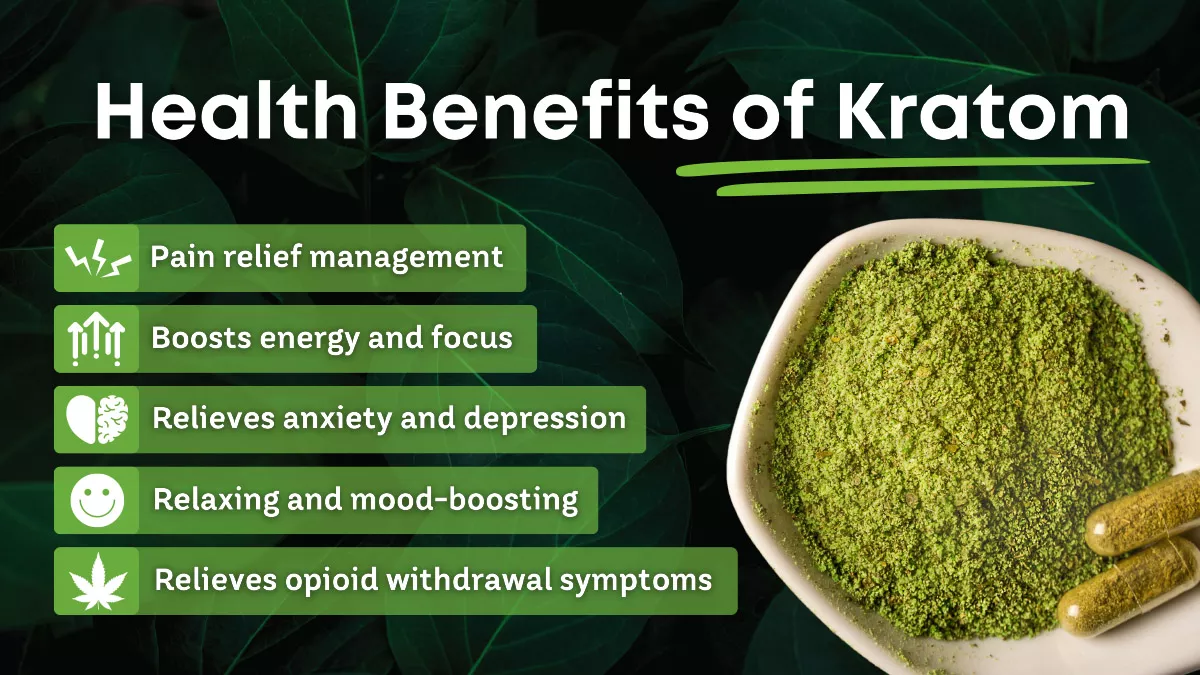
Kratom, the ancient botanical treasure of Southeast Asia, unfolds a tapestry of health benefits that have captured the attention of individuals seeking alternative wellness solutions. You can buy kratom for the following potential health benefits:
Pain Relief Management
At the forefront of Kratom benefits in the health department is its potential ability to alleviate pain. [1]
The active compounds in Kratom, particularly mitragynine and 7-hydroxymitragynine, interact with the body’s opioid receptors, providing, to some, natural analgesic effects.
Opioid Withdrawal Aid
Kratom has emerged as a potential aid for individuals navigating the challenging journey of opioid withdrawal.
By interacting with opioid receptors in a manner distinct from traditional opioids, Kratom may help manage withdrawal symptoms, providing a bridge toward recovery. [2]
Managing Anxiety and Depression
Kratom’s mood-enhancing properties may extend to managing symptoms of anxiety and depression.
Certain strains of Kratom, particularly those with calming and sedative effects, can induce a sense of tranquility and relaxation. [3]
Boosting Energy and Focus
Kratom for energy, especially strains with green and white veins, is renowned for its stimulating effects. [4]
The alkaloids present in these varieties can boost energy levels, enhance focus, and promote mental clarity.
Mood Enhancement and Relaxation
For those seeking relaxation and mood enhancement, the best kratom’s sedative properties, found in certain strains like red veins, might offer a natural avenue for stress relief. [5]
>>Check the best prices for high-quality kratom products here
Using Kratom for Opiate Withdrawal
While the use of Kratom for this purpose has shown promise, it’s crucial to approach it with caution, understanding the Kratom benefits and limitations.
Although not as potent as traditional opiates, Kratom’s alkaloids can help alleviate withdrawal symptoms, providing relief without the intensity of opioid agonists.
Individual responses to Kratom during opiate withdrawal can differ significantly.
Kratom Strains and Their Potential Benefits
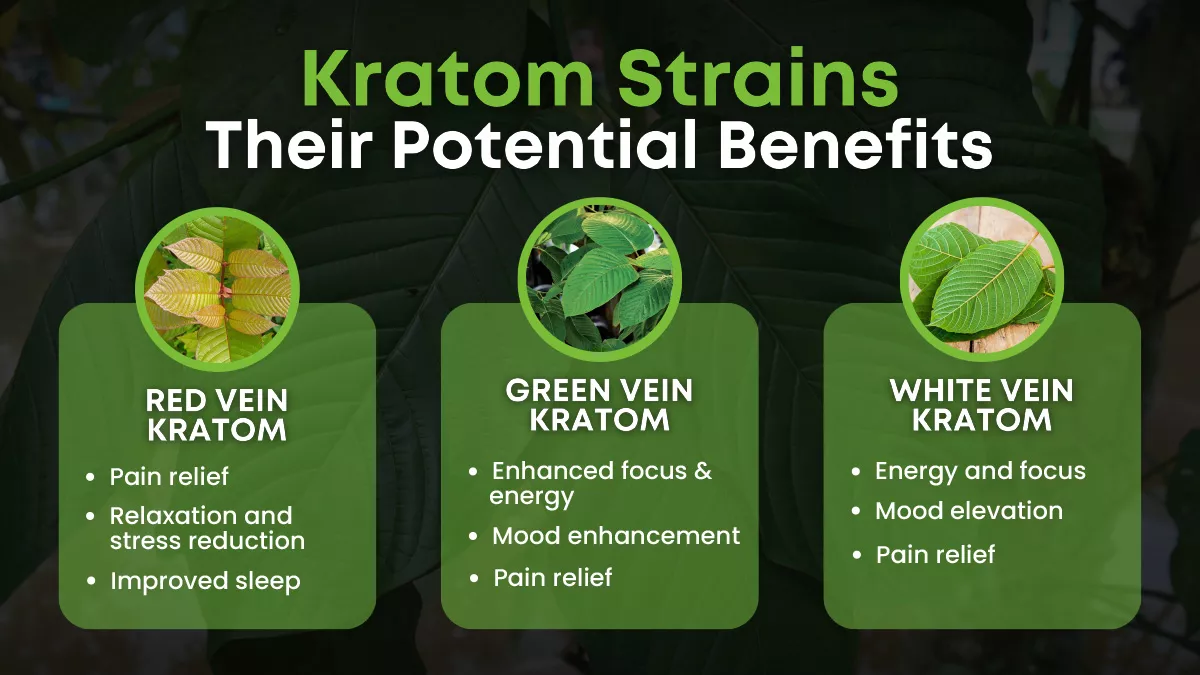
Here’s an exploration of the three primary Kratom strains and their potential benefits:
Red Vein Kratom
Potential red vein Kratom benefits:
-
Pain relief: Red Vein Kratom is renowned for its potent analgesic properties, making it a popular choice for individuals seeking natural pain relief.
-
Relaxation and stress reduction: The potential sedative nature of red strains promotes relaxation and helps alleviate stress and anxiety.
-
Improved sleep: Due to its generally calming effects, Red Vein Kratom can assist individuals in achieving a restful night’s sleep.
Green Vein Kratom
Potential green vein Kratom benefits:
-
Enhanced focus and energy: Green Vein Kratom strikes a balance between relaxation and stimulation.
-
Mood enhancement: Users often report an uplifted mood and a sense of well-being with green strains.
-
Pain relief: While not as potent as red strains in pain management, Green Vein Kratom still possesses analgesic properties that can be beneficial for individuals dealing with mild to moderate pain.
White Vein Kratom
Potential white vein Kratom benefits:
-
Energy and focus: White Vein Kratom is celebrated for its stimulating effects, providing users with increased energy levels, heightened alertness, and improved concentration.
-
Mood elevation: White strains are associated with mood elevation and a general sense of well-being.
-
Pain relief (mild): While not as pronounced as red strains, some White Vein Kratom varieties may offer mild pain relief.
>>Check the best prices for high-quality kratom products here
Kratom Dosage
The effectiveness of Kratom can vary based on individual factors such as tolerance, body weight, and overall health.
-
Low dosage (1-2 grams)
-
Moderate dosage (2-4 grams)
-
High dosage (4-6 grams)
-
Very high dosage (6 grams and above): Caution advised.
Forms of Kratom
Kratom, known for its versatile properties, is available in various forms, each offering a unique experience and method of consumption.
Kratom Leaf
In its most natural form, Kratom is harvested as leaves from the Mitragyna speciosa tree.
Traditionally, the leaves are either chewed directly or brewed into tea.
Powdered Kratom
Dried Kratom leaves are ground into a fine powder, preserving the plant’s active compounds.
It can be mixed with liquids, such as water or juice, or added to foods.
Kratom Capsules
Kratom powder is encapsulated, providing a convenient and discreet option for consumption.
Kratom capsules eliminate the need for measuring and can be swallowed with water like any other supplement or medication.
Kratom Extracts and Tinctures
Extracts and tinctures are concentrated forms of Kratom, often containing a higher ratio of alkaloids.
Extracts can be added to beverages or consumed sublingually, while tinctures are typically taken in drop form under the tongue.
Kratom Tea
Dried Kratom leaves, or powders are steeped in hot water to create a tea infusion.
Kratom tea is a traditional method that extracts alkaloids through boiling.
Topical Applications
Some users experiment with topical applications, creating balms or creams infused with Kratom.
Topical applications involve the direct application of Kratom-infused products onto the skin.
Potential Side Effects and Risks of Kratom
Some users may experience gastrointestinal distress, such as nausea and constipation, but staying hydrated, adding more fiber to your diet, and adjusting the dosage should fix that.
Another possible side effect is developing a dependency or tolerance to kratom. Take periodic breaks and consult healthcare professionals for guidance.
Finally, some users might experience dizziness or confusion, but that only happens with higher doses.
>>Check the best prices for high-quality kratom products here
Kratom Interactions
While Kratom is generally considered safe when used responsibly, certain combinations may lead to adverse effects or interactions. Here’s a closer look at potential interactions with Kratom:
-
Pharmaceuticals and medications
-
Stimulants
-
Prescription medications
-
Herbal supplements
-
Health conditions
How to Choose and Use Kratom Responsibly
Whether you’re a seasoned enthusiast or a newcomer, understanding how to choose and use Kratom responsibly is crucial. Here’s a short guide:
-
Educate yourself
-
Quality matters
-
Dosage awareness
-
Personal goals
-
Stay hydrated
-
Monitor effects
-
Avoid combining with other substances
-
Responsible purchasing
-
Adherence to legal guidelines
-
Seek professional guidance
Kratom Legal Status
The legal status of Kratom is a complex and evolving landscape that varies significantly across different countries and regions.
In the United States, Kratom is legal at the federal level. However, several states, including Alabama, Arkansas, Indiana, Rhode Island, Vermont, and Wisconsin, have enacted specific laws banning the sale or possession of Kratom.
What Are the Benefits of Kratom: FAQs
Here, we answer a few frequently asked questions about Kratom benefits.
How Hard Is Kratom on the Liver?
Kratom is not hard on the liver, at least, there’s no 100% proof that it is. It’s still a topic of ongoing research.
Some studies suggest that there’s a potential association between Kratom use and liver toxicity, but such cases are relatively rare and often involve individuals with pre-existing liver conditions.
Does Kratom Help with Inflammation?
Kratom can potentially help with inflammation as it contains alkaloids with anti-inflammatory properties, and some users report experiencing relief from inflammatory conditions.
Can Kratom Lower Testosterone?
Kratom doesn’t lower testosterone levels generally. Limited research exists on the direct impact of Kratom on testosterone levels.
What Is Kratom vs Kava?
Kratom vs Kava is an ongoing debate between some users, regarding which herbal remedy is better. While both Kratom and Kava have relaxation-inducing properties.
They have distinct active compounds, and regulatory status varies, with Kratom facing different legal considerations globally, while Kava has been associated with liver toxicity concerns in some regions.
What Are the Benefits of Kratom: Final Notes
While the benefits of Kratom are intriguing, responsible use and a holistic approach to wellness are paramount.
As research continues to unfold, users and advocates play a vital role in shaping a positive and well-regulated environment, ensuring that the benefits of Kratom are explored with diligence, respect, and dedication to overall well-being.
Just like witn any substance, it’s important to take kratom in moderation and consult a healthcare professional if you have any existing health issues. Have a good one!
>>Check the best prices for high-quality kratom products here
References:
-
Vicknasingam B, Chooi WT, Rahim AA, Ramachandram D, Singh D, Ramanathan S, Yusof NSM, Zainal H, Murugaiyah V, Gueorguieva R, Mansor SM, Chawarski MC. Kratom and Pain Tolerance: A Randomized, Placebo-Controlled, Double-Blind Study. Yale J Biol Med. 2020 Jun 29;93(2):229-238. PMID: 32607084; PMCID: PMC7309661.
-
Boyer EW, Babu KM, Adkins JE, McCurdy CR, Halpern JH. Self-treatment of opioid withdrawal using kratom (Mitragynia speciosa korth). Addiction. 2008 Jun;103(6):1048-50. doi: 10.1111/j.1360-0443.2008.02209.x. PMID: 18482427; PMCID: PMC3670991.
-
Swogger MT, Walsh Z. Kratom use and mental health: A systematic review. Drug Alcohol Depend. 2018 Feb 1;183:134-140. doi: 10.1016/j.drugalcdep.2017.10.012. Epub 2017 Dec 7. PMID: 29248691.
-
Swogger MT, Smith KE, Garcia-Romeu A, Grundmann O, Veltri CA, Henningfield JE, Busch LY. Understanding Kratom Use: A Guide for Healthcare Providers. Front Pharmacol. 2022 Mar 2;13:801855. doi: 10.3389/fphar.2022.801855. PMID: 35308216; PMCID: PMC8924421.
-
Buckhalter S, Soubeyrand E, Ferrone SAE, Rasmussen DJ, Manduca JD, Al-Abdul-Wahid MS, Frie JA, Khokhar JY, Akhtar TA, Perreault ML. The Antidepressant-Like and Analgesic Effects of Kratom Alkaloids are accompanied by Changes in Low Frequency Oscillations but not ΔFosB Accumulation. Front Pharmacol. 2021 Aug 3;12:696461. doi: 10.3389/fphar.2021.696461. PMID: 34413776; PMCID: PMC8369573.
Disclaimer: Pittsburgh City Paper does not endorse or practice services described in paid content.
This article appears in Apr 24-30, 2024.